


The advantages of remote working in dentistry
Featured Products Promotional FeaturesPosted by: Dental Design 2nd October 2020
The traditional 9-to-5 work day is on its deathbed. In 2018, a YouGov survey revealed that just 6% of UK employees were working a “normal” 9-to-5 day, with more than half wanting to start and finish work earlier than they did.[1] Two years later, the COVID-19 pandemic has forced millions of workers out of the office, putting pressure on businesses across the globe to test remote working at its most extreme. Although there has undoubtedly been a steady increase in working from home in recent years, this shift is now set to accelerate at a far more rapid pace than previously expected, bringing various benefits to industries worldwide – including dentistry.
Any future changes in the way we work are not to say that there will be a complete move towards remote working. Instead, flexibility will be the focus – where workers will be given more freedom to choose when and how they work, so that they are able to maximise on any time they do spend in a conventional workplace. In turn, businesses will be encouraged to create workspaces that are far more social environments, designed to foster and promote greater communication and engagement, taking advantage of periods where talent is collocated in one place. After all, nothing can replace the face-to-face interactions within the workplace that often lead to creativity and innovation. The COVID-19 pandemic has simply made workers appreciate these interactions more than ever.
For many people, however, having control over the way they work can be massively beneficial. There is plenty of evidence to demonstrate remote working can increase productivity, resulting in higher job satisfaction.[2] Being able to work remotely can also enable staff to save on the cost of commuting, which can offer environmental benefits too. Furthermore, working remotely can help reduce stress levels, leading to improved happiness and health among employees.[3], [4] Another advantage of working remotely is the ability to maintain a better work-life balance, which can be particularly valuable for parents juggling childcare and many other family responsibilities.[5]
Due to the very nature of dentistry, remote working is only available to dental professionals in a limited capacity, yet this can offer significant benefits with regard to streamlining workflows and improving business efficiency. Patient consultations, for example, could be performed virtually, enabling you to engage with patients about the benefits of treatment without them having to be in practice. There are even digital solutions that can be used to generate a comprehensive report of patients’ oral health in order to facilitate better organisation, triaging and booking of appointments, thus helping to increase treatment acceptance rates.
Treatment monitoring is another area of dentistry that can be carried out remotely. Particularly in the case of orthodontics, digital technology can be used to communicate quickly and easily with patients outside of the practice, whilst providing an effective means for you to track and evaluate the progress of treatment. This saves patients from unnecessary chair time, thereby enhancing the overall patient experience. Moreover, remote treatment monitoring can act as a reminder for patients, keeping them engaged and motivated throughout the process to ensure treatment success.
Being able to work remotely in some areas of clinical practice ultimately enables clinicians to free up valuable time that can be devoted to other pursuits, including continuing education and professional development. The COVID-19 pandemic has posed obvious challenges in terms of physically attending educational events, which is why e-learning has become increasingly popular. Besides offering dental professionals the flexibility to learn at their own pace, online education can be accessed conveniently from anywhere in the world. This can increase clinicians’ exposure to a wide range of exciting and relevant content that might not be offered through traditional learning platforms in the immediate future.
Of course, given the many options now available, it can be a challenge to determine which online programmes are worthwhile investing your time in. Ideally, you want to seek out providers with an outstanding reputation for delivering world-class dental education. For instance, the BACD is renowned for providing exceptional learning opportunities – not only through educational events held in various locations across the country, but also via its members portal on the BACD website. This enables members of the BACD to access free online, verifiable CPD courses presented by internationally-renowned speakers who are leaders in the field. With topics covered ranging from composite bonding and digital dentistry, to mental health and building influence with Instagram, there’s something of interest for the whole dental team.
The world’s response to COVID-19 has resulted in a rapid transformation of the workplace, which means many individuals can now enjoy increased flexibility in the way they work. For the dental profession, this can go a long way towards enhancing practice processes and enabling clinicians to maximise their time, whilst ensuring the highest standards of patient care are maintained. Those that embrace remote working wherever possible – as well as the technologies that support this – will be better positioned to bounce back and thrive post-pandemic.
For further enquiries about the British Academy of Cosmetic Dentistry, visit www.bacd.com
Author:
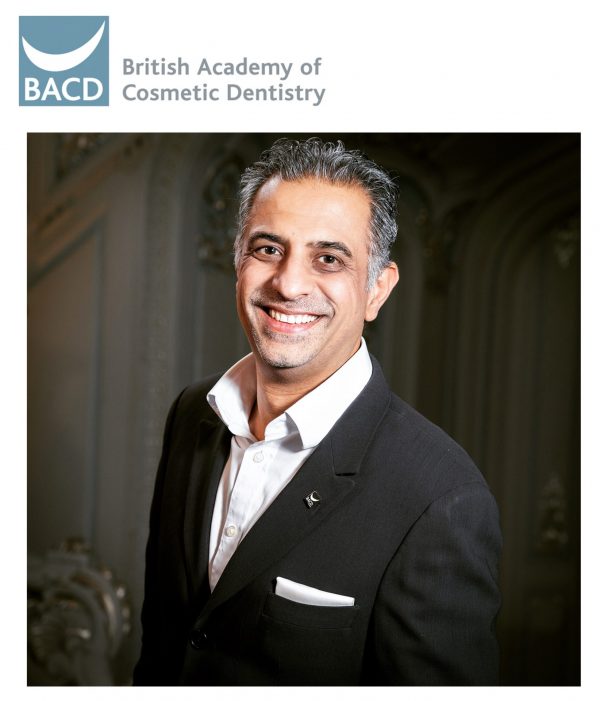
Nishan Dixit qualified from Guy’s Dental Hospital in 1994. After qualifying, he worked as an associate in a couple of practices in North-West London for 5 years. In 2000, he established Blue Court Dental in Harrow, Middlesex. Being in a general practice environment, he covers all aspects of dentistry. However, he has a particular interest in minimally invasive aesthetic dentistry. He is currently the President of the British Academy of Cosmetic Dentistry and previously was the Scientific Director. Prior to this, he served on the Anglo-Asian Odontological Group (AOG) Committee for 10 years in various capacities. Following his passion has led him to be trained by leading clinicians both nationally and internationally.
[1] YouGov. (2018) Over nine in ten not working the usual 9-5 week. Available at: https://yougov.co.uk/topics/economy/articles-reports/2018/08/24/over-nine-ten-not-working-usual-9-5-week. [Last accessed: 11.08.20].
[2] Bloom, N., Liang, J., Roberts, J. and Ying, Z. J. (2014) Does Working from Home Work? Evidence from a Chinese Experiment*. The Quarterly Journal of Economics. 130(1): 165–218. DOI: 10.1093/qje/qju032.
[3] Fundera. (2020) 28 Surprising Working From Home Statistics. Available at: https://www.fundera.com/resources/working-from-home-statistics. [Last accessed: 11.08.20].
[4] Cartridge People. (2016) The Small Office Home Office (SOHO) Workers Report. Available at: https://www.cartridgepeople.com/info/application/files/9215/0218/7394/SOHO-Workers-Report-1.pdf. [Last accessed: 11.08.20].
[5] Consultancy.uk. (2020) Working from home has lifted productivity and work-life balance. Available at: https://www.consultancy.uk/news/24815/working-from-home-has-lifted-productivity-and-work-life-balance. [Last accessed: 11.08.20].







