


Optimising implant outcomes in the aesthetic zone
Featured Products Promotional FeaturesPosted by: Dental Design 4th October 2021
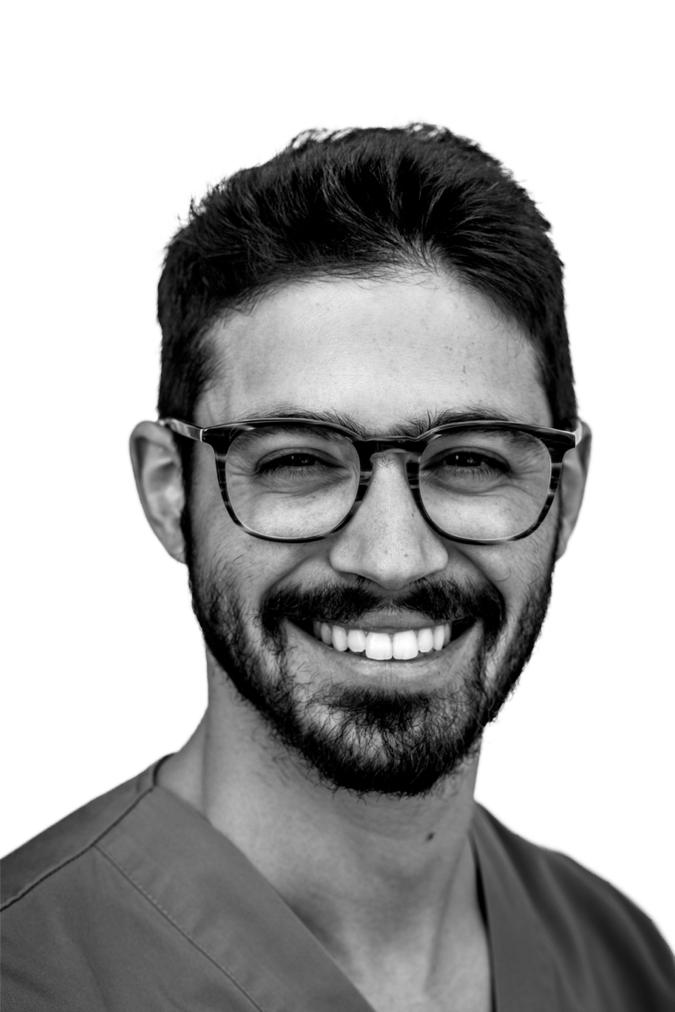
Dr Lucas Pedrosa will be one of many highly-esteemed speakers at the BACD Annual Conference this November, where hundreds of like-minded professionals will finally be able to safely come together for learning, networking and so much more.
Dr Pedrosa obtained an MSc in Dentistry in Portugal, as well as completing various advanced training programmes within the fields of periodontology, implantology and oral surgery. His session, entitled “Digital Planning, Guided Implant Placement and Temporization in the Aesthetic Zone”, will take place on 11 November. It will cover treatment planning and anatomical variables to look out for, functionality of guided surgery, restorative solutions for immediate temporisation and more – all topics that have been designed to help clinicians deliver exceptional aesthetics in a range of clinical scenarios.
Dr Pedrosa will offer a myriad of practical information and guidance to help delegates avoid potential complications and optimise outcomes for their patients. Reflecting on the common challenges faced when considering implant treatment in the aesthetic zone, he says:
“In my humble opinion, implantology in the aesthetic zone means we need to aim for perfection. There is no perfect result in the anterior zone without good white and pink aesthetics. In these cases, we need to avoid bone resorption and control bone remodelling in order to achieve a good soft-tissue contour.
“It is challenging to place the implant in the perfect position, for a good prosthetic outcome and good primary stability. In immediate implant surgeries, we don’t drill the palatal bone in a parallel way, which makes the osteotomy procedure much more challenging and unpredictable if we don’t use the right tools and planning.
“Another challenge in the aesthetic zone is the provisionalisation phase of the rehabilitation. The provisional restorations seal the blood clot in the healing phase and shape the soft tissue margins, so we need to know how to create good emergence profiles to optimise our results.”
Considering how these and other challenges may be reduced or overcome, Dr Pedrosa continues:
“Guided surgery is a must for implant placement in the anterior zone and it’s only possible with a good CBCT machine, 3D printer and surgical planning software. The democratisation of these technologies has made implant surgeries more accessible to general dentists. The surgical procedure can be performed with increased precision and speed, with affordable costs for the patient.
“The implant and abutment design also play an important role in predictability and stability of treatment. Convergence of the intramucosal part of the implant can put homeostasis to work for hard and soft tissue stability. The ‘one abutment one-time’ technique, or tissue level implants, can also enhance bone preservation and help to control bone remodelling, which are critical factors for a good outcome.
“A restoratively- or prosthetically-driven approach to implant planning and execution will further optimise hard and soft tissue outcomes. It also helps to avoid issues including bone loss in adjacent teeth; buccal plate bone loss; asymmetrical gingival zeniths; apical migration of the soft tissues; no papilla formation; and bad prosthetic mechanics that cause fractures and chipping in the long-term. The depth and the mesio-distal / buccal-palatal position of the implant must be decided during planning, taking into account the final position of the restoration.
“If delegates only take one thing away from my session at the BACD Annual Conference, I hope will be the importance of guided surgery with prosthetically-driven implant placement for the best results in the anterior zone.
“I will present several implant cases in the aesthetic region to highlight the different paths we can take when we are planning our surgeries and smile rehabilitations. Special attention will be given to implant design and positioning with guided surgery, hard and soft tissue regeneration/preservation and temporisation.”
Aside from Dr Pedrosa’s session, the BACD Seventeenth Annual Conference will present a wide selection of lectures and hands-on workshops, with a variety of clinical techniques, technologies, experiences and hot topics being discussed. Speakers from across the globe will be offering insight into their daily practice, with exciting concepts, innovative ideas and cutting-edge technologies being explored.
Delegates will also benefit from the vast networking opportunities afforded by finally being able to meet with colleagues in-person. The sessions, exhibition floor and various social events will enable individuals to catch up with friends and expand their professional circles. The much-anticipated Gala Dinner will also provide a chance for everyone to let their hair down and have some fun with friends across the industry once again.
Time’s running out – be sure you don’t miss out by registering today!
The BACD Seventeenth Annual Conference
‘Seeing Is Believing’
11th – 13th November 2021
The EICC
Edinburgh, Scotland
For further enquiries about the British Academy of Cosmetic Dentistry, visit www.bacd.com







