


Ethical Dentistry: An Origin Story.
Featured Products Promotional FeaturesPosted by: Dental Design 20th December 2021
Ethics is defined as the moral principles that influence a person’s behaviour.[i] The subject of ethics has become part of every profession that exists today and it also runs through society in terms of morals and the idea of right and wrong.
The History of Ethics
Ethics began in the fifth century BCE when Socrates appointed himself to awaken people to the need for rational criticism. As society became less rigid and people from various groups moved into positions of power, for instance, they needed a more explicit code of conduct as they would not have necessarily had access to this training previously.[ii] There have also been many ethical advancements throughout the centuries; ethics seems to come into question when a current societal structure starts to collapse. For instance, the demise of medieval feudalism ushered in the modern age of industrial democracy, the Age of Enlightenment in the 18th Century led to a surge in Romanticism, and philosophers such as Jean-Jacques Rousseau led revolts against political and religious superstitions and in turn challenged people’s morals and beliefs.
One of the most popular philosophers is Aristotle, who taught Virtue Theory in Ancient Greece. Virtue Theory emphasises an individual’s character rather than following a set of rules, it doesn’t tell you what to do but Aristotle believed that if people focus on being good then the right actions will follow, effortlessly.[iii] Virtue Theory reflects on the ancient assumption that humans have a fixed nature and they flourish when adhering to that nature. Aristotle described this in terms of “proper functioning” and adhering to that equals a full and happy life; our proper functioning is to grow, be healthy, reason, and get along with our pack. What does it mean to be virtuous? Aristotle believed it meant doing the right thing at all times and if you are virtuous you will know what this is. It’s essentially about a balance between two extremes: too much or too little isn’t virtuous but somewhere in the middle would equal virtue.
Aristotle, referred to as the grandfather of modern dentistry, also published experimental theories on the use of thin wire to straighten teeth. Not only did Aristotle propose ideas and theories that aided the advancement of dentistry but Virtue Theory has been applied to dentistry also. It essentially means to do the right thing, for the dental industry ethics refers to the moral duties and obligations towards patients.[iv] Thanks to the likes of Aristotle and many other philosophers over the centuries, in the 21st Century we are able to provide professionals with policies such as a code of conduct.
Ethical and Unethical Practice in Dentistry
Ethical practice in dentistry includes various ways of working to certain ethical standards. To aid dentists in this there are the Standards for the Dental Team set by the GDC which include ethics.[v] Standard 1.4 states you must take a holistic and preventative approach to patient care and others state that patients must be respected and treated as individuals, for instance.v Ethical dentistry also includes ensuring that patients are given a full and accurate diagnosis of their oral health and problems must be made explicit, as well as making any fees clear, and ensuring that patients are generally well looked after and supported throughout any treatment that may be carried out.[vi]
An example of unethical practice would be that a patient who attends regularly has a condition which is ignored or treatment is delayed until it gradually worsens without the patient’s knowledge – referred to as “supervised neglect”. As well as this, recommending treatment that a patient does not need would be considered unethical and referred to as overtreatment. This is particularly dangerous when it comes to aesthetic or restorative treatment because anything permanent can possibly have detrimental effects for the patient in the future.
Ethical Dilemmas
Despite the standards dentists are required to follow there are still ethical dilemmas that arise in the practice. A survey revealed that out of 62 dentists more than 22% faced an ethical dilemma with treatment related issues, more than 14% felt a colleague had behaved financially unrealistically, and only 6.5% had no ethical problems.[vii] This indicates that, while the majority of the profession act ethically, ethical dilemmas will occur without the dentist being able to predict such an event. However, there are avenues a dentist can take in order to preserve and grow their holistic approach to dentistry. The IAS Academy aims to train dentists to do the right thing by their patients every time, with tooth preservation being the core of their ethos. The Complete GDP course teaches dentists everything they need to know in order to provide each patient with treatment that is appropriate and ethical to achieve biologically stable, functional, and aesthetically pleasing results.
As expressed, ethics has been a long-standing aspect of society and has shaped civilizations time and time again. Today, it’s intertwined into people’s professions and day to day lives which means that it must be something that professionals strive towards achieving. Whether you bear in mind more often Aristotle’s Virtue Theory or not, it is integral to ensure ethics are considered in your practice.
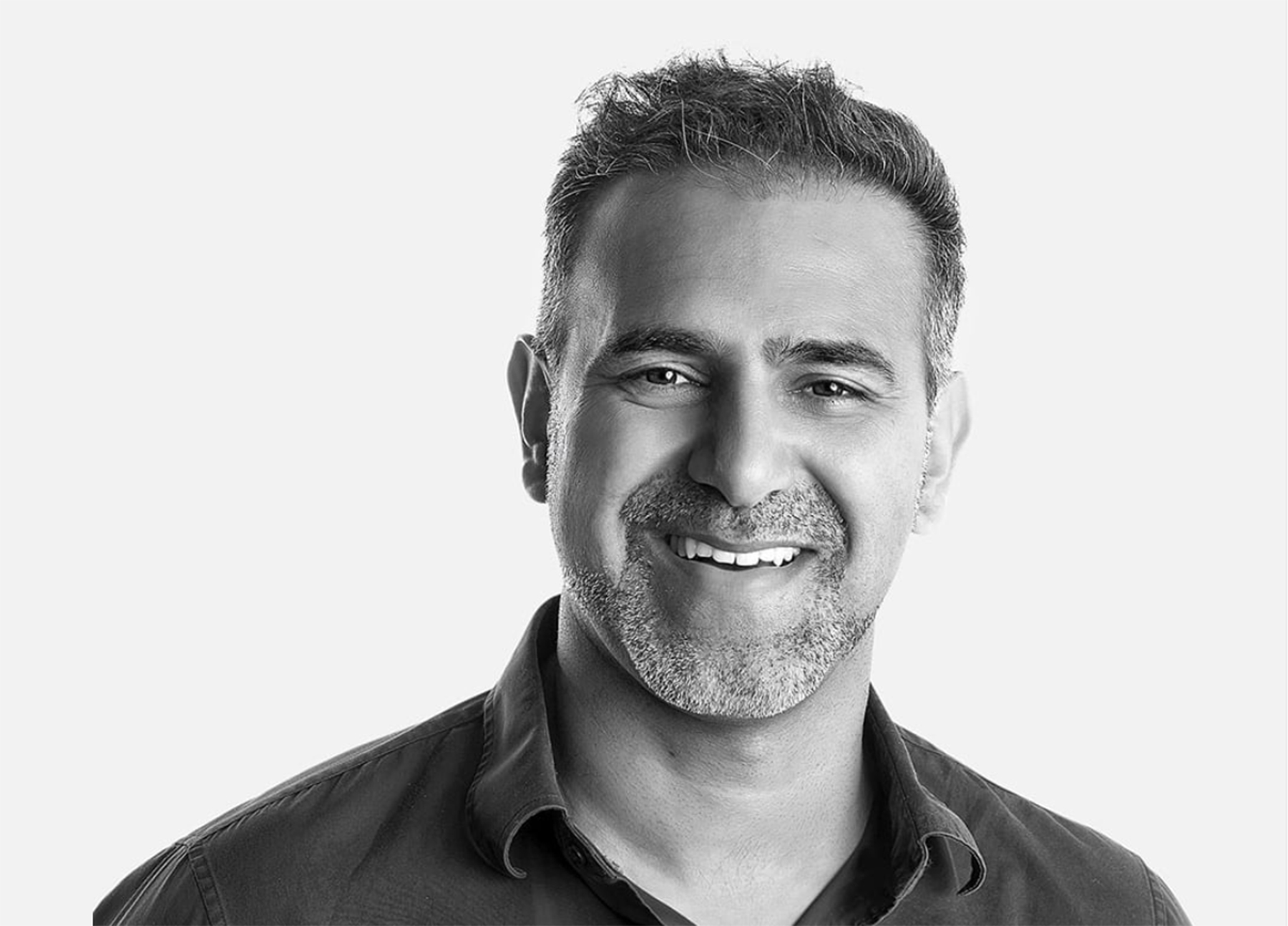
Dr Tif Qureshi founder and a clinical director of IAS Academy, qualified from Kings College London in 1992. He is a Past President of the British Academy of Cosmetic Dentistry, an International faculty that provides mentored education for general dentists on a pathway from appropriate simple to comprehensive orthodontics.
Tif has a special interest in simple orthodontics and truly minimally invasive dentistry. He has committed his life’s work to empowering dentists to provide important alternative techniques. He offers a wide variety of treatments to many more patients, while always respecting the fundamental precepts of orthodontics.
Tif also pioneered the concept of Progressive Smile Design through Alignment, Bleaching, Bonding – a course that combines tooth alignment, composite bonding and teeth whitening to produce superior smiles using techniques with the absolute minimum of invasiveness available today.
An experienced teacher in the Dahl concept, Tif shows how this technique is used to plan tooth alignment and minimise invasive dentistry in the development of a beautiful smile.
Tif now lectures and published scientific articles internationally.
For more information on upcoming IAS Academy training courses, please visit www.iasortho.com or call 01932 336470 (Press 1)
[i] Oxford Dictionary. “Ethic Noun – Definition, Pictures, Pronunciation and Usage Notes | Oxford Advanced Learner’s Dictionary at OxfordLearnersDictionaries.com.” Www.oxfordlearnersdictionaries.com, 2020, www.oxfordlearnersdictionaries.com/definition/english/ethic?q=ethics. Accessed 11 Oct. 2021.
[ii] Encyclopaedia of Philosophy. “Ethics, History of | Encyclopedia.com.” Www.encyclopedia.com, 22 Sept. 2021, www.encyclopedia.com/humanities/encyclopedias-almanacs-transcripts-and-maps/ethics-history. Accessed 11 Oct. 2021.
[iii] CrashCourse. “Aristotle & Virtue Theory: Crash Course Philosophy #38.” YouTube, 5 Dec. 2016, www.youtube.com/watch?v=PrvtOWEXDIQ. Accessed 11 Oct. 2021.
[iv] Prasad, Monika, et al. “Ethics in Dentistry -A Review.” International Journal of Health Sciences & Research (Www.ijhsr.org), vol. 9, 2019, p. 238. Accessed 11 Oct. 2021.
[v] General Dental Council. Standards for the Dental Team. 30 Sept. 2013.
[vi] Druttman, George. “What Is Ethical and Not Ethical Dentistry?” CAP City Dental, 15 July 2016, capcitydental.co.uk/what-is-ethical-and-not-ethical-dentistry/. Accessed 11 Oct. 2021.
[vii] Verma, Mahesh. “Ethical Survey amongst Dental Students in a Dental Institution.” 2013.








