


Brace Yourself!
Featured Products Promotional FeaturesPosted by: Dental Design 27th March 2022
Orthodontics is a popular branch of dentistry amongst patients, especially in the 21st Century where more adults than ever before want orthodontic treatment.[i] While many people get braces as an adult for enhanced aesthetics there are a variety of other possible reasons: some may need treatment to improve their oral hygiene while others may want to close any gaps and improve their quality of life.[ii]
A Brief History
While orthodontic treatment is currently at its most popular it isn’t a dental treatment that is exclusive to the 21st Century. In fact, orthodontic treatment can be dated back to Ancient Greece.[iii] Evidence can be found in the writings of physician Hippocrates and the philosopher Aristotle. This interest continued into the Roman period where medical writers of the time recommended finger pressure for the correction of teeth, as well as filing down irregular teeth to create more space. Another ancient orthodontic rhetoric is that the Ancient Egyptians used metal and catguts to straighten teeth. However, this is debated throughout the literature due to the material found in remains of Egyptian mummies.[iv]
The exact origins of orthodontics are not well documented but from the 1700s onwards there is more published work.iii In 1728, a French dentist, Pierre Fauchard, published the first work to look at dentistry in a scientific scope with two chapters dedicated to ill-aligned teeth. Fauchard also suggested using a silver or gold band to expand a patient’s arch, referred to as a bandolet. As well as this, an English anatomist and surgeon, John Hunter, published descriptions on the anatomy and growth of the teeth which saw dentistry become more credible in the science community.
The 1800s saw the introduction of more orthodontic appliances. J.M. Alexis Schange was the first to suggest the use of screws and elastic bands to manipulate the position of the teeth. Later on, other surgeons recommended the use of ivory plates and swelling wooden wedges to widen the palate. However, there was also more interest in why people’s teeth were naturally positioned incorrectly and one German dentist attributed it to hereditary factors, lack of exercise in the jaw as a child, and nursing difficulties.iii
Of course, the development of orthodontics continued and the profession has seen treatments become quite advanced in comparison to their original counterparts. Today, people have a variety of effective orthodontic treatments to choose from.
What You Can Offer Your Patients
Most dentists are aware of the many different orthodontic treatments available for their patients but you might be wondering which is the best to offer. There are four main types available and these include conventional braces, self-litigating braces, ceramic braces, and clear aligners.[v] In truth, best practice would be to offer a variety of treatment options to your patients. Educating them on each option will help you to manage their expectations too, especially as a survey revealed that patient expectations do not always meet the reality of aspects such as treatment length when it comes to orthodontics.[vi]
Supporting Your Patients Through Orthodontic Treatment
While a patient goes through orthodontic treatment the right approach can minimise pain and discomfort while optimising their satisfaction throughout their treatment journey. However, there are some strategies you might want to adopt in order to make your patient’s journey as smooth as possible.
One easy method is to frequently remind your patient of the positive changes they’ll eventually see – most people want to improve the way their teeth look and a reminder of that when things are difficult could help your patient persevere. Other than this, encouraging patients to take pictures of their orthodontic journey can be helpful too, especially as the changes happen quite slowly over time and it can be difficult to notice them. One suggestion that could be particularly motivating is encouraging your patients to create a rewards system: when they reach milestones in their treatment journey they could reward themselves with something they would enjoy.
For GDPs, it’s important to start with simple cases to build knowledge and ability, often beginning with removable aligners. As you develop your skills and experience it would be good practice to provide more orthodontic options in-house to meet the growing variety of patient expectations. Training in more complex areas such as conventional fixed or lingual braces is a great place to start. Lingual braces are a hugely beneficial for patients as they attach to the back of the teeth leaving them practically invisible. You can start to offer this to your patients when you embark on the Lingual Braces course from the IAS Academy. This one-day course will teach you about the benefits of lingual braces and you will also have hands-on experience in a practical afternoon with expert assistance. As well as this, you will work with world-class teachers and gain on-going support in providing ethical dentistry that lasts.
Orthodontics has come a long way from where it once was and the treatments available today are highly sophisticated. Patients now have a variety of options to achieve a great looking and functional smile, with modern GDPs well positioned to deliver exceptional results.
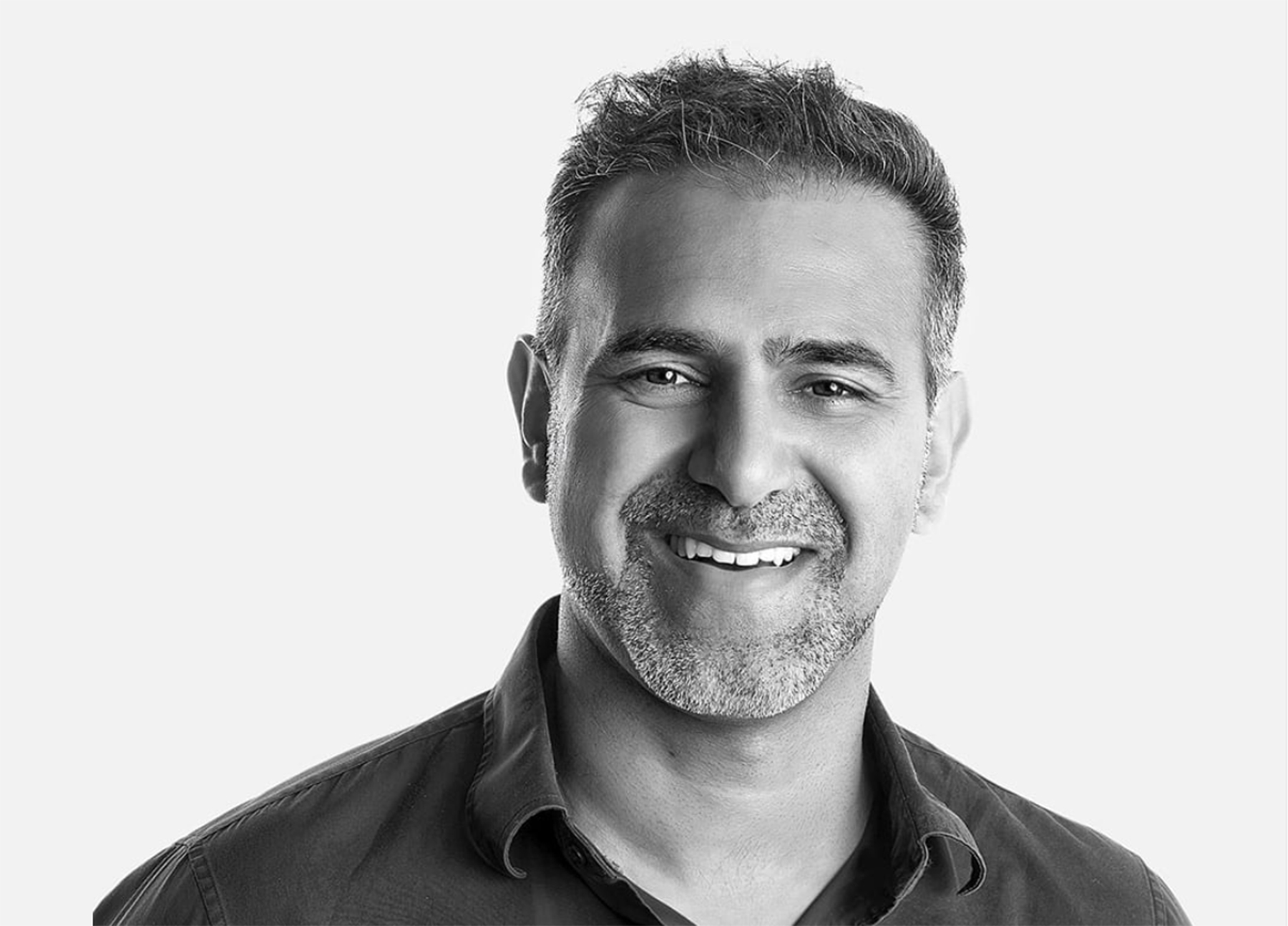
Dr Tif Qureshi founder and a clinical director of IAS Academy, qualified from Kings College London in 1992. He is a Past President of the British Academy of Cosmetic Dentistry, an International faculty that provides mentored education for general dentists on a pathway from appropriate simple to comprehensive orthodontics.
Tif has a special interest in simple orthodontics and truly minimally invasive dentistry. He has committed his life’s work to empowering dentists to provide important alternative techniques. He offers a wide variety of treatments to many more patients, while always respecting the fundamental precepts of orthodontics.
Tif also pioneered the concept of Progressive Smile Design through Alignment, Bleaching, Bonding – a course that combines tooth alignment, composite bonding and teeth whitening to produce superior smiles using techniques with the absolute minimum of invasiveness available today.
An experienced teacher in the Dahl concept, Tif shows how this technique is used to plan tooth alignment and minimise invasive dentistry in the development of a beautiful smile.
Tif now lectures and published scientific articles internationally.
For more information on upcoming IAS Academy training courses, please visit www.iasortho.com or call 01932 336470 (Press 1)
[i] Holland, Caroline, and The British Orthodontic Society. Better Teeth for Life with Orthodontic Treatment.
[ii] Teh, Kayla Dr. “Best AGE to Get BRACES : Are You Too Old? Is It Too LATE? | #BraceYourself!” Www.youtube.com, 21 Mar. 2021, www.youtube.com/watch?v=WZiMF0pLHQ4. Accessed 5 Jan. 2022.
[iii] British Orthodontic Society. “British Orthodontic Society > Museum and Archive > History of Orthodontics > Early Orthodontics.” Www.bos.org.uk, www.bos.org.uk/Museum-and-Archive/History-of-Orthodontics/Early-orthodontics. Accessed 5 Jan. 2022.
[iv] Forshaw, R. J. “Orthodontics in Antiquity: Myth or Reality.” British Dental Journal, vol. 221, no. 3, Aug. 2016, pp. 137–140, 10.1038/sj.bdj.2016.564. Accessed 5 Jan. 2022.
[v] Teh, Kaylah Dr. “Types of Braces COMPARED & EXPLAINED! | #BraceYourself!” Www.youtube.com, 1 Jan. 2021, www.youtube.com/watch?v=AH8RCvcGItc. Accessed 5 Jan. 2022.
[vi] Sayers, M. S., and J. T. Newton. “Patients’ Expectations of Orthodontic Treatment: Part 2—Findings from a Questionnaire Survey.” Journal of Orthodontics, vol. 34, no. 1, Mar. 2007, pp. 25–35, 10.1179/146531207225021888. Accessed 5 Jan. 2022.







