


Sustaining Good Oral Health
Featured Products Promotional FeaturesPosted by: Dental Design 22nd March 2022
In the 19th Century oral health had barely started to be considered in comparison to today’s standards. It was the norm for people at the time to brush their teeth with products such as brick dust and chalk, while toothbrushes and toothpicks were made from hog’s hair.[i] When it came to people with dental caries, they generally pulled the teeth out and left them with missing teeth as most people couldn’t afford what passed for an implant. As well as a lack of technologies and gold-standard treatments, dentistry was a highly unregulated profession and this left a lot of room for unethical practice. Canonical author, Jane Austen, wrote about a particularly horrifying experience of taking her nieces to the dentist and claimed that the dentist “must be a lover of teeth & money & mischief”. Overall, the profession had a long way to go to get to where it’s at today.
A Brief History
While the 19th century saw a lot of dental horrors, the century also saw huge development in the profession.[ii]The Royal College of Surgeons first created Licentiates in Dental Surgery (LDS) in 1860 and by 1879 LDS diplomas were granted by colleges across the nation. However, the first move towards dentistry becoming more regulated was in the 1870s when the Dental Reform Committee was formed and campaigned for legislation. Eventually this led to dentists having to undertake the LDS and register under The Dentists Act 1878.
There were also technological developments in the profession during the 19th century which made visiting the dentist more pleasant. The introduction of general and local anaesthetic meant people’s experiences were less painful and the invention of the foot-operated drill made the process of placing dental fillings much more efficient. However, there were still inequalities in society which meant that dentistry wasn’t accessible to everyone. As there was no NHS during this time, those who could not afford to visit the dentist simply went without. In fact, a study of graveyards that examined people’s teeth revealed that the nation’s oral health worsened during the 19th century with more caries in those buried in the second half of the century compared to those buried in the first half.ii
The Horrors of Missing Teeth
During this time dental implants consisted of other people’s teeth, porcelain, and rubber.[iii] They weren’t well fitted and didn’t offer the permanent solution in the same way that today’s implants do. Most people would have gone without an implant when considering the financial barriers at the time. However, tooth loss can greatly affect a person’s Quality of Life (QoL).[iv] An estimated 81.9% of people from a study consisting of 250 participants, published in 2011, revealed that they found eating difficult after losing their teeth. They also shared that they were affected socially as they felt their ability to communicate had declined. As well as a diminished QoL, tooth loss can also be detrimental to a person’s physical health with one study finding that edentulous patients are more likely to develop high blood pressure which can be a risk factor for other health conditions.[v] This indicates that the nation’s ancestors could have been suffering greatly due to tooth loss without an adequate alternative.
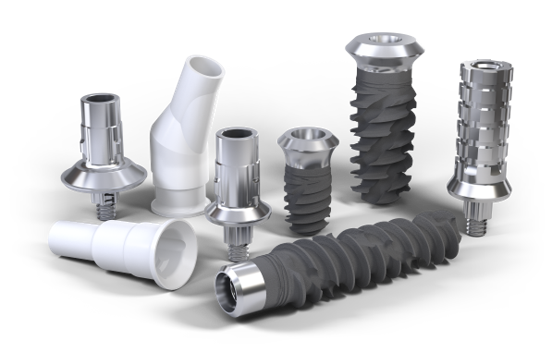
It’s now well known that oral health and general health are related. A person’s mental health can also be affected by tooth loss and therefore their well-being is likely to diminish.[vi] However, sustaining one’s oral health is now easier than ever thanks to advancements in the field. Implants, for instance, have evolved greatly. Today, implants are much more sophisticated than they once were and built to sustain a patient’s oral health. Untreated tooth loss can eventually result in bone resorption[vii] and can therefore affect one’s QoL.[viii] The TLX® implant system from Straumann® is one of the company’s latest implant innovations. This system reduces invasiveness as less metal means more of the patient’s bone is preserved. As well as this, the TLX® comes with new state of the art connection technology from TorcFit™. This allows for the prosthetics to seal on the implant shoulder and is supported by 6 precision engagement positions. Ultimately, this system is designed to support immediacy, optimise the restorative workflow, and produce incredible long-lasting and aesthetically pleasing results.
In summary, the dental profession has come a long way since the 19th century and people no longer have to suffer in the same way. Sustaining people’s oral health has become a focus and generally people are learning more and more how important it is to sustain their oral health.
For more details, please visit http://www.straumann-uk.co/tlx
[i] Magazine, Smithsonian, and Brigit Katz. “This Jane Austen Letter Highlights the Horrors of 19th-Century Dentistry.” Smithsonian Magazine, 18 Oct. 2019, www.smithsonianmag.com/smart-news/jane-austen-letter-highlights-horrors-19th-century-dentistry-180973368/. Accessed 24 Nov. 2021.
[ii] “Development of the Profession.” Bda.org, bda.org/museum/the-story-of-dentistry/ancient-modern/development-of-the-profession. Accessed 24 Nov. 2021.
[iii] BDA Museum. “Teeth and Dentures.” Www.bda.org, www.bda.org/museum/collections/teeth-and-dentures/Pages/index.aspx. Accessed 24 Nov. 2021.
[iv] Saintrain, Maria Vieira de Lima, and Eliane Helena Alvim de Souza. “Impact of Tooth Loss on the Quality of Life.” Gerodontology, vol. 29, no. 2, 24 Aug. 2011, pp. e632–e636, onlinelibrary.wiley.com/doi/full/10.1111/j.1741-2358.2011.00535.x, 10.1111/j.1741-2358.2011.00535.x. Accessed 24 Nov. 2021.
[v] Gordon, Joshua H, et al. “Association of Periodontal Disease and Edentulism with Hypertension Risk in Postmenopausal Women.” American Journal of Hypertension, vol. 32, no. 2, 1 Jan. 2019, pp. 193–201, www.ncbi.nlm.nih.gov/pmc/articles/PMC6331709/, 10.1093/ajh/hpy164. Accessed 24 Nov. 2021.
[vi] Oral Health Foundation. “Mental Illness and Oral Health.” Oral Health Foundation, 7 Dec. 2017, www.dentalhealth.org/mental-illness-and-oral-health. Accessed 9 Nov. 2021.
[vii] Lin, Hsi Kuei, et al. “Prevention of Bone Resorption by HA/β-TCP + Collagen Composite after Tooth Extraction: A Case Series.” International Journal of Environmental Research and Public Health, vol. 16, no. 23, 21 Nov. 2019, p. 4616, 10.3390/ijerph16234616. Accessed 24 Nov. 2021.
[viii] Gerritsen, Anneloes E, et al. “Tooth Loss and Oral Health-Related Quality of Life: A Systematic Review and Meta-Analysis.” Health and Quality of Life Outcomes, vol. 8, no. 1, 2010, p. 126, www.ncbi.nlm.nih.gov/pmc/articles/PMC2992503/, 10.1186/1477-7525-8-126. Accessed 24 Nov. 2021.








