Improving patient experience
Featured Products Promotional FeaturesPosted by: Dental Design 14th April 2022
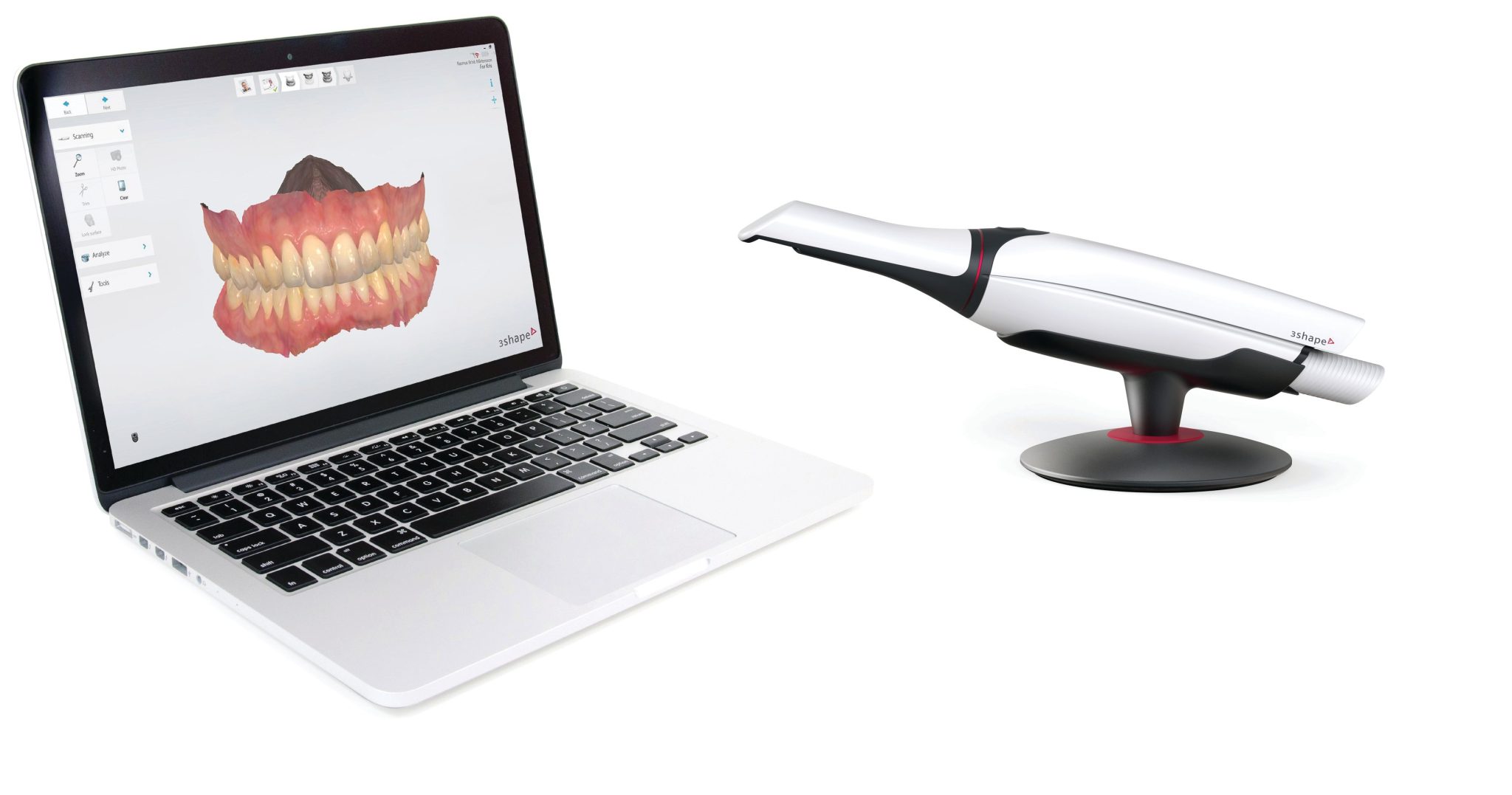
There are many variables that constitute a positive experience for patients. Because patients have higher expectations now more than ever, due to the plethora of treatments and procedures available, providing exceptional care presents a challenge for clinicians. Thus, exploring ways to cater to a range of needs and requirements, whilst making the experience positive and retaining these patients, is vital.
The evolution of digital dentistry has allowed clinicians to improve how they deliver patient care, and revolutionised the experience for both the clinician and their patients.
For the patient
Digital dental equipment currently dominates the market and for practices that have yet to digitalise their workflows, investing in this equipment can make an impressive impact in various aspects of their daily practice.
These technologies have allowed clinicians to forge better relationships with their patients, involve them more closely during their diagnoses and treatment planning and provide desirable treatment outcomes.[i] For patients that require a more tailored approach to care, such as children and the elderly, digital technology can be more favourable over conventional methods. For instance, a study[ii] found that young orthodontic patients, aged between 10-17 years, preferred the impressions taken with an intraoral scanner, due to their comfort and ease of use.
Since digital technologies have been shown to be more time efficient during treatment,[iii] patients who suffer from dental phobia or who have issues with nausea and gag reflex may benefit from these digital methods.[iv][v] Many patients may even avoid attending dental appointments due to the discomforts experienced in the past, but by streamlining their treatment and time spent in the dental surgery, clinicians can make the dental practice more suitable and inclusive for a range of individuals. This also supports the continuity of care and helps promote a good preventative approach for patients’ oral health.
For the professional
From the clinician’s perspective, digital technologies and equipment can boost productivity and improve the workflow in the practice. A questionnaire[vi] conducted in the Netherlands found that opinions on digital technologies varied depending on the clinician’s level of technology use. Those who were “high” technology users reported that digital technology yields more improvements in the quality of patient care, added more value to the dental practice and was easier to use, compared to “low” technology users.
Certain intricate procedures, such as taking impressions for restorations, have been shown to benefit from digital solutions. Intraoral scanners, for instance, have demonstrated their proficiency in impression-taking, with researchers[vii] [viii] noting their increased reliability and accuracy in comparison to conventional impression taking. This can lower the risk of the clinician having to retake the impression, saving them and their patient valuable time and money.
Digital technologies are designed to automate processes, thus facilitating a more positive experience for the patient and the clinician alike.
Know your stuff
The adoption of a digital workflow can present some challenges for the clinician, namely the learning curve and training requirements for each piece of equipment. This aspect of embracing digital may deter some clinicians, who prefer to implement tried and tested, conventional methods. The dental practice is a constantly busy environment, and taking time out of the day for training purposes may seem inconvenient.
However, leading dental suppliers often offer training as part of their customer service. This can be vastly beneficial and opportune for busy clinicians, as they’ll be supported throughout their transactional journey, during installation and long after. Not only is this incredibly valuable for the dental practice, but by increasing the clinician’s confidence when delivering treatment, patient experience will be positively affected too. Exceptional customer support can really help ease a dental practice’s transition into a digital workflow. It also benefits dental practices who have already adopted digital equipment. Clinicians who have access to technical support, training and guidance can deliver a better experience to every patient.
Support when you need it most
The Straumann Group is passionate about their customers’ journeys, and so provide outstanding customer support. For clinicians who purchase the 3Shape TRIOS® intraoral scanner, the Straumann Group provides access to the 3Shape Community; here, clinicians can receive comprehensive training on using their new scanner, from setting up new user accounts, various workflows and protocols and how to navigate the tool’s features, among much more. This proficient customer care illustrates the Straumann Group’s commitment to every customer’s journey.
Improving patient experience helps all dental professionals provide higher standards of care, streamline their workflows, work more comfortably and deliver a remarkable experience for every patient.
For more information on intraoral scanners and digital solutions from the Straumann Group, visit: https://www.straumann.com/digital/en/home/equipment/io-scanners.html
[i] Rekow, E.D. (2020). Digital dentistry: The new state of the art — Is it disruptive or destructive? Dental Materials, [online] Available at: https://www.sciencedirect.com/science/article/abs/pii/S0109564119308061 [Accessed 16 Feb. 2022].
[ii] Mangano, A., Beretta, M., Luongo, G., Mangano, C. and Mangano, F. (2018). Conventional Vs Digital Impressions: Acceptability, Treatment Comfort and Stress Among Young Orthodontic Patients. The Open Dentistry Journal, [online] Available at:https://www.ncbi.nlm.nih.gov/pmc/articles/PMC5815028/ [Accessed 16 Feb. 2022].
[iii] Cicciù, M., Fiorillo, L., D’Amico, C., Gambino, D., Amantia, E.M., Laino, L., Crimi, S., Campagna, P., Bianchi, A., Herford, A.S. and Cervino, G. (2020). 3D Digital Impression Systems Compared with Traditional Techniques in Dentistry: A Recent Data Systematic Review. Materials, [online] Available at: https://www.mdpi.com/1996-1944/13/8/1982/htm [Accessed 16 Feb. 2022].
[iv] Glisic, O., Hoejbjerre, L. and Sonnesen, L. (2019). A comparison of patient experience, chair-side time, accuracy of dental arch measurements and costs of acquisition of dental models. The Angle Orthodontist, [online] Available at: https://meridian.allenpress.com/angle-orthodontist/article/89/6/868/420601/A-comparison-of-patient-experience-chair-side-time[Accessed 16 Feb. 2022].
[v] de Paris Matos, T., Wambier, L.M., Favoreto, M.W., Rezende, C.E.E., Reis, A., Loguercio, A.D. and Gonzaga, C.C. (2021). Patient-related outcomes of conventional impression making versus intraoral scanning for prosthetic rehabilitation: A systematic review and meta-analysis. The Journal of Prosthetic Dentistry. [online] Available at: https://www.sciencedirect.com/science/article/abs/pii/S0022391321004935 [Accessed 16 Feb. 2022].
[vi] van der Zande, M.M., Gorter, R.C., Bruers, J.J.M., Aartman, I.H.A. and Wismeijer, D. (2017). Dentists’ opinions on using digital technologies in dental practice. Community Dentistry and Oral Epidemiology, [online] Available at: https://pubmed.ncbi.nlm.nih.gov/28983942/#:~:text=Results%3A%20The%20response%20rate%20was,use%2C%20than%20low%20technology%20users. [Accessed 16 Feb. 2022].
[vii] Aragón, M.L.C., Pontes, L.F., Bichara, L.M., Flores-Mir, C. and Normando, D. (2016). Validity and reliability of intraoral scanners compared to conventional gypsum models measurements: a systematic review. The European Journal of Orthodontics, [online] Available at: https://academic.oup.com/ejo/article/38/4/429/1748903 [Accessed 17 Feb. 2022].
[viii] Sfondrini, M.F., Gandini, P., Malfatto, M., Di Corato, F., Trovati, F. and Scribante, A. (2018). Computerized Casts for Orthodontic Purpose Using Powder-Free Intraoral Scanners: Accuracy, Execution Time, and Patient Feedback. BioMed Research International, [online] Available at: https://www.hindawi.com/journals/bmri/2018/4103232/ [Accessed 17 Feb. 2022].