


Provide dentistry that lasts
Featured Products Promotional FeaturesPosted by: Dental Design 19th May 2022
Orthodontic treatment allows patients to have their aesthetic and/or functional oral concerns corrected. Aesthetic issues can affect how an individual navigates day-to-day life, whereas functional problems can affect mastication, speaking and trigger further oral health complications. Thus, orthodontic therapy has become increasingly popular and viable for a range of patients.
Luckily, it is now possible for patients to receive discreet orthodontic solutions, which can be beneficial to those in customer-facing job roles or just for those who dislike the aesthetics of conventional braces. However, as with all dental treatments, certain solutions may not suit every patient, so it’s important for the clinician to manage patient expectations and ensure they receive a treatment that best suits their clinical situation, whilst still achieving their desired outcome.
Traditional fixed appliances
Conventional braces are recognised for their strength and ability to treat a range of malalignment issues. There is a wealth of literature on the efficacy of fixed orthodontic therapy; one study[i] saw a successfully corrected class II spacing and midline diastema case, without the extraction of premolars, by implementing a fixed appliance into the treatment plan. Similarly, fixed braces were noted to grant clinicians greater control over the movement of the teeth compared to removable aligners, therefore providing more effective outcomes for mild-to-moderate class I malocclusions. [ii]
However, traditional fixed appliances do have their negative side effects; for instance, the occurrence of white spot lesions (WSL) in patients with fixed appliances has been noted.[iii] The likelihood of WSL occurring can increase if the patient has poor oral hygiene, an inadequate diet and a lack of further preventative measures during their treatment.[iv] Because fixed orthodontic appliances make tooth cleaning more difficult, as well as preventing the mouth from naturally removing food debris through the actions of the tongue, lips and cheeks, patients will be at a further risk of WSL.[v]
Additionally, therapy for traditional braces can span from 12 months to 2 and a half years.[vi] Because these appliances are visible, some patients may be deterred by the visual aspect of fixed braces, and so prefer a more discreet, alternative orthodontic therapy.
Clear Aligners
Clear aligners are a popular choice for patients, as they are discreet and removeable. Lower pain levels and a higher quality of life have been reported by patients undergoing clear aligner therapy, as opposed to their fixed counterparts.[vii] Researchers[viii] also proposed that clear aligners are better for periodontal health, and could be recommended for patients with a high risk of developing gingivitis. They did note, however, that more high-quality studies are required.
Much like with fixed orthodontic therapies, patient compliance is crucial for clear aligner treatment to be effective.ii The removeable function of clear aligners may seem an attractive element to some patients, however it is their responsibility to wear them for the suggested amount of time, which is usually 22-23 hours a day.[ix] Neglecting to do so could compromise the outcome.
Literature on clear aligners varies, with one systematic review[x] noting they were associated with worse outcomes when compared to fixed appliances in adult patients. However, it has likewise been noted that clear aligner therapy is suitable for patients with mild-to-moderate malocclusion, but not in severer cases.[xi] Thus, patients with more complex oral concerns may not be suitable for this type of treatment.
 Lingual braces
 are another option for patients looking to correct oral issues with a discreet orthodontic solution. Lingual braces, according to one study,[xii] do not change how the face is perceived, which researchers discovered through the means of an eye-tracking system. So, they are an excellent option for patients who desire discreetness. Incidences of WSL were also noted to be distinctively reduced in patients with lingual appliances, compared to those with labial multibracket braces.[xiii] One study[xiv] found that a patient with condylar hyperplasia and severe mandibular crowding was successfully treated with lingual braces.
Difficulty speaking is a common side effect of lingual braces, which some patients may find distressing.[xv] However, clinicians can offer patients advice and guidance on how to combat this temporary issue, through simple exercises that practise talking properly through speaking or reading out loud. Also, patient compliance is crucial for maintaining optimal oral health during and after treatment. Once again, clinicians can aid their patients with accessible oral health tips to keep their teeth clean during aligner therapy; this could include using an electric toothbrush, pipe cleaners and interdental brushes.xv
Deliver exceptional care, every time
For clinicians looking to delve into the area of lingual orthodontics, the Lingual Braces course from IAS Academy may be the ideal training resource for them. The course covers theoretical topics, including diagnostics, assessment and case selection, brackets, arch wires and instruments and treatment sequence. The stimulating hands-on session covers placing wires and retainers, with a Q&A to follow. Delegates will have optional access to life-long mentoring with every case and learn how to provide dentistry that lasts.
An individual’s smile is closely linked to their self-image and orthodontic treatment allows patients with aesthetic and/or functional concerns to feel more confident about their teeth. By providing more orthodontic solutions in practice, clinicians can cater to a range of different cases and help patients enjoy straighter smiles and all the confidence that comes with it.

For more information on upcoming IAS Academy training courses, please visit www.iasortho.com or call 01932 336470 (Press 1)
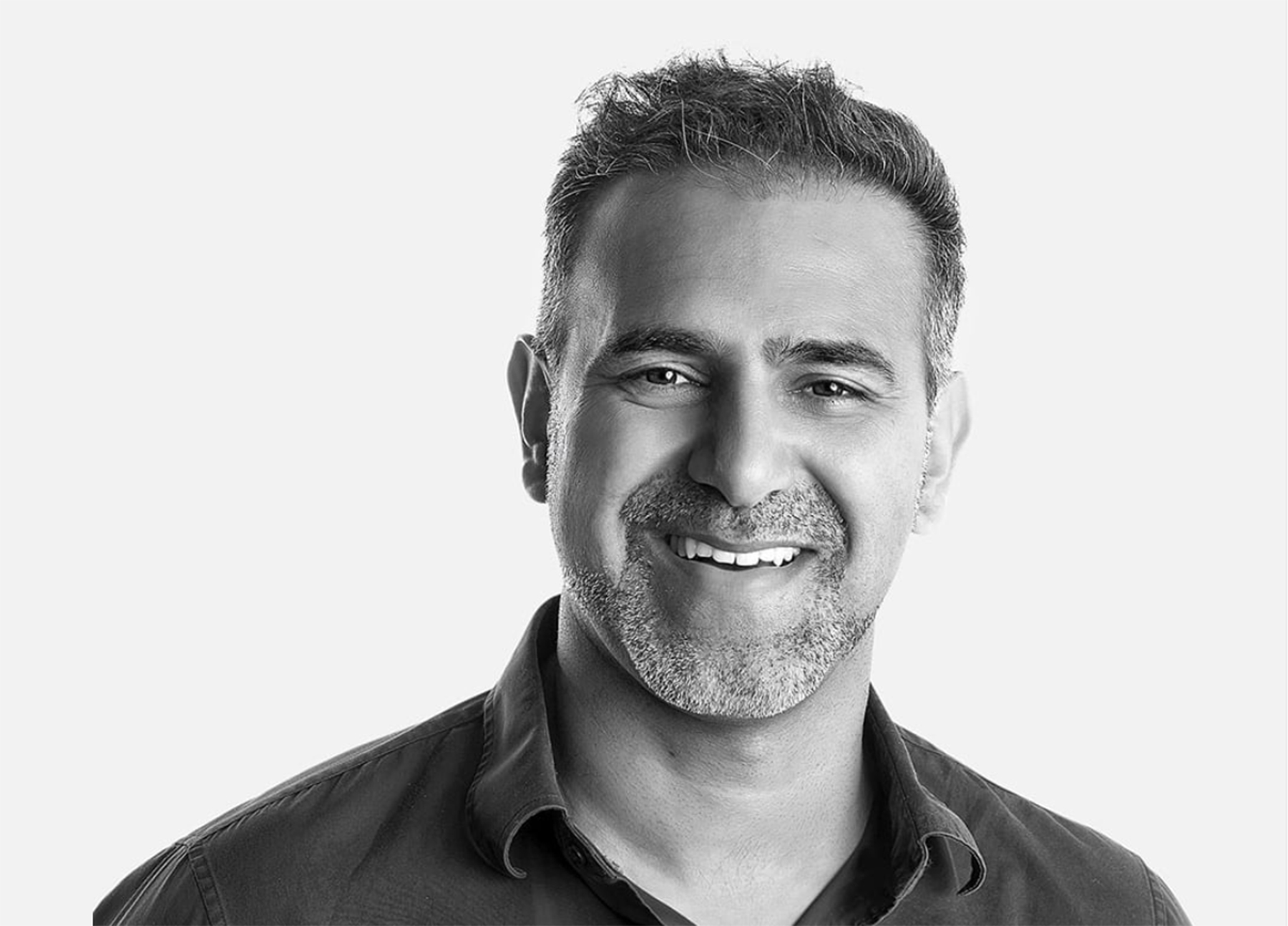
Author: Dr Tif Qureshi founder and a clinical director of IAS Academy
[i] Jawale, B., Rodrigues, L., Ashtekar, S., Belludi, A., Kale, A. and K, N. (2021). “Correction of Spaced Dentition with Fixed Orthodontic Pre-adjusted Edgewise Bracket System” – A Case Report. [Accessed 18 Feb. 2022]
[ii] Buschang, P.H., Shaw, S.G., Ross, M., Crosby, D. and Campbell, P.M. (2014). Comparative time efficiency of aligner therapy and conventional edgewise braces. The Angle Orthodontist, [online] Available at: https://meridian.allenpress.com/angle-orthodontist/article/84/3/391/58505/Comparative-time-efficiency-of-aligner-therapy-and [Accessed 18 Feb. 2022].
[iii] Marinelli, G., Inchingolo, A.D., Inchingolo, A.M., Malcangi, G., Limongelli, L., Montenegro, V., Coloccia, G., Laudadio, C., Patano, A., Inchingolo, F., Bordea, I.R., Scarano, A., Greco Lucchina, A., Lorusso, F., Di Venere, D., Laforgia, A. and Dipalma, G. (2021). White spot lesions in orthodontics: prevention and treatment. A descriptive review. Journal of biological regulators and homeostatic agents, [online] 240. Available at: https://europepmc.org/article/med/34281321 [Accessed 18 Feb. 2022].
[iv] Chapman, J.A., Roberts, W.E., Eckert, G.J., Kula, K.S. and González-Cabezas, C. (2010). Risk factors for incidence and severity of white spot lesions during treatment with fixed orthodontic appliances. American Journal of Orthodontics and Dentofacial Orthopedics, [online] Available at: https://pubmed.ncbi.nlm.nih.gov/20691360/ [Accessed 18 Feb. 2022].
[v] Srivastava, K., Tikku, T., Khanna, R. and Sachan, K. (2013). Risk factors and management of white spot lesions in orthodontics. Journal of Orthodontic Science, [online] Available at: https://www.ncbi.nlm.nih.gov/pmc/articles/PMC4072374/ [Accessed 18 Feb. 2022].
[vi] NHS Choices (2020a). Braces and orthodontics – Healthy body. [online] NHS. Available at: https://www.nhs.uk/live-well/healthy-body/braces-and-orthodontics/ [Accessed 18 Feb. 2022].
[vii] Gao, M., Yan, X., Zhao, R., Shan, Y., Chen, Y., Jian, F., Long, H. and Lai, W. (2020). Comparison of pain perception, anxiety, and impacts on oral health-related quality of life between patients receiving clear aligners and fixed appliances during the initial stage of orthodontic treatment. European Journal of Orthodontics, [online] Available at: https://academic.oup.com/ejo/article-abstract/43/3/353/5866289 [Accessed 18 Feb. 2022].
[viii] Jiang, Q., Li, J., Mei, L., Du, J., Levrini, L., Abbate, G.M. and Li, H. (2018). Periodontal health during orthodontic treatment with clear aligners and fixed appliances. The Journal of the American Dental Association, [online] Available at: https://dl.uswr.ac.ir/bitstream/Hannan/60580/1/2018%20JoADA%20Volume%20149%20Issue%208%20August%20%2819%29.pdf [Accessed 18 Feb. 2022].
[ix] Aljabaa, A. (2020). Clear aligner therapy––Narrative review. Journal of International Oral Health, [online] Available at: https://www.jioh.org/article.asp?issn=0976-7428;year=2020;volume=12;issue=7;spage=1;epage=4;aulast=Aljabaa [Accessed 18 Feb. 2022].
[x] Papageorgiou, S.N., Koletsi, D., Iliadi, A., Peltomaki, T. and Eliades, T. (2019). Treatment outcome with orthodontic aligners and fixed appliances: a systematic review with meta-analyses. European Journal of Orthodontics. [online] Available at: https://academic.oup.com/ejo/article/42/3/331/5638136?login=true [Accessed 18 Feb. 2022].
[xi] Yassir, Y.A., Nabbat, S.A., McIntyre, G.T. and Bearn, D.R. (2022). Clinical effectiveness of clear aligner treatment compared to fixed appliance treatment: an overview of systematic reviews. Clinical Oral Investigations. [online] Available at: https://link.springer.com/article/10.1007/s00784-021-04361-1 [Accessed 18 Feb. 2022].
[xii] Försch, M., Krull, L., Hechtner, M., Rahimi, R., Wriedt, S., Wehrbein, H., Jacobs, C. and Jacobs, C. (2019). Perception of Esthetic Orthodontic Appliances: An Eye Tracking and Cross-sectional study. The Angle Orthodontist, [online] Available at: https://meridian.allenpress.com/angle-orthodontist/article/90/1/109/423111/Perception-of-Esthetic-Orthodontic-Appliances-An [Accessed 18 Feb. 2022].
[xiii] Wiechmann, D., Klang, E., Helms, H.-J. and Knösel, M. (2015). Lingual appliances reduce the incidence of white spot lesions during orthodontic multibracket treatment. American Journal of Orthodontics and Dentofacial Orthopedics, [online] 422. Available at: https://www.sciencedirect.com/science/article/abs/pii/S0889540615007271 [Accessed 18 Feb. 2022].
[xiv] Kyteas, P.G., McKenzie, W.S., Waite, P.D. and Kau, C.H. (2017). Comprehensive treatment approach for condylar hyperplasia and mandibular crowding with custom lingual braces and 2-jaw surgery. American Journal of Orthodontics and Dentofacial Orthopedics, [online] Available at: https://www.sciencedirect.com/science/article/abs/pii/S0889540616304978 [Accessed 18 Feb. 2022].
[xv] Chaudhry, A. (2017). Lingual Orthodontics: The Changing Trends. Biomedical Journal of Scientific & Technical Research, [online] Available at: https://econpapers.repec.org/article/abfjournl/v_3a1_3ay_3a2017_3ai_3a3_3ap_3a708-709.htm [Accessed 18 Feb. 2022].







