


A smile that lasts a lifetime
Featured Products Promotional FeaturesPosted by: Dental Design 19th July 2022
Tooth loss can be devastating for all individuals, but for younger generations, the concept of losing teeth has not yet garnered the same level of recognition and understanding. In recent months, there have been various headlines on young adults striving to raise awareness and eliminate the stigma of tooth loss in young people.
Thankfully, there are many options for individuals in this situation. With help from their clinician, they can take the steps to restore their smile and their confidence.
Why does it happen?
Partial or full edentulism has often been associated with individuals in the later stages of their life. But, in all age ranges, tooth loss is an issue that can result from health conditions and/or poor oral hygiene, to name but a few.
There are many variables that effect the condition of oral health in young adults, whether due to poor instruction in earlier years, a lack of motivation or, of course, frequent exposure to sugary foods and drinks. There have also been studies that link excessive computer usage by teenagers as a risk factor for poor oral health.[i] Additionally, a study found that adolescents with psychological stressors, such as social phobia and general anxiety, have poorer oral health behaviours than those who don’t.[ii] As you well know, the longer these issues are left untreated, the higher the potential for tooth decay and, subsequently, tooth loss.
 Eating disorders have a myriad of negative effects on oral health. New NHS figures show that eating disorder hospital cases have risen by 84% in the past five years, with the largest increases seen in those aged 18 and under.[iii] With the adverse effects on teeth, including erosive tooth wear as the result of excessive vomiting,[iv] individuals suffering from an eating disorder are, inadvertently, putting themselves at risk of serious oral complications, making tooth loss a higher possibility.
The impact
Tooth loss is tragic in all cases. However, with the rise of social media, and the heightened focus on “perfect” physical attributes paired with a lack of awareness, tooth loss in young generations may usher in a host of other issues, too. Appearance has always, to a degree, been considered an important asset in life. In the 21st century, this continues to be apparent. For instance, a study[v] conducted by YouGov found that “two in five Brits think physical appearance matters a great deal in today’s society”, according to 61% of women and 42% of men aged 16-24.
Thankfully, there are individuals who are spreading awareness on tooth loss and their solutions, such as a mother who lost her teeth during her pregnancy, aged just 21. She attributed this situation as the combination of a poor diet and a genetic predisposition to extreme calcium loss, and now wears dentures.[vi] Her videos on social media platforms aim to spread awareness, but there is still a long way to go for tooth loss in younger patients to be a more widely-recognised phenomenon.
For patients who have lost some, or all, of their natural dentition, there are plenty of solutions available to help restore their confidence and get their lives back on track.
What can you do?
Depending on lifestyles and their desired look, patients can choose from a range of solutions, like full or partial dentures, bridges or dental implants. Anecdotally, while dentures do provide a greater degree of flexibility, dental implants may be preferred by younger patients as they can be treated more like natural teeth. With proper maintenance and education, patients can enjoy their dental implants for many years to come.
Restoring confidence is perhaps one of the most fulfilling aspects of the dental profession. In order to continue offering your patients the best possible care, keeping abreast of the developments within the profession is key. One of the best ways to do this is to become part of an association, where you can gain and share insights, learn new techniques and skills and access educational resources.
The right solutions for your patients
The Association of Dental Implantology (ADI) provides their members with access to a range of exceptional learning resources, such as free ADI Study Clubs and a variety of clinical journals. Members also have discounted delegate rates for ADI events, including their biennial ADI Team Congress, masterclasses and focus meetings. Members have great networking opportunities too, such as through the ADI Members’ Only Facebook Group, where professionals can share cases, questions and advice. By joining this prestigious and expanding association, you can better cater to the needs of all of your patients.
Losing one’s teeth can be incredibly upsetting, whether the patient is eighty or eighteen. Fortunately, dentistry has advanced and developed many different solutions to meet and satisfy a range of requirements, so everyone can enjoy a functional, aesthetic smile at any stage in their life.

For more information about the ADI, or to join, please visit the website www.adi.org.uk
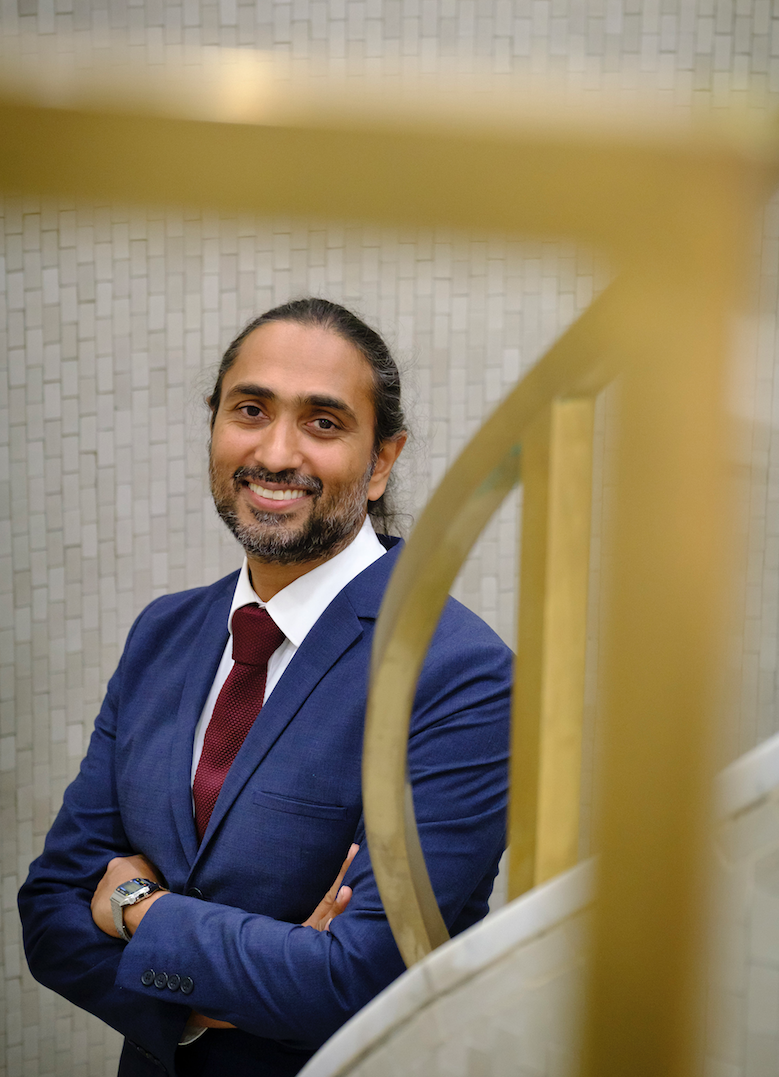
Amit Patel – President of The Association of Dental Implantology (ADI) is registered with the General Dental Council as a specialist in periodontics. His special interests are dental implants, regenerative and aesthetic periodontics. Amit graduated from the University of Liverpool and completed a four year specialist training programme in Periodontics at Guy’s, King’s & St Thomas’ Dental Institute.
[i] Olczak‐Kowalczyk, D., Tomczyk, J., Gozdowski, D. and Kaczmarek, U. (2019). Excessive computer use as an oral health risk behaviour in 18‐year‐old youths from Poland: A cross‐sectional study. Clinical and Experimental Dental Research, [online] 5(3), pp.284–293. Available at: https://onlinelibrary.wiley.com/doi/10.1002/cre2.183 [Accessed 26 May 2022].
[ii] Pohjola, V., Nurkkala, M. and Virtanen, J.I. (2021). Psychological distress, oral health behaviour and related factors among adolescents: Finnish School Health Promotion Study. BMC Oral Health, [online] 21(1). Available at: https://link.springer.com/article/10.1186/s12903-020-01357-3 [Accessed 26 May 2022].
[iii] NHS Digital. (2021). Hospital admissions for eating disorders. [online] Available at: https://digital.nhs.uk/supplementary-information/2021/hospital-admissions-for-eating-disorders-2015-2021 [Accessed 26 May 2022].
[iv] Rangé, H., Colon, P., Godart, N., Kapila, Y. and Bouchard, P. (2021). Eating disorders through the periodontal lens. Periodontology 2000, [online] 87(1), pp.17–31. Available at: https://onlinelibrary.wiley.com/doi/full/10.1111/prd.12391 [Accessed 26 May 2022].
[v] yougov.co.uk. (2021b). Physical appearance in today’s society | YouGov. [online] Available at: https://yougov.co.uk/topics/health/articles-reports/2021/08/05/physical-appearance-todays-society [Accessed 26 May 2022].
[vi] The Sun. (2022). I’m a proud Catfish & never hid my fake teeth- trolls say it should be ‘illegal’. [online] Available at: https://www.thesun.co.uk/fabulous/15283955/proud-catfish-never-hide-fake-teeth/ [Accessed 26 May 2022].







