


How can the power of digital technology transform your practice?
Featured Products Promotional FeaturesPosted by: Dental Design 4th June 2023
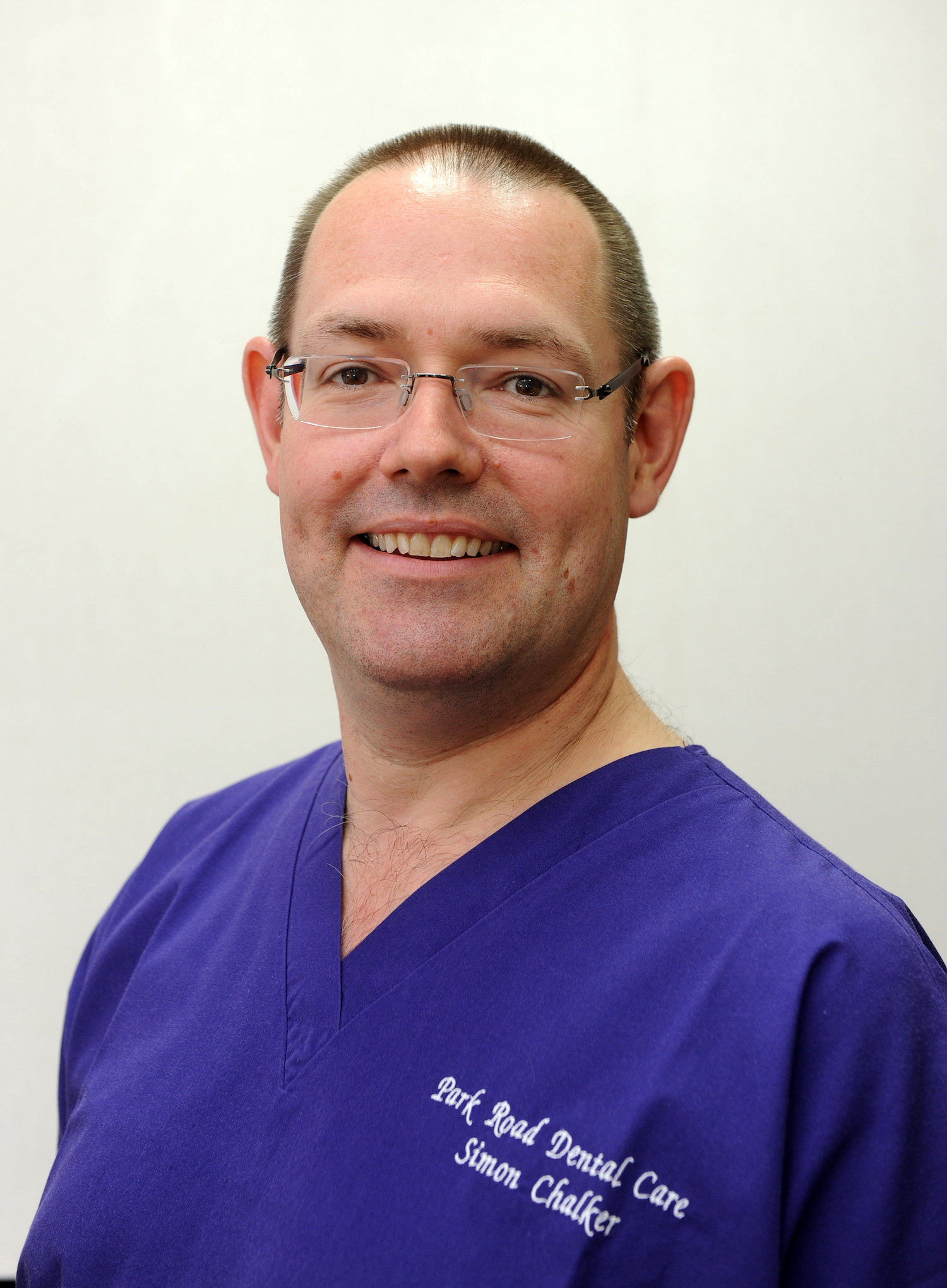
Dr Simon Chalker recently introduced systems to digitalised his surgery’s workflow, with products supplied by Clark Dental.
Digital technology was something that interested me from when I first had a demo of the CEREC-2 milling machine, over twenty years ago now. I could see the difficulties with the technology at that time but always kept an eye on any developments.
I got hold of a good digital camera once they became available. High quality clinical photos were required for case presentations, especially when taking professional examinations such as the Diploma of Membership of the Faculty of General Dental Practice (MFGDP), which I did back in 2000. Fast forward six years and I was happy with the quality that digital radiographic images were achieving, and so the practice invested in the Schick system from Clark Dental – I do a lot of endodontics, so the instant images have been a godsend in my clinical work.
I was in one of Dr Mike Wise’s study groups for many years, where some studies on digital scanning technology for impressions were being discussed. I realised that the accuracy and milling capabilities of these systems were extremely good, but there were still a lot of players in the marketplace and I wanted to bide my time and see which systems survived before investing in one. I could see that the CEREC Omnicam was a successful and reliable system and, when I was ready to take the plunge, I was even happier to learn that the Primescan had been introduced, as it appeared to be more streamlined and was an all-in-one unit with a touchscreen.
 We were lucky enough to have been lent a Primescan and Primemill by Clark Dental before we purchased them last year. The technology enables me to provide ceramic onlays in a single day. I also have clinical preference for ‘Immediate Dentine Sealing’, but temporising this sort of approach was awkward. The ability to provide restorations the same day did away with the need to temporise altogether. I had to get my head around the different materials, how they worked and were processed – but, now that I have, I feel I’m able to optimise the properties of each and make the best selection in any given situation.
My dental nurse and I were used to taking impressions and fitting temporaries, and then seeing the patient again two weeks later to fit the crowns. Suddenly, this could all be done chairside, in one appointment. We started out using Vita Enamic® hybrid ceramic, so we were scanning, designing, milling, polishing and then cementing onlays, all in one visit. It took around two hours per case initially, but we soon became quite slick and got it down to an hour. Gone were the days of temporary crowns, and the patients loved not having to be numbed up a second time to have the crown fitted! There is also another dentist in practice who uses the scanner as much as I do, but for orthodontic cases.
Despite starting out with hybrid ceramics, I wanted to see what the system could do so I bought a SpeedFire sintering furnace soon after introducing the Primescan and Primemill, allowing us start using lithium disilicate and zirconia. eMax is very strong when bonded, especially if the dentine bonding process is carried out at the time of preparation. Ceramic onlay preparations do not lend themselves to easy temporisation, as the preps are not inherently retentive, so being able to fit restorations the same day is amazing. Using zirconia is even easier. It’s not a difficult material to work with and has pretty much replaced gold and porcelain-fused-to-metal (PFM) crowns, with the exception of patients who experience severe bruxism. It was a bit scary to start with and I think most dentists are rather apprehensive, but having the option to provide temporaries and still work with a talented technician for complex cases is highly beneficial.
Both materials do take longer to use than hybrid ceramics due to the firing cycle, but there is nothing involved that is particularly difficult when you’re working on posterior teeth. The restorations fit very nicely and adjustments are rare. The quality of fit far exceeds that of traditional indirect techniques, in my experience. I have graduated to anterior restorations and these do take a little more time. eMax is my go-to material for anteriors, which need to be stained and glazed to get a great cosmetic match – this is where digital photography comes in useful once again. Taking a photo, so you have it to hand when you’re applying stains, will give you some fantastic results with a little practice.
I send implant-supported restorations and longer span bridgework to a dental technician, as these are more complex and would take me too long to complete in-house. I let the lab optimise the choice of abutment and the screw angulation. Primescan will tend to push you towards a split abutment and cemented crown solution in such cases, and this isn’t my preference (I go for screw-retained alone wherever possible). However, the scans are very simple – gone are the days of using impression materials and undoing screws on impression copings, all while fighting polyether-induced gagging!
The Primescan, Primemill and SpeedFire equipment simplify impression taking, bite registrations, design and processing of restorations into a reasonably straightforward process. These systems provide the entire workflow. I’m happy to take impressions at the end of a morning session and have a single tooth restoration ready to fit immediately after our lunch break.
The support we’ve received from Clark Dental has been very good and I wouldn’t hesitate to recommend them. They provided us with the Schick CMOS sensors which we have now been updated to the newer sensors with fantastic image quality and speed. The support team have been great. Tracey can rescue us from any minor mishap, such as finding that a radiograph has been attached to the wrong record or resolving a network problem. James was very helpful when we first used the Primescan as he arranged a loan unit, as well as organising training for the whole practice. We had time to figure out how it all worked before we purchased our own equipment. The installation was seamless and we rarely, if ever, have a problem that we can’t resolve in-house.
My advice to others looking to optimise their digital workflows would be to decide if you want to be able to manufacture restorations as well as take impressions, as the Primescan and Primemill systems are set up for the whole workflow. I think you’re missing a trick if you don’t manufacture your own restorations in the appropriate cases. If you get stuck, you can always temporise and electronically transmit the job to your technician, so you’re not obliged to do every job yourself. This is a handy safety net for those unforeseen technical difficulties.
Now’s a great time to invest in digital technology. The restorations fabricated in this way fit superbly well and the occlusion is almost always correct. It’s quite humbling looking at your own preps with immense magnification – so prepare to have your ego dented! Enrol in an online course – CDOCS is dedicated to the CEREC system and has hundreds of videos covering a huge range of applications. The Institute of Digital Dentistry is a great option in my opinion.
For more information call Clark Dental on 01268 733 146, email info@clarkdental.co.uk or visit www.clarkdental.co.uk







