


Designing smiles to be proud of
Featured Products Promotional FeaturesPosted by: Dental Design 22nd July 2023
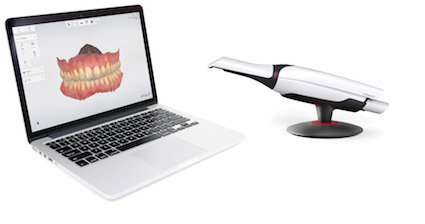
Concepts like digital smile design embrace engagement with a patient throughout the integral process of planning treatment for aesthetic and functional results. Digital smile design has pushed the potential of digital dentistry further than ever before, creating a solution that brings communication to the forefront of the procedure and enhances patient satisfaction with their treatment.
A personal journey
Undergoing aesthetic smile alterations can be an incredibly intimate process for patients. The effect a person’s oral-facial appearance has on their mental health and anxieties is paramount, with a deterioration in dental appearance increasing general anxiety.[i] The connection between a person’s smile and their interpersonal relationships has been discussed in various studies, with poorer dental aesthetics, including darkened or discoloured teeth, detrimentally affecting outward connection with others.[ii] A dentist therefore holds immense responsibility in any stage of helping to construct a new smile.
Any type of dental treatment could be a cause for dental anxiety amongst patients, which could have ramifications on general quality of life.[iii] Using a digital smile design approach that helps patients preview a result can affect them on an emotional level, increasing trust and confidence in a procedure.[iv] A practitioner can then help them realise the importance of the proposed treatment not only for cosmetic purposes, but for their general oral health too.
If a dentist has considered the psychological, biological and mechanical factors that are fundamental in creating a pleasing smile,[v] they can more effectively create a positive outcome for the patient.
Improving care with digital systems
In creating a simulation of a prospective smile after treatment, this allows for a collaborative experience between dentist and patient, helping to increase treatment acceptance rates.[vi] All treatment plans are optimised when the patient can adequately visualise their current condition and predicted treatment outcome.[vii] By sending patients home with knowledge of how their smile will look in the end, they can share prospective results with family and friends, reassuring them of their choice of treatment.[viii]
Digital smile design relies on an accurate and informative collection of scans and photographs to begin a treatment journey.[ix] Intraoral scanners are the key to simultaneously ensuring a high standard of care, whilst providing comfort and efficiency to the patient.
Most patients have been found to prefer intraoral scanning to conventional methods of impressions. This is a result of reduced patient discomfort,[x] with factors ranging from perceived tastes[xi] and feelings of control, as opposed to helplessness, during the procedure.[xii]
Communicating effectively
From the clinician’s perspective, intraoral scanners have been found to save time in treatment preparation. Initial scans can be checked immediately by the dentist, and can be communicated with speed online to technicians. This eliminates the extended transportation times and the associated costs that come with processing and transporting physical impressions.[xiii] If retakes are needed dentists can know before the patient has left the chair, reducing the need to call them back for new impressions,[xiv] and allowing a patient to see their prospective new smile sooner.
The initial scan can be communicated digitally throughout the process to all technicians or dental professionals involved by referral. Practitioners can create an all-encompassing package, with necessary details dependent on the procedure; tooth positions can be assessed for implants, tooth shape and colour for restorative work. Notes on patient preferences and needs can be added throughout the treatment planning phase, enhancing the general information available to all members of the team working on the case. This will make it possible to tailor the plan accordingly and remain agile to conversations with the patient in order to create a better result that matches or exceeds the patient’s expectations.
To create the best digital smile design process for patients, dentists should consider using intraoral scanners that provide high quality scans and allow for speed in the creation and communication of impressions.
The right tools for the job
The 3Shape TRIOS® intraoral scanner, available from the Straumann Group, provides high end digital impressions and ensures an accurate result every time. Its lean design makes scanning a pleasurable experience for the clinician, and a comfortable and swift one for patients. Smile design is also made simple with TRIOS engagement apps, which allow for easy patient communication with detailed and accessible visuals, boosting case acceptance. Visit the Straumann Digital Knowledge Portal to access a multitude of resources and training materials, including e-learning courses to help you make the most of the equipment and the digital smile design concept.
To provide communicative and personal dental care, dentists may consider digital smile design as a revolutionary way to ensure patients leaving their chair are excited for treatment, not anxious. With leading equipment and software at their fingertips, dental professionals can provide the best communication, experience and treatment for anyone in their practice.

For more information on the 3Shape TRIOS® Intraoral Scanner range from the Straumann Group, visit: https://www.straumann.com/gb/en/dental-professionals/products-and-solutions/cares-digital-solutions/equipment/io-scanners/3shape-trios.html
[i] Metin-Gürsoy, G., Haciomeroglu, A.B., Kale-Varlık, S., Tortop, T., (2023). Evaluation of the relationship between anxiety levels and dental appearance. Journal of Clinical Pediatric Dentistry [Online] Available at: https://oss.jocpd.com/files/article/20230314-1699/pdf/JOCPD2022110601.pdf [Accessed April 2023]
[ii] Espíndola-Castro, L.F., Monteiro, G.Q.d.M., Ortigoza, L.S., da Silva, C.H.V, Souto-Maior, J.R., (2019). Multidisciplinary Approach to Smile Restoration: Gingivoplasty, Tooth Bleaching, and Dental Re-anatomization. Compendium, 40(9) [Online] Available at: https://www.aegisdentalnetwork.com/cced/2019/10/multidisciplinary-approach-to-smile-restoration-gingivoplasty-tooth-bleaching-and-dental-re-anatomization [Accessed April 2023]
[iii] Vermaire, J.H., De Jongh, A. Aartman, I.H.A., 2008. Dental anxiety and quality of life: the effect of dental treatment. Community Dentistry and Oral Epiemiology, 36(5), pp409-416 https://onlinelibrary.wiley.com/doi/abs/10.1111/j.1600-0528.2007.00416.x
[iv] Jafri, Z., Ahmad, N., Sawai, M., Sultan, N., Bhardwaj, A., (2020) Digital Smile Design-An innovative tool in aesthetic dentistry. Journal of Oral Biology and Craniofacial Research, 10(2), pp194-198
[v] Alikhasi, M., Yousefi, P., Afrashtehfar, K.I., (2022). Smile Design: Mechanical Considerations. Dental Clinics of North America, 66(3), pp477-487
[vi] Alikhasi, M., Yousefi, P., Afrashtehfar, K.I., (2022). Smile Design: Mechanical Considerations. Dental Clinics of North America, 66(3), pp477-487
[vii] Jafri, Z., Ahmad, N., Sawai, M., Sultan, N., Bhardwaj, A., (2020) Digital Smile Design-An innovative tool in aesthetic dentistry. Journal of Oral Biology and Craniofacial Research, 10(2), pp194-198
[viii] Prafulla, T., (2014). Evaluation of function and esthetics for creating a beautiful smile in dental practice using digital smile designing. Journal of Interdisciplinary Dentistry, 4(3), pp144-147
[ix] Tallarico, M., (2020). Computerization and Digital Workflow in Medicine: Focus on Digital Dentistry. Materials, 13(9) [Online] Available at: https://doi.org/10.3390/ma13092172 [Accessed Apr 2023]
[x] Mangano, F., Gandolfi, A., Luongo, G., Logozzo, S., (2017). Intraoral scanners in dentistry: a erview of the current literature. BMC Oral Health, 17. [Online] Available at: https://doi.org/10.1186/s12903-017-0442-x [Accessed Apr 2023]
[xi] Wismeijer, D., Mans, R., van Genuchten, M., Reijers, H.A., (2013). Patients’ preferences when comparing analogue implant impressions using a polyether impression material versus digital impressions (Intraoral Scan) of dental implants. Clinical oral implants research, 225(10), pp 1113-1118
[xii] Schepke, U., (2018). Restorative dentistry done digitally: Implementation and evaluation of some digital tools in contemporary implant dentistry. [Thesis fully internal (DIV), University of Groningen]. Rijksuniversiteit Groningen. [Online] Available at: https://research.rug.nl/en/publications/restorative-dentistry-done-digitally-implementation-and-evaluatio [Accessed Apr 2023]
[xiii] Zimmerman, M., Mehl, A., Mörmann, W.H., Reich, S., (2015). Intraoral scanning systems – a current overview. International Journal of Computerized Dentistry, 18(2), pp101-129
[xiv] Mangano, F., Gandolfi, A., Luongo, G., Logozzo, S., (2017). Intraoral scanners in dentistry: a review of the current literature. BMC Oral Health, 17. [Online] Available at: https://doi.org/10.1186/s12903-017-0442-x [Accessed Apr 2023]







