


Reducing the likelihood of secondary caries development
Featured Products Promotional FeaturesPosted by: Dental Design 6th October 2023
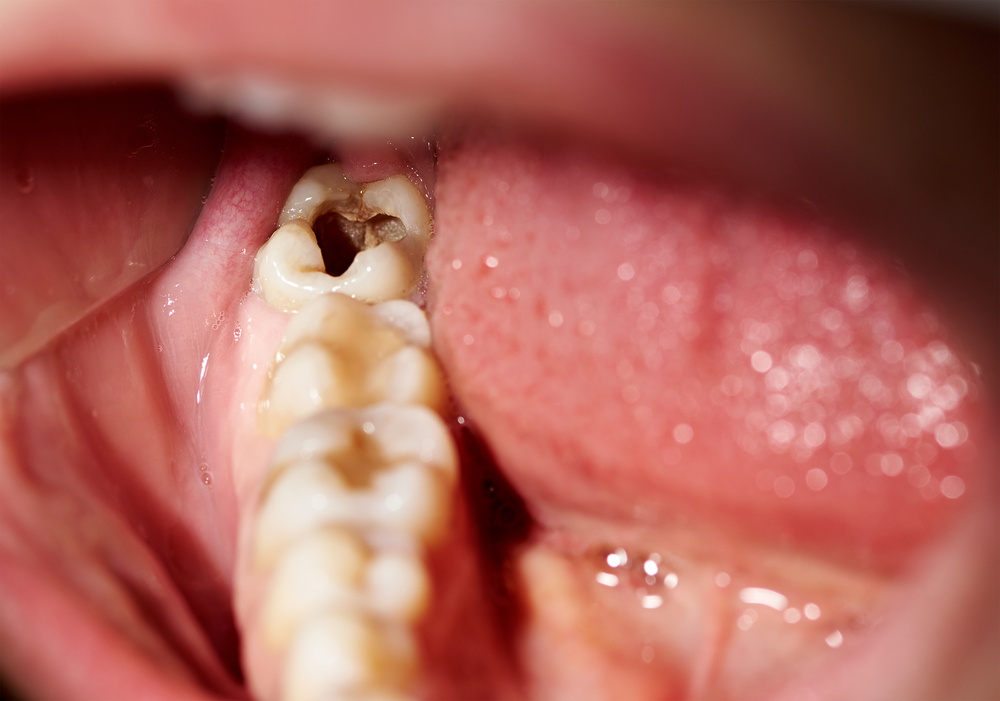
When restoring teeth, it is important to consider the factors which could affect the longevity of the restoration. Patients who present with caries may require the removal of the infected tissue, and the subsequent filling of the cavity, restoring the functionality and aesthetics of the tooth. However, this may not be the end of the issues for all patients. Should the tooth develop secondary caries, it is likely to require removal of the restorative material and re-treatment, followed by another restoration.
Patients who are particularly susceptible to caries may expect additional procedures, requiring more invasive restorative treatments each time. Clinicians should consider the ways they might reduce the amount of treatment a patient needs, and extend the life of the natural tooth.
Prevalence of secondary caries
Within restorative dentistry, the prevention of secondary caries is expected to be an important issue over the coming years. This is because secondary caries is noted as being the most common cause of restoration failure, regardless of the material used. This can mean that a lot of time is spent re-treating previously restored teeth, costing both patients and clinician’s money and time. In addition to this, the replacement of restorative material can weaken the structure of the tooth, accelerating the restorative cycle, eventually leading to the loss of the tooth.[i]
Secondary caries can be caused by the same patient-related factors as primary caries, with oral hygiene, diet, and smoker status having an impact. The restoration itself may also contribute to the development of secondary caries. Research suggests that the presence of the restoration itself can lead to secondary caries, as well as the type of restorative material used.i
Slowing the restorative cycle
Methods for detecting caries are relatively inaccurate, meaning that, sometimes, caries can go undetected until it has progressed to a more severe stage. The philosophy behind minimally invasive dentistry requires intervention to conserve the natural structure of teeth,[ii] preventing the need for more invasive treatments for as long as possible. Secondary caries is one of the major reasons for replacement of restorations, it is able to speed up the destructive restorative cycle. Because of this, it’s important for clinicians and patients to do all they can to reduce the risk of secondary caries development.i
A minimally invasive approach prioritises disease prevention, remineralisation, and minimal intervention when both placing and replacing restorations. To undertake this type of treatment approach, clinicians should use the least invasive surgical procedure, removing as little healthy tissue as possible – removing the infected tissue and restoring the tooth in the most appropriate way for the case.ii
Choice of material
 One study found that the estimated prevalence of secondary caries was 3.6%. It saw that restorative material, restoration class, caries risk, and smoker status were important factors. This was because incidence of secondary caries was more common in patients with composite restorations and class II restorations, as well as in those who were susceptible to caries and who were smokers. When composite and amalgam fillings are compared, secondary caries is more common in teeth with composite fillings.i As such, clinicians should carefully consider the material used in each individual case, taking into account patient related factors which may have an impact on the development of secondary caries.
Research suggests that fluoride releasing restorative materials encourage the uptake of fluoride ions by the dental tissues. This results in a cariostatic effect, providing the dentine with protection, preventing the development of secondary caries, as well as encouraging effective adhesion between the dental structure and the restorative material.[iii]
3M Oral Care offers a range of solutions which allow clinicians to provide high-quality restorative care to their patients. The 3M Ketac Universal Aplicap Glass Ionomer Restorative from 3M Oral Care is the ideal solution for protecting the long-term health of restored teeth. The material continuously releases fluoride for 24 months*, constantly remineralising the natural tooth structure to protect against the development of secondary caries. Additionally, 3M Ketac Universal Aplicap Glass Ionomer Restorative from 3M Oral Care is suitable for a wide range of cases, available in 6 shades and appropriate for extended indications compared to other glass ionomer materials.
To provide patients with long-lasting restorative solutions, it’s important to consider all of the factors which may have an impact. Restorative material can have a significant influence on the susceptibility to secondary caries – with some types leading to a reduced longevity of the restoration, and others releasing fluoride over a long period of time, to help prevent the development of secondary caries. Clinicians should also ensure that patients understand the effects that their habits may have on their restoration.

For more information, call 08705 360 036 or visit www.go.3M.com/ocsdpr
3M is a trademark of the 3M Company.
* 3M Internal data
Please scan for the:

Latest news on education, webinars and events
FREE clinical samples – try before you buy
Save with current sales promotions
About 3M
At 3M, we apply science in collaborative ways to improve lives daily. With $34.2 billion in sales, our 92,000 employees connect with customers all around the world.
The UK is home to one of the largest 3M subsidiaries outside the USA, employing around 1,900 people across 12 locations, including four manufacturing sites.
Products manufactured in the UK include coated abrasives, personal safety equipment and adhesive tapes.
As a strategic partner of the British Science Association and a sponsor of WeAreTheCity Rising Star Awards in Science and Engineering, 3M is a passionate advocate for diversity, equity and inclusion in STEM (Science, Technology, Engineering and Maths).
Learn more about 3M’s creative solutions to the world’s problems at 3M.co.uk or follow @3MUK on Twitter or 3m.uk on Instagram.
[i] Nedeljkovic, Ivana, et al. “Secondary caries: prevalence, characteristics, and approach.” Clinical oral investigations 24 (2020): 683-691.
[ii] White, Joel M., and W. Stephan Eakle. “Rationale and treatment approach in minimally invasive dentistry.” The Journal of the American Dental Association 131 (2000): 13S-19S.
[iii] Ikemura, Kunio, et al. “A review of chemical-approach and ultramorphological studies on the development of fluoride-releasing dental adhesives comprising new pre-reacted glass ionomer (PRG) fillers.” Dental materials journal 27.3 (2008): 315-339.







