


A combination of strength and beauty for restorative treatment
Featured Products Promotional FeaturesPosted by: Dental Design 4th October 2023
Sparked by a growing interest in improving the aesthetic results of dental treatment, along with concerns about allergic reactions to some types of restorative material, there has been an increasing demand for a metal-free and tooth coloured restorative material. In this search, there was also much concern about the strength of existing restorative solutions. Particularly in prosthetic dentistry, using a material which is both highly aesthetic and strong is key. Addressing all of these concerns, zirconia has become a popular choice in restorative dentistry and is used across a number of indications including the fabrication of endodontic posts, crown and bridge restorations, and implant abutments.[i]
Benefits of zirconia in restorative dentistry
Along with its ability to meet the growing demands from patients for aesthetic, metal-free dentistry, zirconia presents a number of benefits when used as a dental material. Zirconia offers biocompatibility, chemical stability, mechanical strength, and has aesthetic characteristics. Because of these unique advantages, it has become a very popular choice amongst both patients and dentists. The material’s strength and durability makes it resistant to chipping, making it the ideal choice in many cases.[ii]
Research also supports zirconia as a long-lasting solution, with one study reporting that zirconia bridges had a survival rate of 86% after three years, and the highest initial and long-term strength, performing well when compared to other restorative materials.i In recent years, the materials and methods used in the cementation of zirconia have also improved, further facilitating the use of this material in restorative dentistry – particularly when providing crowns supported by a dental implant, or a fixed dental prosthesis.[iii]
Challenges of altering zirconia restorations
While zirconia is a material of choice for many practitioners due to its unique properties, these can make it a difficult material to work with using conventional instruments. For example, should a restoration require an adjustment, or need to be removed or replaced, clinicians may come across issues.[iv]
It is estimated that between 3% and 6.5% of crowned abutment teeth require endodontic treatment in the 7 years following crown placement. Because of this, the zirconia restoration may need to be removed or adjected to facilitate the procedure. While this may not be a challenge for other crown materials, because of their strength, the removal of zirconia can prove difficult and can be a time-consuming procedure in itself.iv Due to the added challenge, there may be a risk of increased pressure raising the temperature and damaging the pulp.
Using the right tools for effective removal
To reduce any risk to the health of the remaining dentition, there are a number of factors that should be considered. Firstly, the load applied by the clinician during the procedure, the design of the diamond rotary instrument used, the revolutions per minute (rpm), and the type of coolant. Because zirconia is a hard material, it is likely that clinicians will increase the load applied, with an aim to improve cutting efficiency.iv
By selecting the most appropriate tools for the case, zirconia cutting will become easier, and more effective – and will likely reduce the risks of problems for your patients. To polish and adjust zirconia restorations, fine diamond and ceramic polishers are most often used. However, when removing zirconia crowns, diamond rotary instruments which are designed specifically for this purpose are best suited, as they are shown to be more effective than traditional diamond burs.[v]
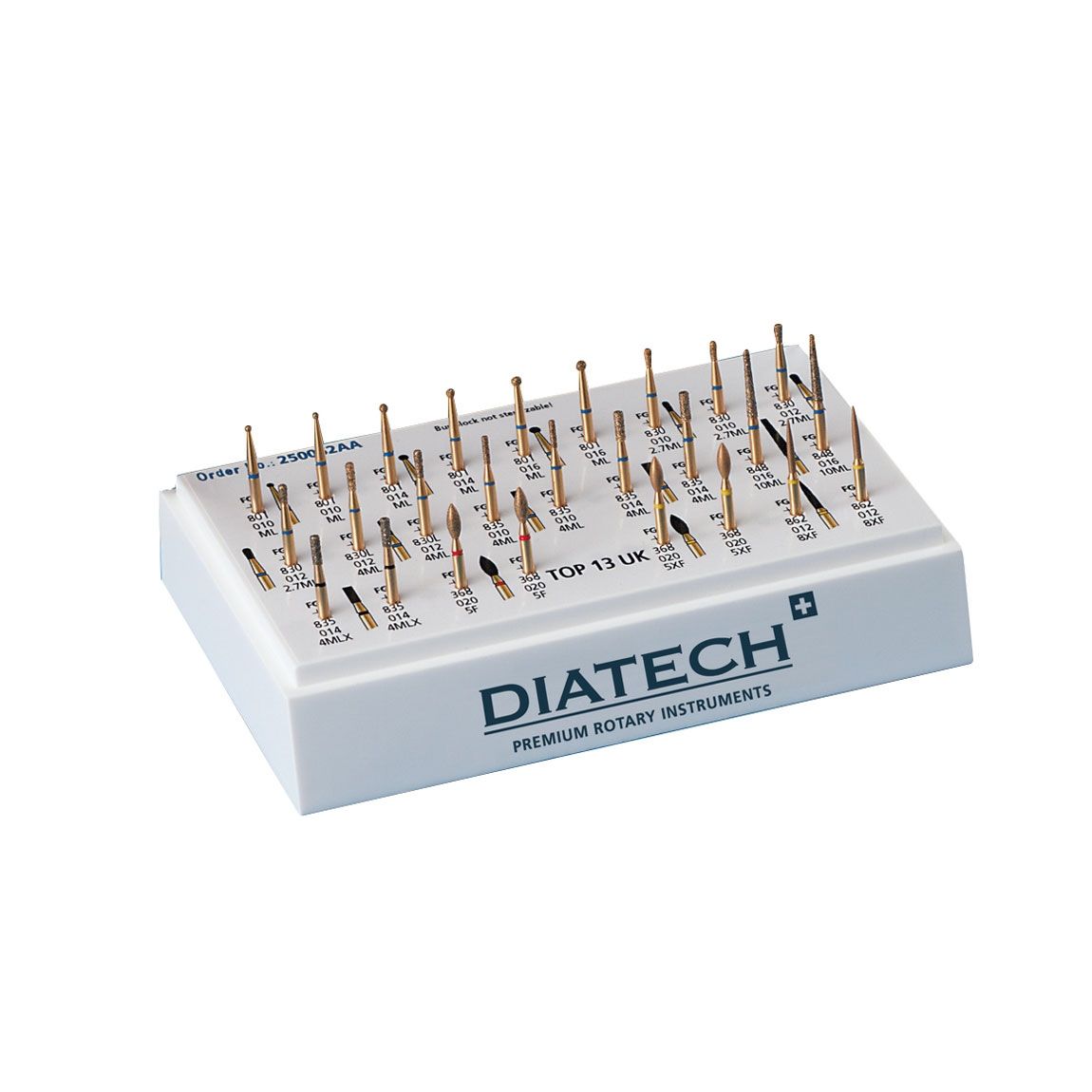
Research suggests that, to combat the challenges presented by zirconia, and therefore make it the material of choice when discussing restorative options with patients, having the right tools on hand is key. COLTENE offers a wide range of DIATECH Multilayer Diamond instruments, including the DIATECH Z-Rex range. It is the ideal solution, making it straightforward to adjust, trepan, or remove high-performance ceramic restorations such as zirconia. The range features a unique synthetic diamond mixture which delivers durability and efficiency, and the instruments are available in two grits, to reduce the likelihood of micro-fractures and to offer improved cutting-efficiency.
Zirconia presents a number of unique benefits for restorative dentistry. Its strength makes it an excellent choice for dental prosthetics, and it also provides patients with desirable aesthetics not usually achieved with other materials, such as metal. However, because it is strong, it can be challenging to remove if there is an issue. For instance, if a clinician needs access to the tooth abutment to perform root canal treatment, it may be challenging to remove the material first. If clinicians have the tools necessary on hand to remove the material safely and effectively, they will be in a good position to provide their patients with the best possible care.

For more on COLTENE, visit www.coltene.com, or call 0800 254 5115.
COLTENE loyalty scheme https://rewards.coltene.com

Nicolas Coomber COLTENE National Account & Marketing Manager
[i] Madfa, Ahmed A., et al. “Use of zirconia in dentistry: An overview.” The Open Biomaterials Journal 5.1 (2014).
[ii] Khanlar, Leila Nasiry, et al. “Additive manufacturing of zirconia ceramic and its application in clinical dentistry: A review.” Dentistry journal 9.9 (2021): 104.
[iii] Alqutaibi, Ahmed Yaseen, et al. “Revolution of current dental zirconia: A comprehensive review.” Molecules 27.5 (2022): 1699.
[iv] Hunziker, Severin, et al. “Evaluation of diamond rotary instruments marketed for removing zirconia restorations.” The Journal of Prosthetic Dentistry (2022).
[v] Lawson, Nathaniel C., et al. “Zirconia restorations: an American dental association clinical evaluators panel survey.” The Journal of the American Dental Association 152.1 (2021): 80-81.
Sparked by a growing interest in improving the aesthetic results of dental treatment, along with concerns about allergic reactions to some types of restorative material, there has been an increasing demand for a metal-free and tooth coloured restorative material. In this search, there was also much concern about the strength of existing restorative solutions. Particularly in prosthetic dentistry, using a material which is both highly aesthetic and strong is key. Addressing all of these concerns, zirconia has become a popular choice in restorative dentistry and is used across a number of indications including the fabrication of endodontic posts, crown and bridge restorations, and implant abutments.







