


Balancing speed and quality in implant dentistry
News Promotional FeaturesPosted by: Dental Design 17th October 2023
Implant dentistry has grown with the demands of patients, who now expect impressively natural looking aesthetic solutions, sooner rather than later.[i] Immediate implants were born out of this pressure, and have become a revolutionary way to deliver effective results to patients.
The procedure is no easy feat, however, and only experienced implant dentists are able to offer it. Even in the hands of a consummate professional, there are a variety of factors that must be considered to confidently know that a patient is suited to the treatment.
The effect on patients
For all their difficulties, immediate implants can deliver advantageous results. Performing implant placement immediately after an extraction helps to shorten treatment times, by negating the wait for healing first. The conventional healing period required before placing an implant following an extraction is commonly around 3-6 months.[ii] Conventional loading methods similarly follow a healing period of 4-6 months after an implant has been placed,[iii] meaning a patient could theoretically be without a permanent prosthesis for a year or more in some cases.
Immediately placing and loading an implant can improve the QoL of patients that undergo restoration of anterior teeth.[iv] These teeth are not only fundamental for physiological functions such as chewing and speech, but their visible nature means they could severely impact a patient’s confidence when talking or smiling if left as a gap for some time. Of course, a delayed approach could still be most appropriate for some patients, or sites that aren’t necessarily visible.
Structural considerations
 A dentist should consider various factors for a patient’s suitability for treatment, be it immediately placed or delayed. If a patient’s bone structure is not sufficient, an immediate treatment is at risk of failing to achieve primary stability.[v] Without this, osseointegration of the implant after placement is not necessarily impossible, but the corresponding success rate suffers greatly.[vi]
Some clinicians have suggested a crest width of 4 to 5 mm and a height of 10 mm or more is the minimum for predictable immediate implant surgery.[vii] This ensures an implant is stable, whilst not intruding on vital anatomical structures such as the mandibular canal, maxillary sinus or nasal floor.[viii] Each patient is different, and this should not be used as a steadfast rule; it should inform the treatment choice, to be both effective and safe.
The site of the extraction and subsequent implant should also be considered. The reliability of a successful implant when treating posterior teeth may be lower, in some cases below 75% when immediately implanting in molar extraction sites, for example. Achieving primary stability here may be more difficult due to the thin interradicular bony septum.[ix]
If a patient doesn’t present a promising bone quality and quantity, a delayed implant approach could allow for a bone graft, following which the implant would be placed. Alternatively, the bone graft and implant could be placed simultaneously, whilst achieving comparable results,[x] in a shorter time period.
Immediate loading
As previously discussed, immediately loading the implant can have a dramatic effect on a patient’s QoL, and this is especially the case when replacing anterior teeth. However, a patient’s suitability for immediate loading should be considered on a case-by-case basis. For instance, the increased occlusal force upon the posterior teeth could increase the risk of implant failure. Delayed implant loading could be a safer approach when treating these non-visible teeth that bear a greater occlusal load,[xi] as the implant can be integrated without these external forces taking effect.
A patient’s oral hygiene, parafunctional habits and diet can all affect the success of an implant, regardless of the placement and loading treatments employed.[xii] An entire overview of a patients oral health status can suitably inform their treatment plan and the necessary clinical approaches to their implant.
Immediate implant loading is affected largely by precise treatment planning and the components used. A clinician should load the suitable abutment and crown, be it a permanent or temporary prosthesis, at the right time, with consideration for the patient’s bone structure and uniquely adapted treatment plan. Ensuring clinicians are equipped with the appropriate equipment allows for confidence in a successful treatment outcome.
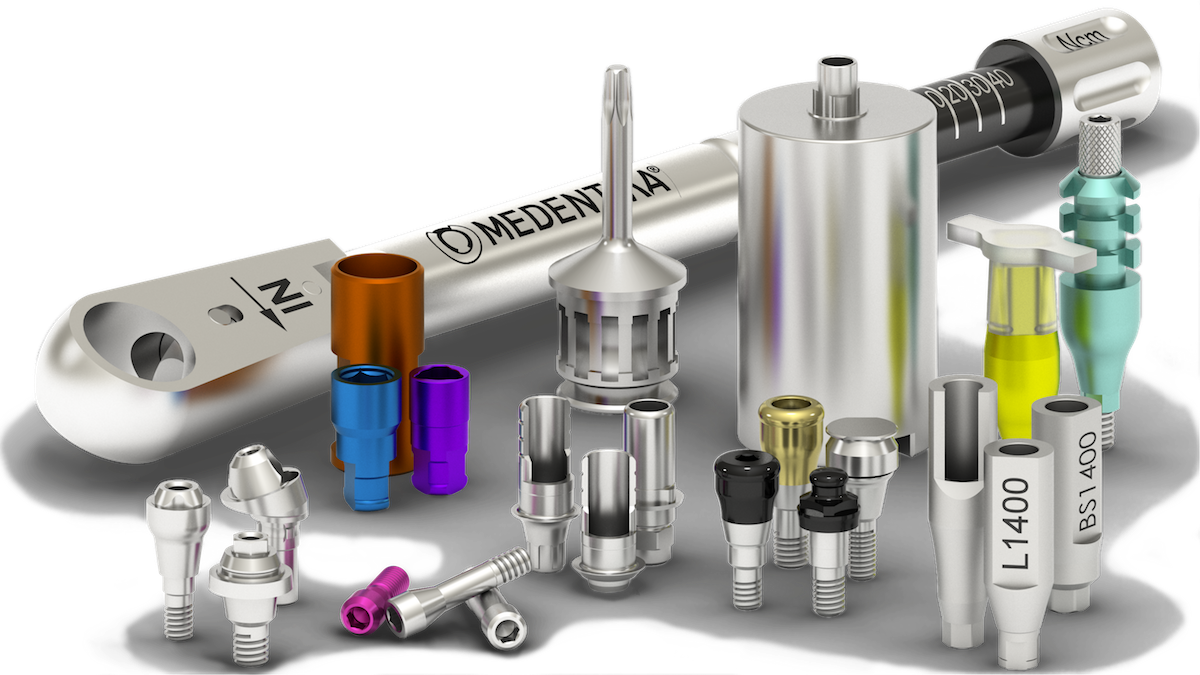
A reliable and accurate solution is the Multi Platform Systems (MPS) range from Medentika®, a Straumann Group brand. The MPS portfolio provides abutments and components that connect seamlessly with all major implant systems. Born out of German precision, the abutments are versatile and well structured, with permanent and temporary options that can be customised to provide all the tools for a successfully immediately loaded implant.
Understanding a patient’s expectations, unique bone structures and habits means dentists can provide personalised and successful care. Immediately placed and loaded implants should be employed when clinicians recognise it is the right choice for their patient’s situation, who can reap the benefits of an aesthetic and functional smile, sooner.

For more information, please visit
https://www.straumann.com/medentika/us/en/dentistry.html
[i] Flanagan, D., Fisher, A., Ciardiello, C., Moreno, V., Pierce, D., Uvalic, A., … & Lykotrafitis, G. (2021). A theoretical iteration for predicting the feasibility for immediate functional dental implant loading. Journal of Oral Implantology, 47(4), 310-317.
[ii] Avila‐Ortiz, G., Chambrone, L., & Vignoletti, F. (2019). Effect of alveolar ridge preservation interventions following tooth extraction: A systematic review and meta‐analysis. Journal of Clinical Periodontology, 46, 195-223.
[iii] Ghalaut, P., Shekhawat, H., & Meena, B. (2019). Full-mouth rehabilitation with immediate loading basal implants: A case report. National journal of maxillofacial surgery, 10(1), 91.
[iv] Chen, Z., Zhang, S., Zhou, J., & Liang, H. (2022). Immediate versus Delayed Implantation for Single-Tooth Restoration of Maxillary Anterior Teeth: A Comparative Analysis on Efficacy. Computational and Mathematical Methods in Medicine, 2022.
[v] Javed, F., Ahmed, H. B., Crespi, R., & Romanos, G. E. (2013). Role of primary stability for successful osseointegration of dental implants: Factors of influence and evaluation. Interventional Medicine and Applied Science, 5(4), 162-167.
[vi] Javed, F., Ahmed, H. B., Crespi, R., & Romanos, G. E. (2013). Role of primary stability for successful osseointegration of dental implants: Factors of influence and evaluation. Interventional Medicine and Applied Science, 5(4), 162-167.
[vii] Koh, R. U., Rudek, I., & Wang, H. L. (2010). Immediate implant placement: positives and negatives. Implant dentistry, 19(2), 98-108.
[viii] Koh, R. U., Rudek, I., & Wang, H. L. (2010). Immediate implant placement: positives and negatives. Implant dentistry, 19(2), 98-108.
[ix] Meijer, H. J., & Raghoebar, G. M. (2020). Immediate implant placement in molar extraction sites: a 1-year prospective case series pilot study. International journal of implant dentistry, 6(1), 1-7.
[x] Slagter, K. W., Meijer, H. J., Hentenaar, D. F., Vissink, A., & Raghoebar, G. M. (2021). Immediate single‐tooth implant placement with simultaneous bone augmentation versus delayed implant placement after alveolar ridge preservation in bony defect sites in the esthetic region: A 5‐year randomized controlled trial. Journal of Periodontology, 92(12), 1738-1748.
[xi] Skvirsky, Y. (2020). 5 questions to ask before choosing between delayed and immediate dental implant loading. Dentistry IQ. (Online). Available at: https://www.dentistryiq.com/dentistry/implantology/article/14168513/5-questions-to-ask-before-choosing-between-delayed-and-immediate-dental-implant-loading [Accessed May 2023]
[xii] George, J., Paulose, A., Devassy, J. P., & George, J. (2021). Immediate loading in implant Dentistry: A review. The Journal of Prosthetic and Implant Dentistry, 4(3), 118-22.







