


Having the right tools for the job
Featured Products Promotional FeaturesPosted by: Dental Design 11th December 2023
Precise dental measurements are vital for successful diagnostics, treatment and patient care
“A good tool improves the way you work. A great tool improves the way you think,” so says Jeff Duntemann, the American technology author. That’s food for thought in the world of dentistry, where the rapid advancements in technology have given rise to cutting-edge measuring tools that not only enhance accuracy but also improve efficiency in the way dentists apply their skills.
Take digital scanners for example. These have become an integral part of the dental industry, offering dentists a faster, more accurate, and less invasive alternative to traditional impression techniques. These devices utilise optical scanning technology to create a detailed digital impression of the patient’s oral cavity. The digital data captured by these scanners can be easily transferred to CAD/CAM systems, eliminating the need for manual model fabrication. This trend has significantly improved treatment workflows by increasing efficiency and reducing patient discomfort.[i]
Then there’s three-dimensional (3D) imaging technology which has transformed the way dentists diagnose and treat their patients. Cone Beam Computed Tomography (CBCT) scanners are now widely used in advanced dentistry, enabling dentists to capture high-resolution 3D images of the patient’s teeth, jawbones, and surrounding structures. These detailed images provide an accurate depiction of the oral anatomy, allowing for precise measurements and enhanced treatment planning.[ii] CBCT scanners have become essential in implant dentistry for preoperative planning, as they enable clinicians to assess bone quality, identify anatomical landmarks, and plan dental implant placement.
 Laser technology has found its place in dentistry too, offering a new dimension in measuring and treatment procedures. Lasers are now utilised in various applications, including caries detection, soft tissue management, cavity preparations and tooth whitening. Laser fluorescence devices are used to detect early stages of dental decay by measuring light-induced fluorescence from demineralised tooth structures.[iii] This non-invasive method allows for early detection and intervention, preventing the progression of caries and minimising the need for extensive restorative procedures. Laser-assisted surgical techniques, such as soft tissue laser ablation, provide precise incisions, minimal bleeding and accelerated healing times.[iv]
Intraoral scanners (IOS) have also been widely adopted in dentistry, allowing dentists to capture high-quality images of the oral cavity. These scanners are handheld devices and provide instant visualisation of the patient’s teeth and soft tissues on a monitor. Dentists can zoom in on specific areas, capturing images for further analysis and treatment planning. IOS play a crucial role in patient education, as these images can be displayed on a screen, allowing patients to understand and visualise their oral health conditions.v They also have helped in transforming the relationship between the dentist and the dental lab.[v]
The emergence of smart measuring tools has upgraded the way dental professionals gather and analyse data. Bluetooth-enabled devices, such as smart calipers,[vi] enable practitioners to capture measurements directly from the patient’s mouth and wirelessly transfer the data to their digital records. These devices streamline workflows, significantly reduce human error, and enhance accuracy by eliminating the need for manual entry. Smart measuring tools also facilitate better communication and collaboration among dental teams, as the measurements are easily accessible and shareable.
In endodontics, a key aid is the operating microscope as an alternative to the conventional dental loupe. The human eye is not able to distinguish between two points separated by a minimum distance of 0.1mm – it will see them as a single image.[vii] By using an operating microscope, the power of resolution increases from 0.1mm to 0.005mm equal to 5 microns, thus making the human eye able to observe more details. Dental operating microscopes help endodontic specialists carry out enhanced restorative treatments due to their precision. A magnified image can help them to better check a number of issues including cavity preparations, matrix fitting, saliva infiltration and remaining dentine debris.[viii]
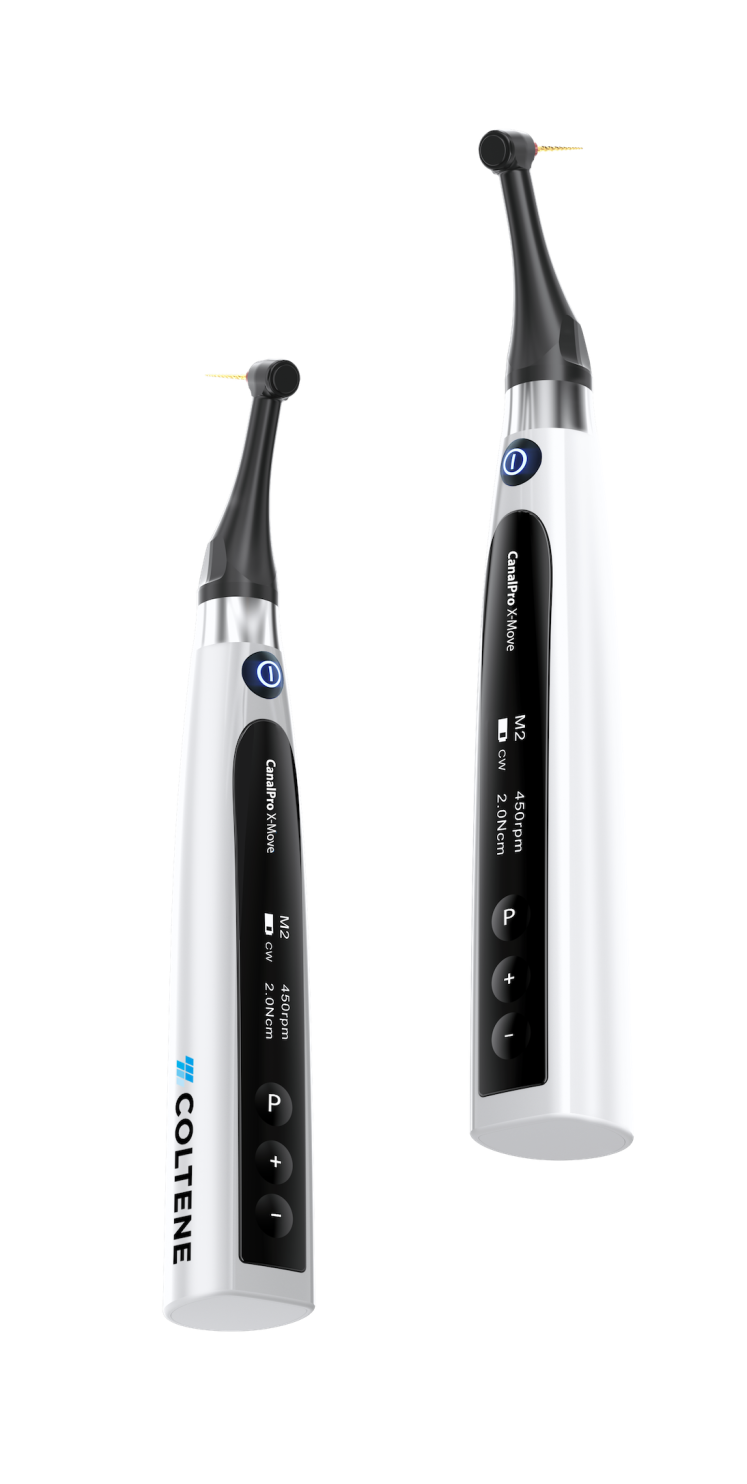
When it comes to measuring the canal length in preparation for root canal treatment, the cordless CanalPro X-Move endomotor from COLTENE has transformed the way root canal treatments are carried out. It can be used as an endodontic motor for preparation of the root canal and as an apex locator device to determine the root canal working length. Other features include an insulated contra angle with super mini-head and slim neck and an intuitive user interface with pre-programmed file settings for COLTENE files. Its versatility helps to ensure optimal treatment outcomes for all patients.
The advent of advanced measuring tools has brought a new era in dentistry, revolutionising the way clinicians gather data, plan treatments, and deliver patient care. As technology continues to evolve, it is imperative for dentists to stay up to date and incorporate the latest tools into their practice to provide the best possible care for their patients.

For more information, info.uk@coltene.com and 0800 254 5115
COLTENE loyalty scheme
Mark Allen
Author: Mark Allen, General Manager at COLTENE

[i] Mangano F, Gandolfi A, Luongo G, Logozzo S. Intraoral scanners in dentistry: a review of the current literature. BMC Oral Health. 2017 Dec 12;17(1):149. doi: 10.1186/s12903-017-0442-x. PMID: 29233132; PMCID: PMC5727697. [Accessed August 2023]
[ii] Mosavat, F., Ahmadi, E., Amirfarhangi, S. et al. Evaluation of diagnostic accuracy of CBCT and intraoral radiography for proximal caries detection in the presence of different dental restoration materials. BMC Oral Health 23, 419 (2023). https://doi.org/10.1186/s12903-023-02954-8 [Accessed August 2023]
[iii] Verma SK, Maheshwari S, Singh RK, Chaudhari PK. Laser in dentistry: An innovative tool in modern dental practice. Natl J Maxillofac Surg. 2012 Jul;3(2):124-32. doi: 10.4103/0975-5950.111342. PMID: 23833485; PMCID: PMC3700144. [Accessed August 2023]
[iv] Kohale BR, Agrawal AA, Raut CP. Effect of low-level laser therapy on wound healing and patients’ response after scalpel gingivectomy: A randomized clinical split-mouth study. J Indian Soc Periodontol. 2018 Sep-Oct;22(5):419-426. doi: 10.4103/jisp.jisp_239_18. PMID: 30210191; PMCID: PMC6128133. [Accessed August 2023]
[v] Christopoulou I, Kaklamanos EG, Makrygiannakis MA, Bitsanis I, Perlea P, Tsolakis AI. Intraoral Scanners in Orthodontics: A Critical Review. Int J Environ Res Public Health. 2022 Jan 27;19(3):1407. doi: 10.3390/ijerph19031407. PMID: 35162430; PMCID: PMC8834929. [Accessed August 2023]
[vi] Pocket Dentistry https://pocketdentistry.com/assessing-agreement-in-measurements-of-orthodontic-study-models-digital-caliper-on-plaster-models-vs-3-dimensional-software-on-models-scanned-by-structured-light-scanner/ [Accessed August 2023]
[vii] Alfredo Iandolo, Giuseppe Iandolo, Mariano Malvano, Giuseppe Pantaleo, Michele Simeone,
Modern technologies in Endodontics, Giornale Italiano di Endodonzia, Volume 30, Issue 1, 2016, Pages 2-9, ISSN 1121-4171, https://doi.org/10.1016/j.gien.2015.12.001. (https://www.sciencedirect.com/science/article/pii/S1121417115000308) [Accessed August 2023]
[viii] Bud M, Jitaru S, Lucaciu O, Korkut B, Dumitrascu-Timis L, Ionescu C, Cimpean S, Delean A. The advantages of the dental operative microscope in restorative dentistry. Med Pharm Rep. 2021 Jan;94(1):22-27. doi: 10.15386/mpr-1662. Epub 2021 Jan 29. PMID: 33629044; PMCID: PMC7880065. [Accessed August 2023]







