


A modern approach to tooth decay
Featured Products Promotional FeaturesPosted by: Dental Design 4th January 2024
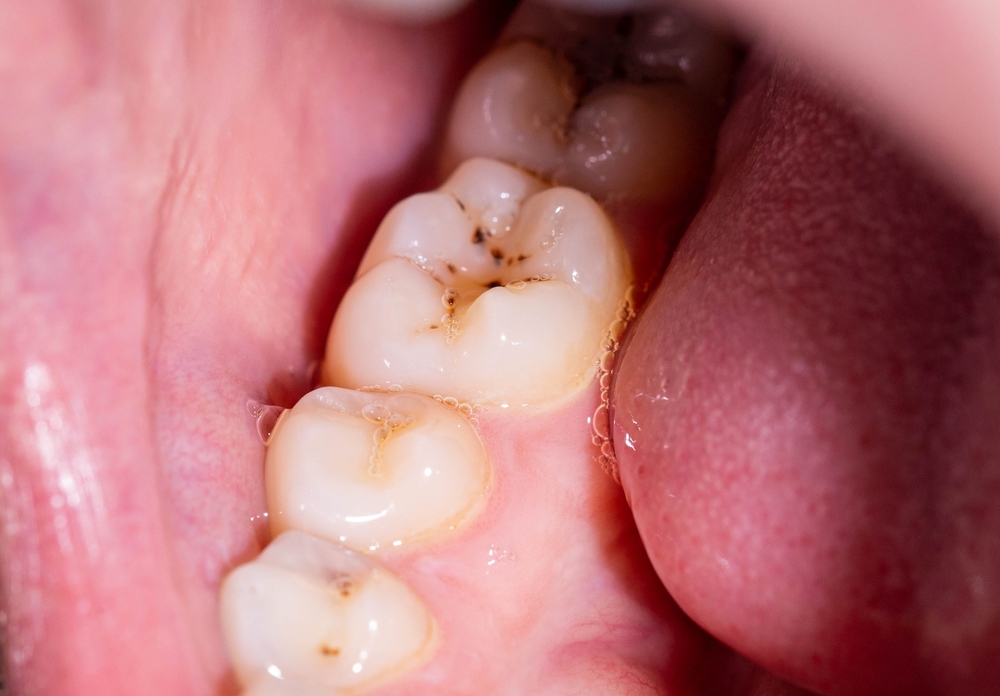
Minimally invasive dentistry isn’t out to reinvent the wheel. It is close to a clinical philosophy, believing that, where at all possible, acting to maximise the preservation of the natural dentition is extremely beneficial.
It’s been defined by some as a biological or medical approach to dentistry, notably that of caries treatment, as opposed to traditional surgical or mechanical principles.[i] Now a popular approach carried out by many clinicians in their daily work, it’s important to consider what sets it apart from the established norm, and how it could tackle the largest challenge to modern oral health – tooth decay.
Simple steps
 Minimally invasive (MI) dentistry is a practice that many clinicians may unconsciously implement every day. It demands a preventative and risk-management focused approach to care, with the conservation of healthy tissue a high priority. Conventional care may include removing carious dentine and implementing restorative fillings after disease has set in. On the other hand, a MI approach seeks to prevent and identify issues early, long before cavitation begins and, where appropriate, employ minor surgical intervention.[ii]
It is a more holistic take on dental care and patient interactions. In a way, the least invasive treatment of all is simply effective communication with patients, instilling a well-kept oral care routine. Both patient and professional must realise that dental caries are a result of simple cause and effect. It is a lifestyle-related disease,[iii] and taking preventative actions such as regular brushing or cutting down on sugars can be beneficial.[iv]
However, some patients will, inevitably, present with a form of caries progression. For the best outcomes, catching the disease early is key. From there, the least invasive approach can be considered.
Adapting a skillset
A misconception that the uninitiated may arrive at is that MI dentistry simply means doing less, and requires less skill than a conventional, often complicated, surgical  approach. The reality is, both require their own set of unique expertise – and MI techniques require just as much skill.
Dentists must have the clinical ability required to accurately risk assess and judge the need for operative intervention only when lesions are actively progressing, without non-operative success; and the technical skill and material knowledge required to act upon a proposed treatment plan.[v] Where the early detection of caries is successful, approaches to minimise the spread of decay may not require comprehensive dentine removal.
Differentiating between dentine that is caries-infected and caries-affected is a task in itself. The former is sticky and soft, whereas caries-affected dentine is a little ‘tackier’ and blends better with the harder, scratchy consistency of sound dentine.[vi] Where there is the opportunity to only remove minimal caries-infected dentine, there is the chance to retain sufficient natural tooth structure to support the next key step: a sealed restoration.[vii]
Closing off the caries
 Since the MI philosophy calls to retain as much of the natural dentition as possible, the caries-affected dentine may actually be left behind, sealed off – rather than removed entirely – to prevent the spread of disease. By creating a physical barrier, dental professionals can effectively arrest caries whilst also creating a favourable environment for patients to clean.[viii]
This has proven to be an effective resolution in a number of studies, reducing the likelihood of caries progression by 70%[ix] – one 10-year study even showed that bonded and sealed restorations arrested caries progression and had greater longevity and clinical outcomes than unsealed amalgam restorations, where caries were completely excavated before placement.[x]
For patients, achieving consistent results in this manner reduces the future time, money and headaches spent on retreatment of caries. However, alongside the clinical skill needed, dental professionals must be able to employ materials that they can rely upon. When practicing MI dentistry, the preservation of caries-affected dentine presents the challenge of effective adhesion. Bond-strength, regardless of material and technique used, has found to be consistently higher for sound dentine than caries-affected dentine.[xi]
As a result, choosing the right adhesive solution is essential for maximising long-term success, especially where MI dentistry may preserve a significant level of caries- affected dentine, when the circumstance allows. Clinicians could benefit from employing the 3M Scotchbond Universal Plus Adhesive from 3M Oral Care. The award-winning* adhesive seals caries-affected dentine by creating a well-defined, void-free hybrid layer,** making it an essential for MI treatments. It is radiopaque to reduce the chance of future misdiagnoses and subsequent invasive overtreatment.** With virtually no post-operative sensitivity,** it’s a fantastic choice for a variety of indications.
Minimally invasive dentistry may be the standard workflow of the future for many clinicians. With tooth decay presenting as an issue of overwhelming magnitude – the World Health Organisation calls untreated caries the most common health condition[xii] – it’s important to understand what can be done to effectively provide treatment, whilst also ensuring healthy tissue can survive for a very, very long time.

For more information, call 08705 360 036 or visit www.go.3M.com/ocsdpr
3M and Scotchbond are trademarks of the 3M Company.
*Dental Advisor award-winning product: https://www.dentaladvisor.com/evaluations/3m-scotchbond-universal-plus-adhesive/
** 3M Internal data
Please scan for the:

Latest news on education, webinars and events
FREE clinical samples – try before you buy
Save with current sales promotions
About 3M
At 3M, we apply science in collaborative ways to improve lives daily. With $34.2 billion in sales, our 92,000 employees connect with customers all around the world.
The UK is home to one of the largest 3M subsidiaries outside the USA, employing around 1,900 people across 12 locations, including four manufacturing sites.
Products manufactured in the UK include coated abrasives, personal safety equipment and adhesive tapes.
As a strategic partner of the British Science Association and a sponsor of WeAreTheCity Rising Star Awards in Science and Engineering, 3M is a passionate advocate for diversity, equity and inclusion in STEM (Science, Technology, Engineering and Maths).
Learn more about 3M’s creative solutions to the world’s problems at 3M.co.uk or follow @3MUK on Twitter or 3m.uk on Instagram.
[i] Brostek, A. M., Bochenek, A. J., & Walsh, L. J. (2006). Minimally invasive dentistry: a review and update. Shanghai Kou Qiang Yi Xue, 15(3), 225-49.
[ii] Abdelhafeez, M. M., Alharbi, F. M., Srivastava, S., Eldwakhly, E., Saadaldin, S. A., & Soliman, M. (2023). Perception of Minimum Interventional Dentistry among Dental Undergraduate Students and Interns. Medicina, 59(4), 649.
[iii] Banerjee, A. (2013). Minimal intervention dentistry: part 7. Minimally invasive operative caries management: rationale and techniques. British dental journal, 214(3), 107-111.
[iv] NHS, (2022). Tooth decay. (Online) Available at: https://www.nhs.uk/conditions/tooth-decay/ [Accessed November 2023]
[v] Banerjee, A. (2015). The contemporary practice of minimally invasive dentistry. Faculty Dental Journal, 6(2), 78-85.
[vi] Banerjee, A. (2013). Minimal intervention dentistry: part 7. Minimally invasive operative caries management: rationale and techniques. British dental journal, 214(3), 107-111.
[vii] Minimal intervention dentistry: part 7. Minimally invasive operative caries management: rationale and techniques
[viii] Ng, T. C. H., Chu, C. H., & Yu, O. Y. (2023). A concise review of dental sealants in caries management. Frontiers in Oral Health, 4, 1180405.
[ix] Desai, H., Stewart, C. A., & Finer, Y. (2021). Minimally invasive therapies for the management of dental caries—A literature review. Dentistry journal, 9(12), 147.
[x] Desai, H., Stewart, C. A., & Finer, Y. (2021). Minimally invasive therapies for the management of dental caries—A literature review. Dentistry journal, 9(12), 147.
[xi] Isolan, C. P., Sarkis-Onofre, R., Lima, G. S., & Moraes, R. R. (2018). Bonding to sound and caries-affected dentin: a systematic review and meta-analysis. J Adhes Dent, 20(1), 7-18.
[xii] World Health Organization, (2023). Oral health. (Online) Available at: https://www.who.int/news-room/fact-sheets/detail/oral-health[Accessed November 2023]







