


Solutions that transcend dentistry
Featured Products Promotional FeaturesPosted by: Dental Design 6th January 2024
It’s important to consider the wider impacts dentistry can have on a patient’s life, beyond improved oral health. Alongside relieving physical pains, clinicians have the opportunity to restore other areas of a patient’s life that have been impaired by poor oral health.
Brilliant restorations have the ability to improve a patient’s interactions with the world around them, and their overall experience of the day-to-day. Solutions like this go further than enhancing a person’s smile – they can give patients an entirely new lease of life.
Edentulism and speech
As would be expected, several studies confirm that patients face a worsened oral health related quality of life (OHRQoL) as they lose teeth.[i]
With a significant social impact, partially or completely edentulous patients may begin to see disruption to their speech. The relationship between the dentition (especially the anterior teeth) and speech production is widely known and recorded.[ii] A distorted clarity of speech contributes to feelings of insecurity and inferiority, which may prompt a patient to eventually draw back from regular daily activities.[iii]
It’s important for people of all ages to engage in regular, supportive social interaction, but the effect of edentulism on speech can seriously hamper the motivation to do so. This could affect any patient, at any age, but it is especially a concern for older individuals.
As age increases, so does the prevalence of edentulism.[iv] For elderly patients who are at an increased risk of tooth loss, a dwindling social life could see a loss of fundamental support systems that would otherwise reduce feelings of loneliness and abandonment.[v] Furthermore, when compromised, speech affects communication with family members or friends so patients can experience depression, sadness, and isolation.[vi]
Improving speech may be a sole motivator to seek a dental solution, such as a fixed-implant restoration. This could especially be the case if patients have tried an alternative option, like a removable denture, but experienced discomfort and/or unsatisfactory results.[vii]
A social smile
 Edentulism has the power to affect a patient’s actions in a social setting before a word is even said. These situations may be directed heavily by a lack of confidence derived from an individual’s perception of their self, fuelled by their appearance.[viii]
By addressing gaps in the aesthetic zone of the smile, clinicians can create treatments that restore a brilliant, natural dental appearance. Fixed solutions have been found to greatly reduce an individual’s social anxiety when compared to untreated edentulous patients, and provide similar results to those with a natural dentition.[ix]
An implant-supported prosthesis also helps to preserve the alveolar ridge, which may succumb to bone resorption in its absence. [x] If so, this could heavily distort a patient’s facial features, and go on to further damage this aspect of life.
Realising the results a fixed solution can provide may be all the motivation a patient needs to seek treatment. Some expect that the restoration will be as good as their former natural teeth, returning their OHRQoL to a perceived “normal”.[xi] Clinicians should clearly and openly communicate the differences treatment will make, and how it may compare to their former natural dentition (or lack of). This is not only in terms of appearance, but also with regards to care and maintenance.
The greatest outcome
With both speech and appearance considered, it is evident that an optimised implant-supported prosthesis can significantly improve an individual’s quality of life. However, to achieve this, a clinician must help a patient achieve the best result possible.
This requires thorough due diligence when preparing for treatment. A patient’s pre-conceived ideals for the final restoration will have a significant impact on their satisfaction with the final outcome. As such, communication is essential to not just understand a patient’s wants and needs, but to clarify any misunderstandings about the treatment and temper any unrealistic expectations.[xii]
Importantly, when creating a functional and aesthetic outcome, a clinician must be able to rely on implant solutions that facilitate an excellent result. Having various components at hand is important, so clinicians can reach a predictable result no matter the patient’s state of dentition and maxillofacial structure.
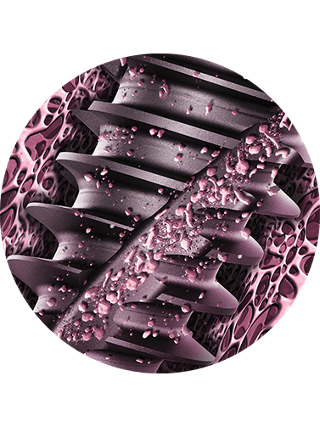
Clinicians can receive life-changing results with the Axiom® Multi Level® implant solutions range from Anthogyr, a Straumann Group brand. The innovative collection features the Axiom® Bone Level implant that promotes biological integration for an exceptionally reliable and functional final outcome, which would be incredibly favourable to bone preservation. Where an alternative approach is required, the Axiom® Tissue Level implant aids in biological safety and easy prosthesis insertion at the gingival level, with natural emergence profiles for a brilliantly aesthetic result.
The dental professional has a fantastic opportunity to provide treatments that impact a patient beyond just their oral health. By realising a patient’s ideal outcomes, clinicians have the ability to bring a partially or completely edentulous patient’s social experience back to life, and improve their all-around well-being.

For more information about the Axiom® Multi Level implant solutions from Anthogyr, visit https://www.straumann.com/anthogyr/en/home.html
[i] Polzer, I., Schimmel, M., Müller, F., & Biffar, R. (2010). Edentulism as part of the general health problems of elderly adults. International dental journal, 60(3), 143-155.
[ii] Holan, G., & Needleman, H. L. (2014). Premature loss of primary anterior teeth due to trauma–potential short‐and long‐term sequelae. Dental Traumatology, 30(2), 100-106.
[iii] Rajaraman, V., Ariga, P., Dhanraj, M., & Jain, A. R. (2018). Effect of edentulism on general health and quality of life. Drug Invention Today, 10(4), 549-53.
[iv] Foiles Sifuentes, A. M., Castaneda‐Avila, M. A., & Lapane, K. L. (2020). The relationship of aging, complete tooth loss, and having a dental visit in the last 12 months. Clinical and Experimental Dental Research, 6(5), 550-557.
[v] Rodrigues, S. M., Oliveira, A. C., Vargas, A. M. D., Moreira, A. N., & e Ferreira, E. F. (2012). Implications of edentulism on quality of life among elderly. International journal of environmental research and public health, 9(1), 100-109.
[vi] Rodrigues, S. M., Oliveira, A. C., Vargas, A. M. D., Moreira, A. N., & e Ferreira, E. F. (2012). Implications of edentulism on quality of life among elderly. International journal of environmental research and public health, 9(1), 100-109.
[vii] Grey, E. B., Harcourt, D., O’sullivan, D., Buchanan, H., & Kilpatrick, N. M. (2013). A qualitative study of patients’ motivations and expectations for dental implants. British dental journal, 214(1), E1-E1.
[viii] Ellakany, P., Fouda, S. M., Alghamdi, M., & Bakhurji, E. (2021). Factors affecting dental self-confidence and satisfaction with dental appearance among adolescents in Saudi Arabia: a cross sectional study. BMC Oral Health, 21, 1-8.
[ix] Kalyoncuoğlu, Ü. T., & Ergüven, S. S. (2023). Social appearance anxiety and oral health-related quality of life in middle-aged adults with implant therapy. Folia Medica, 65(2), 277-282
[x] Khalifa, A. K., Wada, M., Ikebe, K., & Maeda, Y. (2016). To what extent residual alveolar ridge can be preserved by implant? A systematic review. International journal of implant dentistry, 2, 1-9.
[xi] Kalyoncuoğlu, Ü. T., & Ergüven, S. S. (2023). Social appearance anxiety and oral health-related quality of life in middle-aged adults with implant therapy. Folia Medica, 65(2), 277-282
[xii] Walia, K., Belludi, S. A., Kulkarni, P., Darak, P., & Swamy, S. (2016). A comparative and a qualitative analysis of patient’s motivations, expectations and satisfaction with dental implants. Journal of Clinical and Diagnostic Research: JCDR, 10(4), ZC23.







