



Firm foundations
Featured Products Promotional FeaturesPosted by: Dental Design 22nd February 2024
Dental implant stability is key to long-term implant success
Dental implants are rapidly becoming the gold standard for replacing missing teeth due to their durability, functionality and natural aesthetic appearance. One crucial factor that ensures the long-term success of dental implants is stability.[i] As you know, the stability of an implant determines its ability to bear occlusal loads and maintain integration with the surrounding bone.
There are several factors affecting stability. It begins with implant site preparation. This is a critical step that directly influences implant stability[ii] and several techniques can be employed to prepare the implant site properly:
- Bone Augmentation: In cases where the available bone volume is insufficient, bone augmentation techniques like bone grafting, sinus lifting, and ridge expansion can be employed.[iii] These procedures promote bone formation, providing a solid foundation for implant placement.
- Drilling Protocols: The use of specific drilling protocols helps in preparing the implant site accurately. Sequential drilling, which involves progressively increasing the drill diameter, ensures that the bone is adequately prepared to receive the implant and promotes primary stability.[iv]
- Piezoelectric Implant Site Preparation (PISP): PISP has been demonstrated to improve secondary stability compared with conventional drilling techniques.i
The design of dental implants contributes significantly to their stability.[v] Two important design aspects to consider include their microgeometry and surface modification. The macrogeometry of dental implants, such as tapered or cylindrical shapes, influences their stability. Tapered implants offer enhanced primary stability due to their ability to engage the surrounding bone more effectively.[vi] While surface modification techniques, such as sandblasting and acid etching, are employed to increase the surface area and enhance osseointegration. These modifications promote better implant stability by allowing for greater contact between the implant and the surrounding bone.[vii]
Guided surgery
Guided surgery involves the use of computer-aided design (CAD) software and surgical guides to ensure accurate implant placement.[viii] This technique improves implant stability by reducing the chance of error during surgery. Guided techniques provide a precise, predictable and minimally invasive approach to implant placement, resulting in enhanced primary stability.[ix]
Resonance Frequency Analysis (RFA) is a non-invasive diagnostic tool used to assess implant stability.[x] RFA measures the stability of dental implants by analysing their vibrational frequency. A specialised device, known as an implant stability analyser, is used to determine the implant’s stability through resonance values. RFA offers quantitative data to objectively assess implant stability, facilitating informed decision-making during the healing process.
Immediate loading, also known as ‘Teeth in a Day’, allows for the placement of a prosthesis on the implant immediately after surgery.[xi] This technique, when performed under specific conditions, can promote early function and stabilisation of the implant. Immediate loading protocols require careful patient selection, adequate implant primary stability, and appropriate occlusal load management to achieve long-term success.[xii]
Bone management
 Various bone management techniques can be employed to improve long-term dental implant stability too.[xiii]The use of bioactive materials, such as growth factors or bone graft substitutes, enhances bone formation and integration around the implant. These materials stimulate osseointegration, leading to improved stability.[xiv]Barrier membranes are also used in guided tissue regeneration procedures to prevent soft tissue ingrowth and promote bone regeneration. By isolating the implant site from surrounding soft tissues, barrier membranes encourage new bone formation, contributing to successful implant stability.[xv]
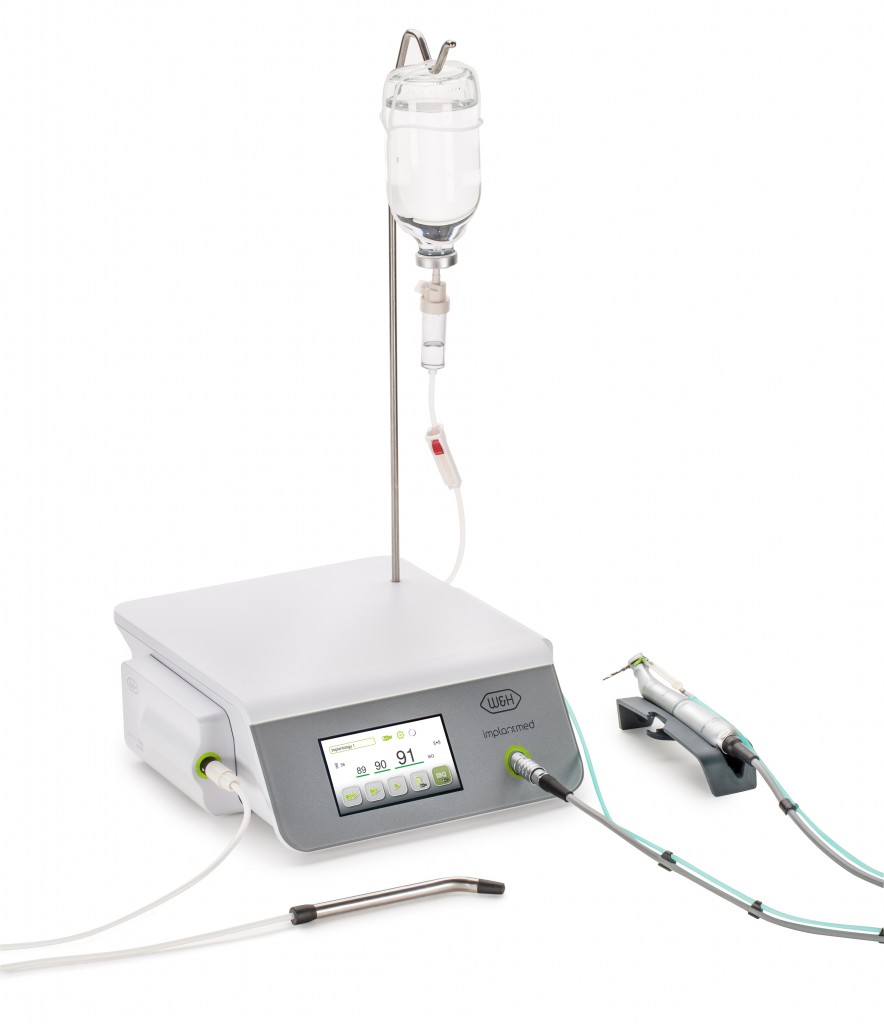
Using the right equipment can help towards implant stability as well. With Implantmed, the high-quality, high-performance surgical motor from W&H, the placement of implants is assured and efficient. With an intuitive user interface, colour touch screen and glass surface, Implantmed offers the highest levels of design and comfort. It also offers maximum flexibility thanks to its wireless foot control and its higher torque compact motor. Boasting an automatic thread cutter function integrated into Implantmed, the tightening torque control provides support when placing implants and prevents excessive compression of the bone when inserting the implant. This reduces the risk of bone loss, enhancing stability and facilitating stress-free healing of the implant.
To carry out RFA, it is important to use the appropriate equipment to evaluate with accuracy. The Osstell Beacon, from W&H, produces results within a matter of seconds, showing clinicians when an implant is successfully osseointegrated, and can therefore be loaded. Additionally, because the Osstell Beacon operates wirelessly, it offers excellent freedom of movement. Data captured using the Osstell Beacon can be stored safely and compared on the Osstell Connect platform. By using high-quality equipment, clinicians receive accurate results about implant stability, allowing them to progress treatment with confidence and certainty.
The Osstell Beacon helps the clinician to objectively determine implant stability and to assess the progress of osseointegration, without jeopardising the healing process. It allows the avoidance of long treatment times, improving healing and ensuring the achievement of predictable results.
When it comes to high-risk patients, it is important to do everything possible to maximise the success of dental implant treatment. This means ensuring patients understand how best to maintain their oral health, and that the implants selected are appropriate for the individual case. By doing this, good primary stability is encouraged, as well as successful osseointegration and functional dental implants. Ensuring accuracy is crucial when measuring this, as implant stability will determine how and when clinicians choose to progress with treatment and loading. It is important that implants are stable prior to this.
Achieving optimal dental implant stability is vital for long-term implant success. Implant site preparation techniques, implant design considerations, guided surgery, RFA, immediate loading techniques, and bone management methods all play integral roles in enhancing the stability of dental implants. By incorporating these techniques and tools into dental implant procedures, clinicians can ensure predictable outcomes and improve patient satisfaction in terms of functionality and aesthetics.
To find out more visit www.wh.com/en_uk, call 01727 874990 or email office.uk@wh.com

[i] Vollmer A, Saravi B, Lang G, Adolphs N, Hazard D, Giers V, Stoll P. Factors Influencing Primary and Secondary Implant Stability—A Retrospective Cohort Study with 582 Implants in 272 Patients. Applied Sciences. 2020; 10(22):8084. https://doi.org/10.3390/app10228084 [Accessed November 2023]
[ii] Stacchi C, Troiano G, Montaruli G, Mozzati M, Lamazza L, Antonelli A, Giudice A, Lombardi T. Changes in implant stability using different site preparation techniques: Osseodensification drills versus piezoelectric surgery. A multi-center prospective randomized controlled clinical trial. Clin Implant Dent Relat Res. 2023 Feb;25(1):133-140. doi: 10.1111/cid.13140. Epub 2022 Oct 3. PMID: 36190150; PMCID: PMC10092180. [Accessed November 2023]
[iii] Rues S, Schmitter M, Kappel S, Sonntag R, Kretzer JP, Nadorf J. Effect of bone quality and quantity on the primary stability of dental implants in a simulated bicortical placement. Clin Oral Investig. 2021 Mar;25(3):1265-1272. doi: 10.1007/s00784-020-03432-z. Epub 2020 Jul 10. PMID: 32651646; PMCID: PMC7878229. [Accessed November 2023]
[iv] Kim HM, Cho JY, Ryu J. Evaluation of implant stability using different implant drilling sequences. J Dent Sci. 2019 Jun;14(2):152-156. doi: 10.1016/j.jds.2019.03.006. Epub 2019 Mar 28. PMID: 31205606; PMCID: PMC6558346. [Accessed November 2023]
[v] Raz P, Meir H, Levartovsky S, Sebaoun A, Beitlitum I. Primary Implant Stability Analysis of Different Dental Implant Connections and Designs—An In Vitro Comparative Study. Materials. 2022; 15(9):3072. https://doi.org/10.3390/ma15093072 [Accessed November 2023]
[vi] Heimes D, Becker P, Pabst A, Smeets R, Kraus A, Hartmann A, Sagheb K, Kämmerer PW. How does dental implant macrogeometry affect primary implant stability? A narrative review. Int J Implant Dent. 2023 Jul 5;9(1):20. doi: 10.1186/s40729-023-00485-z. PMID: 37405709; PMCID: PMC10323072. [Accessed November 2023]
[vii] Kligman S, Ren Z, Chung CH, Perillo MA, Chang YC, Koo H, Zheng Z, Li C. The Impact of Dental Implant Surface Modifications on Osseointegration and Biofilm Formation. J Clin Med. 2021 Apr 12;10(8):1641. doi: 10.3390/jcm10081641. PMID: 33921531; PMCID: PMC8070594. [Accessed November 2023]
[viii] Ku JK, Lee J, Lee HJ, Yun PY, Kim YK. Accuracy of dental implant placement with computer-guided surgery: a retrospective cohort study. BMC Oral Health. 2022 Jan 16;22(1):8. doi: 10.1186/s12903-022-02046-z. PMID: 35034613; PMCID: PMC8762866.[Accessed November 2023]
[ix] Ku JK, Lee J, Lee HJ, Yun PY, Kim YK. Accuracy of dental implant placement with computer-guided surgery: a retrospective cohort study. BMC Oral Health. 2022 Jan 16;22(1):8. doi: 10.1186/s12903-022-02046-z. PMID: 35034613; PMCID: PMC8762866. [Accessed November 2023]
[x] Sadeghi R, Rokn AR, Miremadi A. Comparison of Implant Stability Using Resonance Frequency Analysis: Osteotome Versus Conventional Drilling. J Dent (Tehran). 2015 Sep;12(9):647-54. PMID: 27148375; PMCID: PMC4854743. [Accessed November 2023]
[xi] Singh G, Kumar A. Evaluation of Primary Stability in Immediate Loading of Dental Implants. The Traumaxilla. 2020;2(1-3):25-27. doi:10.1177/26323273221074048 [Accessed November 2023]
[xii] Tettamanti L, Andrisani C, Bassi MA, Vinci R, Silvestre-Rangil J, Tagliabue A. Immediate loading implants: review of the critical aspects. Oral Implantol (Rome). 2017 Sep 27;10(2):129-139. doi: 10.11138/orl/2017.10.2.129. PMID: 29876038; PMCID: PMC5965071. [Accessed November 2023]
[xiii] Rues S, Schmitter M, Kappel S, Sonntag R, Kretzer JP, Nadorf J. Effect of bone quality and quantity on the primary stability of dental implants in a simulated bicortical placement. Clin Oral Investig. 2021 Mar;25(3):1265-1272. doi: 10.1007/s00784-020-03432-z. Epub 2020 Jul 10. PMID: 32651646; PMCID: PMC7878229. [Accessed November 2023]
[xiv] Saini M, Singh Y, Arora P, Arora V, Jain K. Implant biomaterials: A comprehensive review. World J Clin Cases. 2015 Jan 16;3(1):52-7. doi: 10.12998/wjcc.v3.i1.52. PMID: 25610850; PMCID: PMC4295219. [Accessed November 2023]
[xv] Yang Z, Wu C, Shi H, Luo X, Sun H, Wang Q, Zhang D. Advances in Barrier Membranes for Guided Bone Regeneration Techniques. Front Bioeng Biotechnol. 2022 Jun 22;10:921576. doi: 10.3389/fbioe.2022.921576. PMID: 35814003; PMCID: PMC9257033. [Accessed November 2023]







