



Understanding learning styles
Featured Products Promotional FeaturesPosted by: Dental Design 23rd March 2024
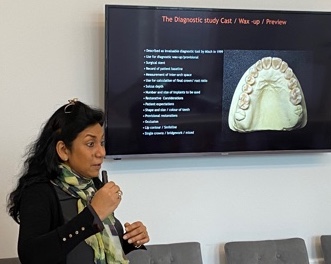
Everyday we’re looking to grow and improve as clinicians. This could be in passing moments in the practice, where we develop new ways to approach patients and specific clinical scenarios, or through long-term courses that give us a new understanding of a previously unventured dental subject.
Figuring out how to make the most of these experiences is key. Choosing the courses that suit your learning approach could maximise your comprehension and eventual development of clinical skill.
To do this, it may be helpful to look at your previous experiences when studying, and recognise your unique learning style.
Personal preferences
In the literature, learning styles are sometimes referred to within Neil Fleming’s VARK model, which stands for Visual, Aural, Read/write, and Kinaesthetic.[i] This outlines four of the main ways individuals tend to gain and best process most of their information. As such, individual learning styles between clinicians will vary, and finding courses that lean into your strengths may be of benefit.
As a dental professional, day-to-day orthodontic or implant-focused work is inherently hands-on. Planning, placing and maintaining a restoration or prosthetic requires deft control and a clinical self-confidence. There is plenty to learn before placing an implant, but I have always encouraged clinicians to actively take the front foot in their education, and practice with their hands.
Kinaesthetic learning is very influential for dental students, and leads to increased engagement, satisfaction and confidence with hands-on experience.[ii] When learning how to place implants, for example, a complete understanding of the relevant theory is of course essential. However, the solidification of this built-up knowledge and the understanding of effective application may only come when you practice physically placing an implant, even in a non-clinical setting. This will allow you to practically engage with different treatment scenarios, and adapt your expertise accordingly, as you would for real-life treatments. If you, like many other professionals, feel that hands-on learning is of immense benefit, you may want to actively seek courses that hold this as a core element throughout the entire process.
That is not to disregard visual, aural and text-based learning in the dental field. Studies have revealed that a majority of dental and medical students prefer an amalgamation of multiple learning styles,[iii] and you may be the same. Courses that give clinicians a variety of opportunities to learn new concepts, such as hands-on modules conjoined with talks from experienced and talented professionals, could give the greatest opportunity to develop thorough knowledge.
The joy of learning
 Understanding your unique learning style, and how to capitalise on it, offers a number of advantages. Professionals can develop strategies to study more in less time, with a better understanding of one’s own preferences allowing for adapted learning experiences.[iv] This may change the way you approach post-graduate education, or even how you attain your yearly CPD hours. If your learning style lends itself to audible stimulus, you may wish to attend courses that feature talks from standout professionals, or attend virtual webinars that delve into a specific topic in detail.
By choosing the educational experiences you attend based on your learning strengths, that aforementioned confidence that we all strive for when approaching new techniques may be easily attained, alleviating any anxieties around a new topic. After all, if you felt one topic was cause for concern, you may have simply been receiving the right information in the ‘wrong’ manner. In turn, you could have found the new concept more difficult to process and understand. Tailoring your course choices to your strengths could make the entire process more enjoyable and rewarding, with greater outcomes.
Progressing as a professional
Choosing your next educational dental course already requires immense thought and consideration. What do you want to learn? Who do you want to learn it from? Would you benefit from a mentor and receiving support in your clinical work after the course has ended?
Considering your own learning styles to optimise your experience, alongside these important questions, could help you make the most of your decisions. In turn, you could provide improved treatments with a greater deal of confidence.
A Postgraduate Diploma in Implant Dentistry from One To One Implant Education could be ideal for clinicians who love to take their learning into their own hands, whilst being supported by world-class professionals. The course embraces hands-on approaches that are backed by evidence, with delegates able to receive effective support from a range of experienced course leads, speakers and mentors, for a comprehensive educational experience. Delegates will develop an exceptional understanding of implant dentistry that they can take back to their practice, and reinvigorate their patients’ smiles.
Understanding how you prefer to learn allows you greater freedom when you progress through your dental career. Choosing the courses and opportunities that best suit you allows you to maximise your understanding and experience, and provide brilliant care to a wide array of patients.

To reserve your place or to find out more, please visit
https://121implanteducation.co.uk
Dr Fazeela Khan-Osborne

Principal Implant and Restorative Surgeon
MSc.BDS (Lon) BSc(Hons) LDS.RCS (Eng) DRDP Dip. Imp. Dent.(RCS.Eng)Advanced Certificate, FCOI
[i] Dmitrichenkova, S. V., Dolzhich, E. A., V Dmitrichenkova, S., & A Dolzhich, E. (2020). Learning styles and teaching methods. European proceedings of social and behavioural sciences, 97.
[ii] Crowe, H. L., & Woolley, S. M. (2022). Dental students’ experience of conscious sedation: A qualitative review of student reflections. European Journal of Dental Education, 26(1), 197-205.
[iii] Chaudhry, N. A., Ashar, A., & Ahmad, S. A. (2020). Association of Visual, Aural, Read/Wite, And Kinesthetic (VARK) learning styles and academic performances of dental students. Pakistan Armed Forces Medical Journal, 70(Suppl-1), S58-63.
[iv] Deshpande, A. N., Pradhan, H. C., Sikdar, M., Deshpande, N., & Patel, K. (2018). Learning Styles among Dental Undergraduates and Postgraduates—VARK Scale Study. Res. Rev. A J. Dent, 9(2), 1-8.







