



Orthodontics done differently
Featured Products Promotional FeaturesPosted by: Dental Design 25th March 2024
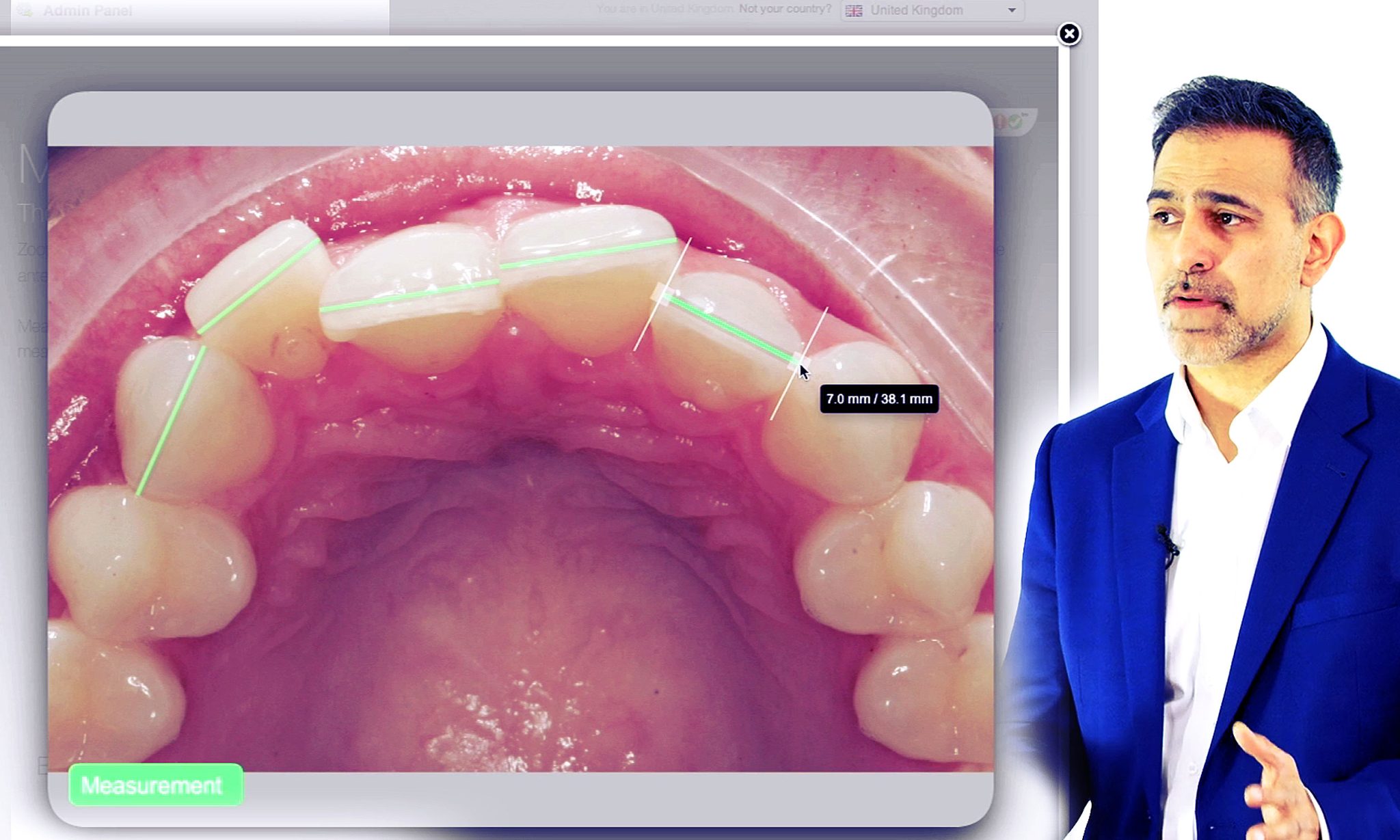
You may be looking at your treatment offerings and thinking, “What else can I do?” Perhaps you’re well versed in the use of clear aligners and conventional fixed braces, but want to offer something that combines optimum aesthetics with reliable efficiency.
That something could be lingual brace treatment. First introduced in the 1970s,[i] it has grown to become an incredibly useful solution with a variety of unmatched benefits.
So, how can lingual orthodontics change your practice’s treatment options and ultimately improve your patients’ daily lives – and why should you look into it now?
Patient preferences
A lingual approach to orthodontics can offer patients a benefit they so often crave: it is an exceptionally aesthetic treatment option. By placing the brace behind the teeth, the appliance can go unnoticed, all whilst treating orthodontic complications that would normally be solved with a buccal technique.[ii]
The demand for visually appealing treatments has only increased over time. An aesthetic outcome is the main priority for patients when they seek orthodontic care, and as a result, they may also want a visually unobtrusive therapy solution.[iii] It could also help their daily well-being, as dental aesthetics have an undeniable effect on self-perception and the impression we make on other people. A more pleasing appearance can lead to a better social function both during and after treatment.iii
There is a difficult sacrifice that those with conventional labial braces often have to make. To manipulate a smile into its ideal structure, a patient must usually undergo a less than flattering treatment option, for months or years.
The benefits of lingual braces as a ‘best of both worlds’ option are clear. Yet despite patient demands, lingual braces are still only just emerging as a common treatment. This could be due to their cost, which is admittedly higher than other similar treatments, a lack of patient awareness, or a dearth of adequately trained clinicians to place them.[iv]
A modern adaptation
When considering a brace, patients will want to know what they’re giving up in order to use this visually-beneficial alternative. After all, it seems too good to be true. Excellent aesthetics, effective orthodontic movement, without extended treatment times – there has to be a catch.
Placing brackets on the inside of the arch intrudes on the tongue’s natural space, which can have subsequent problems with speech, eating, and overall discomfort, especially where there is a high bracket profile.i Having an open conversation with a patient can help them realise these potential limitations before treatment begins. However, they should also know that the adaption period to the brace, which could take around a month for some, is often similar for both lingual and labial treatments.[v]
In addition, design and production advancements of orthodontic treatments have improved lingual offerings. With CAD/CAM processes, dental professionals are able to formulate fully customised lingual systems. The placement and construction of bracket bases can be tailored to the individual tooth for more accurate bonding, reduced bond failure, and an overall idealised finish.i Customisable appliances can also reduce the need for chairside archwire adjustments, and designing the brackets with a lower profile can minimise patient discomfort.i
Whilst the iron is hot
Lingual braces could have their moment in the sun over the coming years. After all, considering patient demands are increasingly aesthetic-driven, appliance creation and design is advancing, and digital solutions are progressing in tandem, a perfect storm could be brewing.
However, the number of UK clinicians that offer the lingual technique as an aesthetic solution is slim. A 2020 survey found approximately 30% of orthodontists supply the treatment, which pales in comparison to the 80% for clear aligners and conventional braces with clear brackets.[vi] This creates a potential vacuum to fulfil patient demands, which may only grow in the coming years.
Dental professionals looking to expand their offerings are required by the GDC to be appropriately trained and competent.[vii] Before providing lingual braces, clinicians should seek out exceptional educational resources that provide a comprehensive understanding of the subject, and build upon their experiences from there.
The beginning of your lingual technique journey could be on the Lingual Braces course, with the IAS Academy. The thorough programme educates clinicians on the differing mechanics the treatment requires, and guides you through the entire treatment process from assessment to placement and retention. A hands-on afternoon is paired with expert assistance, for advice and insight you won’t find anywhere else. Support goes beyond the course with potential for life-long mentoring throughout each of your clinical cases.
Lingual braces are an ideal aesthetic solution for many patients. In a social media age where we may be more conscious of our appearance than ever before, they could be the optimal way to attain a smile that lasts a lifetime.

For more information on upcoming IAS Academy training courses, please visit
www.iasortho.com or call 01932 336470 (Press 1)
Dr Tif Qureshi founder and a clinical director of IAS Academy

Dr Tif Qureshi founder and a clinical director of IAS Academy, qualified from Kings College London in 1992. He is a Past President of the British Academy of Cosmetic Dentistry, an International faculty that provides mentored education for general dentists on a pathway from appropriate simple to comprehensive orthodontics.
Tif has a special interest in simple orthodontics and truly minimally invasive dentistry. He has committed his life’s work to empowering dentists to provide important alternative techniques. He offers a wide variety of treatments to many more patients, while always respecting the fundamental precepts of orthodontics.
Tif also pioneered the concept of Progressive Smile Design through Alignment, Bleaching, Bonding – a course that combines tooth alignment, composite bonding and teeth whitening to produce superior smiles using techniques with the absolute minimum of invasiveness available today.
An experienced teacher in the Dahl concept, Tif shows how this technique is used to plan tooth alignment and minimise invasive dentistry in the development of a beautiful smile.
Tif now lectures and published scientific articles internationally.
[i] Huh, H. H., Chaudhry, K., Stevens, R., & Subramani, K. (2021). Practice of lingual orthodontics and practitioners’ opinion and experience with lingual braces in the United States. Journal of Clinical and Experimental Dentistry, 13(8), e789.
[ii] Kairalla, S. A., Galiano, A., & Paranhos, L. R. (2014). Lingual orthodontics as an aesthetic resource in the preparation of orthodontic/surgical treatment. IJO, 25(2), 39-43.
[iii] Saccomanno, S., Saran, S., Laganà, D., Mastrapasqua, R. F., & Grippaudo, C. (2022). Motivation, perception, and behavior of the adult orthodontic patient: a survey analysis. BioMed Research International, 2022.
[iv] Saccomanno, S., Saran, S., Laganà, D., Mastrapasqua, R. F., & Grippaudo, C. (2022). Motivation, perception, and behavior of the adult orthodontic patient: a survey analysis. BioMed Research International, 2022.
[v] Behnaz, M., Farahnaki, A., Rahimipour, K., Mousavi, R., & Davoodi, N. S. (2019). Lingual Orthodontic Treatment: Efficacy and Complications. Journal of Advanced Oral Research, 10(2), 65-74.
[vi] British Dental Journal, (2020). Increase in adults seeking orthodontic treatment. British Dental Journal, 228, 908.
[vii] General Dental Council, (2013). Scope of Practice. (Online) Available at: https://www.gdc-uk.org/docs/default-source/scope-of-practice/scope-of-practicea2afa3974b184b6a8500dd0d49f0b74f.pdf?sfvrsn=8f417ca8_7 [Accessed December 2023]







