



Bridging the Gap – how to reconcile patient expectations and clinicians’ assumptions
News Promotional FeaturesPosted by: Dental Design 7th March 2024
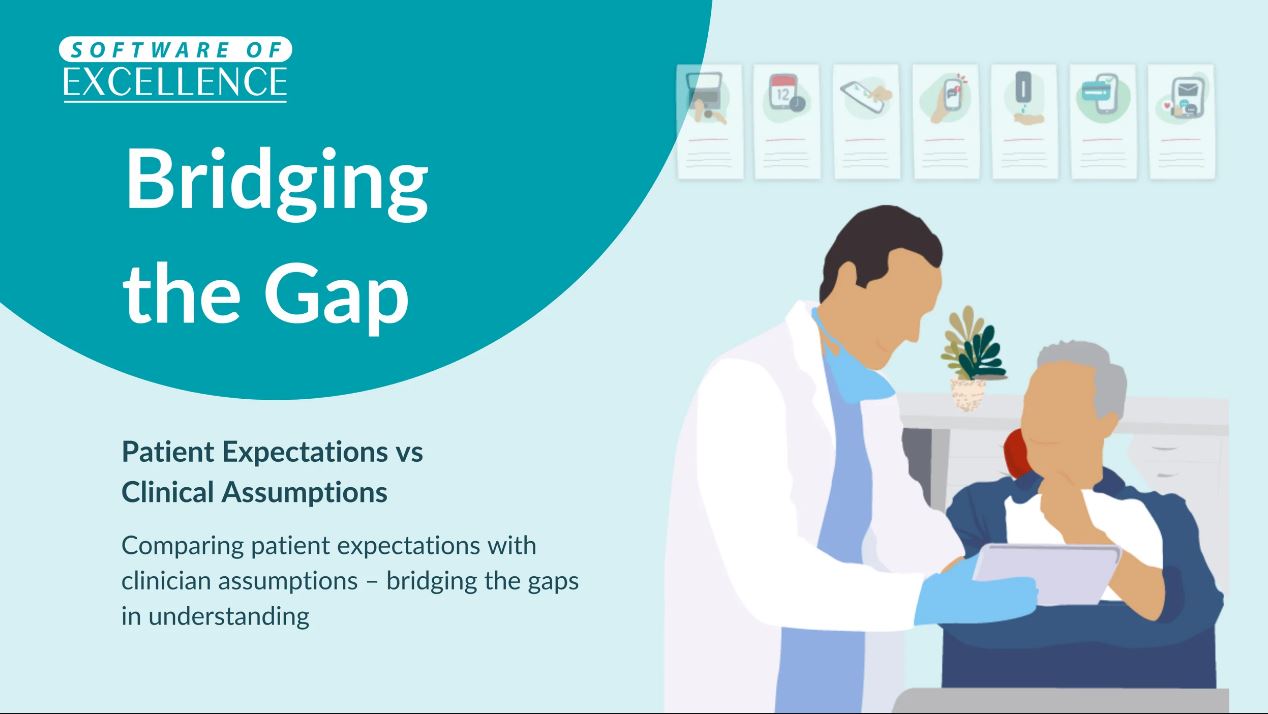
In the third in its series of White Papers looking into the rise of Patient Experience in UK dentistry, Software of Excellence (SoE) considers how the demands of patients and the perception of patients’ needs by professionals are aligned and how the gap between these two must be narrowed to create a relevant and modern patient experience. The results and conclusions can be read in SoE’s new White Paper, ‘Bridging the Gap – patient expectations versus clinical assumptions.’
The context
There is wide acknowledgement amongst the profession of the importance of patients’ experience, but UK dentistry currently finds itself in a difficult situation. It is both trying to deliver a patient experience that lives up to expectations but from within an environment defined by a lack of supply coupled with over demand. This scenario is responsible for creating a situation beyond that which many staff can cope with, in turn leading to employee attrition and appointment shortages.
The need to prioritise patients’ experience is well known but the ways and means to do so appear out of reach for professionals who are juggling numerous challenges. There is a clear need for dentists and their teams to understand exactly what constitutes ‘excellence’ in the eyes of patients, which would enable them to better allocate resources in areas that would make a real difference to patient satisfaction.
Important factors in attracting new patients
The current well documented issues with staff recruitment and retention can induce a stressful workplace environment, which is amplified by the need to complete time-consuming manual front-desk tasks.
A friendly team, clinical reputation and personal recommendation are considered by dental professionals to be the most influential factors in attracting new patients in each of the last three SoE surveys (2012, 2022 and 2023). The 2023 White Paper recommends tools that can be introduced to foster a ‘team culture’, which can be improved by introducing processes that help reduce stress and streamline administrative procedures, helping practices operate more smoothly and facilitating a calm environment in which a friendly team can flourish.
However patient respondents rank location, and ease of booking as the factors most likely to encourage them to opt for a dental practice, clearly demonstrating an important difference of opinion between what professionals perceive and what patients actually want.
There is slightly more alignment when it comes to online reviews, which although for professionals is growing in importance, remains less influential than other factors. However, it is clear from patient responses that online reviews provide an important source of information, with 44.1% of patient respondents ranking online reviews as a persuasive factor when selecting a new practice.
Clinical excellence
Delivering clinical excellence should be a given for dental practices, and professionals consider the delivery of pain free dentistry and their own clinical qualifications as two of the aspects of care their patients value most, but this is not reflected when patients themselves are asked. Good communication, presentation of treatment options and efficiency are all highly valued by patients. The profession considers the application of new technology as growing in importance and whilst patients themselves rank this of lower value, this could be attributed to dentists and teams failing to communicate the significance of technology both from a clinical and administrative point of view. Often there is a failure to appreciate the correlation between technological tools and the ability to deliver more valued aspects. For example, ‘ease of booking’ is specified as being desirable by patients and can be delivered by practices that employ technology to streamline processes such as online booking and remote form filling.
Importance of patient experience
The report observes that patient experience is becoming more important, with 95% of respondents seeing this factor as remaining important or increasing in importance in the next 12 months. A number of respondents cited social media as having an impact by setting unrealistic expectations in terms of the experience patients expect to receive.
The survey found that 85% of private practices review their patient journey regularly, with over 60% of this group making changes based on the findings of the review. Changes made include refurbishment, check-in procedures, opening times, welcome and departure processes, courtesy calls following complex treatment, online booking and introducing treatment coordinators.
Conclusion
While many might assume that delivering outstanding patient experience would fall down the list of priorities in such a challenging time for UK dentistry, this is simply not evidenced in the results of the 2023 survey. In fact, an overwhelming majority of respondents understand how important experience is to the patient journey and rather, what is arguably lacking is an acknowledgement that the tools already exist that can help to transform patient experience and improve team morale.
There is a continued upward trend in consumer empowerment and dentistry is not immune to these wider societal changes. As more pressure is exerted on NHS provision, more patients will shop around for dental care and seek out those practices that best meet their expectations.
SoE’s White paper not only provides a valuable insight into the current thinking of patients and dental professionals, but also contains a Best Practice Checklist comprising seven practical suggestions as to how practices can improve.
The impact of making these small, practical changes in the way in which processes are delivered can result in a ripple effect that not only directly impacts the patient’s experience, but also affects the stress levels and morale of the whole team who are at the front line of patient communication. In the quest to achieve wider objectives this cause-and-effect relationship cannot be underestimated.
The desire for clinical excellence is of course a given. The challenge is to create an internal and external environment in which clinical excellence can flourish. Externally, dentistry needs a robust structure which enables practices to operate within a stable environment. For professionals, such stability would breed the confidence to encourage investment and give the time to appreciate how a practice can operate most efficiently, for the benefit of all.
Software of Excellence’s White Paper can be downloaded at https://www.softwareofexcellence.com/en-gb/bridging-the-gap-2024.
To speak with a Customer Success Consultant visit Software of Excellence on Stand F50 at BDIA Dental Showcase 22nd – 23rd March 2024







