


Integrated abutment crowns: a viable long-term solution?
Featured Products Promotional FeaturesPosted by: Dental Design 9th March 2020
The number of devices available to modern-day dental implantologists is impressive. Not only are there hundreds of different dental implant systems on the market, but the choice of prostheses, materials and approaches continues to expand, making selection of the best solution for individual patients all the more complex.
The historical preference for screw-retained prostheses has led to dentists to overlook one implant/abutment connection which may be the most beneficial in the long-term. The locking taper, a well-known method of joining metal components and one favoured by engineers the world over, has largely been ignored by dental implantologists. Dental implants with finned external topography, coupled with such a simple abutment/implant interface, not only mean that short implants are feasible, but that the joint between the two mating parts can be fantastically strong. With these two concepts in mind, the Integrated Abutment Crown was developed to not only simplify but future-proof dental implant treatment for patients.
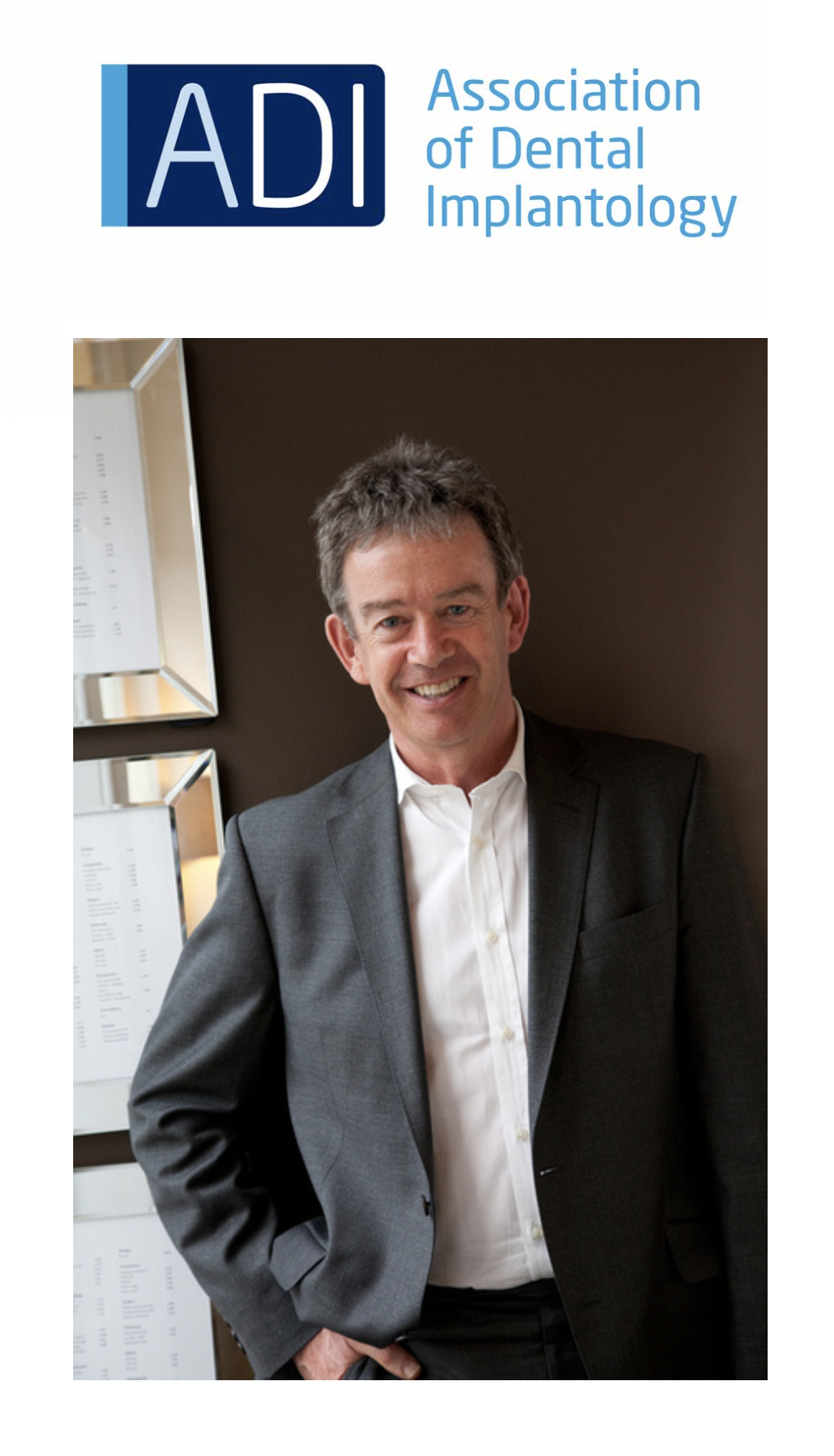
Geoffrey Pullen, who runs his own private practice in London, recently gave a talk on the topic at the Association of Dental Implantology’s (ADI) Members’ National Forum. Here he presents some of his ideas surrounding this device and why it shouldn’t be disregarded by the modern dental implant professional…
What is an integrated abutment crown?
‘In basic terms, an integrated abutment crown is a solid abutment that already has a premade, resin crown bonded to it. This crown/abutment is fitted to the implant to provide a simple and flexible restorative solution. These devices are cement-free and screwless, and in my session at the ADI Members’ National Forum, I explained what these devices are and how they work to bring a new level of versatility to patient treatment.
Different sorts of patients
‘One of the core aims of my discussion at the ADI Members’ National Forum was to get professionals to consider the different types of patients. All dental practices have patients who require a considerable amount of reconstructive work. They are in need of rehabilitation, but due to time constraints or simply the want of a quicker solution, prefer to fix one problem at a time.
‘Another thing we need to consider is that patients have varying financial capabilities and obviously need to prioritise their spending. Even if someone wants a state-of-the-art dental implant solution, this may be beyond their means at the moment. As such, if dentists have alternative options available, they can greatly increase the uptake of treatment. This, in turn, can give patients the chance to explore an implant solution that suits their budget and crucially, be part of an overall, more ideal long-term plan.
Flexibility in the future
‘Although a lot of people assume that products made out of materials such as resin are not a feasible choice for long-term treatment, this isn’t the case. One of the biggest benefits of resin as a material is that it is adaptable. Our mouths do not stay the same through the years, and unlike materials such as porcelain, zirconia and metal alloys, resin can easily be built upon and changed, which means the restoration can be updated to suit the patient’s needs over time. Such changes can easily be achieved even at the chairside. This is especially important as shifts in adjacent tooth position are extremely common. At least 50% on interproximal contacts adjacent to single implant crowns open. How can this problem be solved with a crown made of porcelain?
‘Many professionals see resin as an unorthodox material choice because it doesn’t provide the same lasting surface as other, more popular dental materials. Yet, porcelain is brittle, suffers from static fatigue and can be very difficult to colour match. Some of the perceived weaknesses of resin are actually strengths in this application, and the ability to cope with inevitable movements is a huge asset over the long-term.
‘Another significant benefit of these solutions is that they are incredibly stable. Even though the connection is solid and provides a bacterial seal, they can be fitted and removed in seconds. There is no connective component between the abutment and crown so this means that the whole device is one solid unit.’
Changing perspectives
‘In the end, what I really want to achieve by discussing integrated abutment crowns with other professionals is a change of mindset. We are constantly told that we must use certain products and materials, but there are different, viable choices out there to consider.
‘Integrated abutment crowns are a fast, simple, stable and long-lasting solution to edentulism which can provide a number of benefits to both practitioner and patient alike. As such, even though they are made from a typically overlooked material, I want to encourage professionals to rethink what solutions like this can provide patients, and how they can be used to offer better, more flexible care.’
More from the ADI
Geoffrey Pullen’s session was just one of the many up-to-date topics discussed at the ADI Members’ National Forum last November. As the association strives to bring only the most relevant topics to discussion and always looks forward to introduce new subjects to members, joining the ADI is an excellent opportunity to always keep ahead of the curve.
For information on the ADI and upcoming events, please visit www.adi.org.uk







