


The power of a smile
Featured Products Promotional FeaturesPosted by: Dental Design 14th December 2021
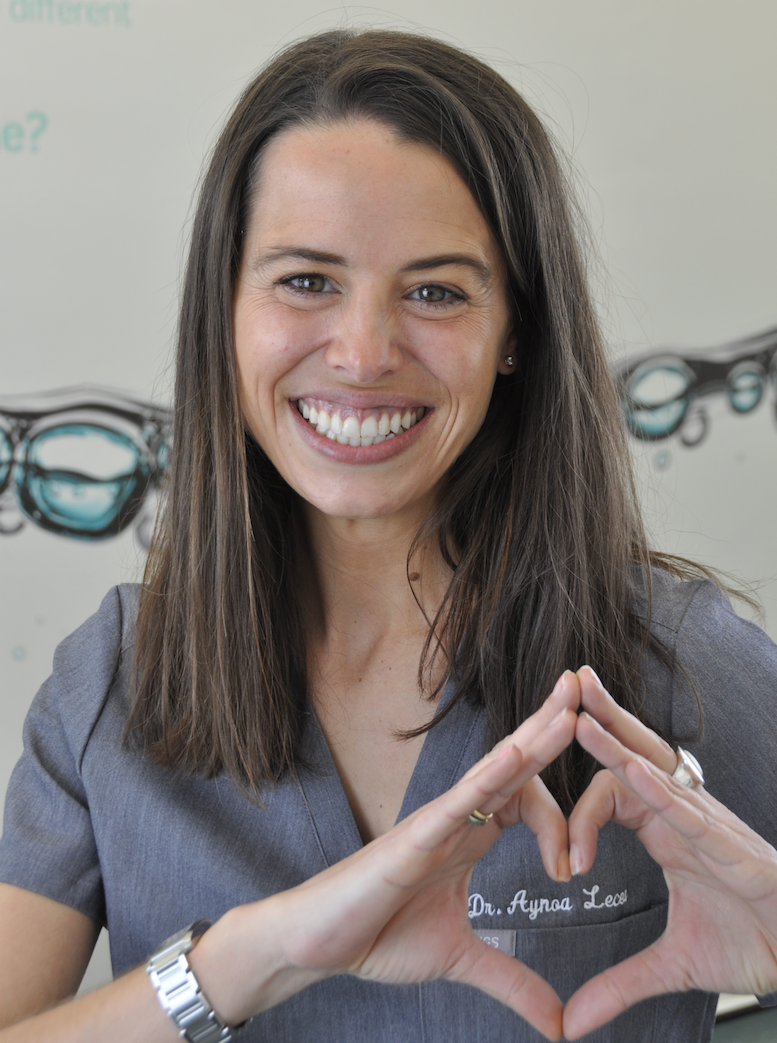
Dr Aynoa Lecea from Exeter considers how the patient journey can be optimised and patients encouraged to take greater responsibility for their dental health when approaching orthodontic treatment.
I don’t think we speak enough in society about how important it is to smile. It’s one of the most holistic health boosters out there and even in the short-term, smiling with confidence can improve a person’s mood. With time, good oral hygiene and the consequential smiling can lead to improvements in the skin, faster soft tissue healing, higher rates of efficacy and personal success… the list is extensive.
It’s a simple cause-effect involuntary action. Smiling triggers endorphins that cause happy feelings inside the body, which can have a very positive impact on quality of life if felt frequently. It also works both ways – we smile because we are happy and we feel happier because we are smiling.[i] Smiling has also been linked to health benefits like lower blood pressure, a stronger immune system and reduced stress, as well as better relationships with others and a more youthful appearance.
It is, therefore, no wonder that so many patients seek to improve their smiles. However, not everyone is the same or wants the same. I believe the perfect treatment is one that suits that patient. A good aesthetic result fits with their expectations and their lifestyle. As professionals we know that the teeth have to be functional and not just look good!
If there is any one aspect of dentistry that I love, preach and practice, it’s good patient communication. Apart from the obvious, spending time talking to patients and really getting to know them helps me to understand what they want and what could be the best treatment for them. I aim for my patients to see me as a friendly and approachable clinician that accompanies them through their journey. Some patients don’t know what kind of treatment they want, or they might present with inaccurate ideas about how much aesthetic dentistry could impact their overall health or even mental state. It’s part of my job to help separate a patient’s desires, expectations and dental knowledge, and establish how I can best support each individual.
Different routes to treatment
Let me explain with two scenarios:
 Patient 1: The patient is a young female who wants to improve her smile, creating one that will help her smile more and boost her confidence. The latter is the real reason why she came to me, so how she felt post-treatment was the most important factor in determining our success according to the patient. The treatment simulation available during the second appointment is a game-changer – it’s so helpful for showing patients like this just what is achievable for them and encouraging their treatment acceptance. It also helps to manage their expectations and motivates them to compliance with instructions for the best results. Following a thorough clinical check-up and orthodontic assessment, this patient proceeded with ClearCorrect® clear aligners. We concluded with tooth whitening and composite edge bonding to create the ideal tooth colour and shape. In this particular case, the whitening and composite bonding afforded a massive improvement in the patient’s eyes, providing the aesthetics she sought and giving her a smile she was truly proud of for greater self-confidence. I see the patient often as she now works at my practice – she takes advantage of every opportunity she has to smile, which actually helps her enjoy each day more. It’s just incredible what a smile can do, how much it can impact on your overall energy and how much this can affect others too. There really is nothing more contagious than a great smile.
Patient 2: A male patient in his late 30s was starting to suffer with periodontal disease. He was very motivated to improve his oral health and he was beginning to understand the importance of prevention. His teeth were quite crowded, but he had sought alignment for aesthetic reasons. A Trios® (3Shape) intraoral scan was taken to show him the areas he was struggling to clean and why, where periodontal sockets were most likely to form and why. This also helped him to better appreciate how his teeth would continue moving in the future if left untreated and unsupported, emphasising the mouth’s constant state of the change – much like the rest of the body. The decision to commence orthodontic treatment to make cleaning easier was therefore his – he is in control and he is taking responsibility for his long-term dental health. It wasn’t long into treatment that he started seeing and feeling changes that would enable him to look after his dental health in the years ahead. He also rapidly became very conscious about his oral hygiene. Despite developing an endoperio lesion on the LR1, which paused aligner treatment, we were able to resume and complete treatment as planned.
In both these cases and many others, the discretion and adaptability of treatment are key for patients. Adult patients who have families and work commitments need a solution that can be implemented seamlessly into their busy lives without too much disruption. Removable aligners also seem to provide extra flexibility that patients appreciate. As with any dental treatment, ensuring that patients fully understand the importance of aligner treatment and how it works – including how their own actions will impact success – they feel more in control and are more willing to accept the necessary level of accountability. Ultimately, this makes for effective treatment that can have a truly positive impact on a patient’s quality of life.
For more information on ClearCorrect®, visit: https://www.straumann.com/clearcorrect/en/home.html
Author: Aynoa Lecea
Aynoa was born in Madrid and studied dentistry here. She worked in Belfast and then Spain as a dentist for a few years, before taking a year out to live in Costa Rica with her partner, where she worked in advertising. At this point, Aynoa moved to Exeter, England, to settle down and she returned to working in dentistry. Over the past ten years, she has provided both NHS and private services, and now also offers facial aesthetic and cosmetic dental treatments as well. She is also currently taking a PGDip in Advanced Restorative and Aesthetic Dentistry.
[i] British Council. what’s the science behind a smile? April 2014. https://www.britishcouncil.org/voices-magazine/famelab-whats-science-behind-smile#:~:text=When%20our%20brains%20feel%20happy,muscles%20to%20trigger%20a%20smile.&text=When%20our%20smiling%20muscles%20contract,of%20happy%20hormones%2C%20or%20endorphins. [Accessed March 2021]
Images:









