


Restoring Health in the Human Body
Featured Products Promotional FeaturesPosted by: Dental Design 26th February 2022
The human body is complex and when one area isn’t performing as it should be a person’s quality of life (QoL) can diminish. A broken leg, for instance, can mean solitary confinement. Depending on the kind of break, of course, but sometimes people need to rest for long periods of time and this can mean their QoL dwindles. Similarly, losing a tooth due to diseases or trauma can impact an individual’s speech, nutrition, and self-confidence, again reducing their standard of living significantly. Leaving health related issues such as injuries, fractures and tooth loss untreated can sometimes be fatal but thanks to modern advancements in the medical field professionals are now able to treat the majority of afflictions.
Physiotherapy
Physiotherapy is an area of the health profession that promotes the maintenance and restoration of injuries, illness, and disability through movement and exercise, manual therapy, education, and advice. Its origins have been found in Ancient Egypt and Ancient Greece, while the West didn’t start to see physiotherapy until the 17thcentury.[i] There are four systems of the body that a physiotherapist can practice in[ii] and these include:
- Neurological (stroke, multiple sclerosis, Parkinson’s)
- Neuromusculoskeletal (back pain, whiplash, associated disorder, sport injuries, arthritis)
- Cardiovascular (chronic heart disease, rehabilitation after a heart attack)
- Respiratory (asthma, chronic obstructive pulmonary disease, cystic fibrosis)
Physiotherapists use a variety of treatment techniques. If a patient has lost mobility and function of, for instance, their hand due to injury then movement and exercise would be prescribed.[iii] Movement and exercise programmes include moderate aerobic exercise, intense aerobic exercise, strengthening, isometric exercise, mobility exercises, and exercise to promote the re-education of specific muscle groups.[iv] Studies examining the effectiveness of the re-education approach revealed that the exercise programme was beneficial for patients who suffered with chronic lower back pain.[v] This is incredibly positive and considering that a survey revealed that those with chronic back pain report a general lower QoL[vi] this indicates that treatment will lead to an improved QoL.
Orthopaedic Approaches
Other health issues that can affect a person’s QoL can be injuries such as bone fractures, but these usually have a short-term impact on the patient. In the long-term, conditions such as arthritis can lead to necessary surgery like a hip replacement; the most common cause for this is osteoarthritis.[vii] From the surgeon’s perspective a hip replacement is generally straight forward, especially when placing a femoral component.[viii] However, for the patient the healing process will likely be extensive – usually around 6 weeks. Is it worth it? A study revealed that patients’ health significantly improved after surgery for hip replacement[ix] which, of course, implies that their QoL would have improved also.
Another solution to arthritis can be arthrodesis – joint fusion surgery.[x] This procedure literally fuses two bones together where the joints ache. Throughout the healing process the joined bones become one solid bone and while movement is reduced a patient will experience much less pain. This procedure can be used to fuse joints in various areas, including:
- Spine
- Ankles
- Wrists
- Fingers
- Thumbs
- Feet
A surgery that reduces movement once healed might not sound ideal but a survey revealed that patients’ physical component summary (how they rate the affected area) increased post-surgery in those who underwent spinal fusion, total knee replacement, and total hip replacement.[xi] All of which points toward an improved QoL.
Oral Health
Diminished oral health can also affect a person’s QoL. As an example, tooth loss can impact a person’s eating a social habits with a study revealing 81.9% of respondents reported difficulties after losing teeth.[xii] Oral health related quality of life (OHRQoL) is a concept that has rapidly grown over the last few years and it is integral that this is taken into account in order to sustain patient health. This has been realised as it has become increasingly clear that conditions and diseases caused by bad oral health can undermine self-image, lead to stress and depression, and discourage social interaction too.xii
However, there are options that clinicians can offer their patients. The advancement of implantology has meant that patients can take back control of their life. Ucer Education offers a Postgraduate Certificate in Implant Dentistry that teaches clinicians how to incorporate the treatment into their practices with confidence. You will learn to use the most well documented techniques and a range of implant brands led by Professor Cemal Ucer who is a Specialist Oral Surgeon with over 25 years of experience in the field. Everyone who works in the profession wants to see their patients happy and healthy; implant dentistry is a great way to achieve that in various situations.
There are many aspects of a person’s life that can influence their overall health but there are some things that can be completely debilitating, such as losing a tooth. While the health profession tirelessly works to improve patient health and QoL there is still some progress to make in terms of educating the general population about how to properly care for their general health. As dentists, the impact that can be made might feel small but giving someone their smile back is priceless.
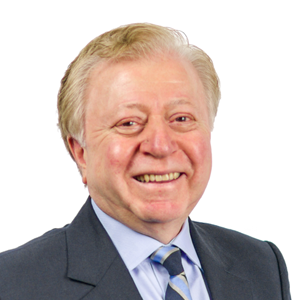
Prof. Cemal Ucer, BDS, MSc, PhD, FDTFEd., ITI Fellow, Specialist Oral Surgeon
Cemal Ucer first established an implant referral centre in 1995. He was awarded an MSc in Implantology at Manchester Dental Hospital following his research into guided bone regeneration and osteopromotion. He later gained a PhD for his clinical and laboratory studies into the factors affecting the success of implant treatment in iliac grafts and the investigation of the effect of skeletal bone density on implant survival. He has personally trained and mentored more than 1,000 dentists in implant dentistry as one of the main providers of implant education in the UK.
Cemal’s current clinical research interests include immediate implant placement, reconstructive bone surgery, nerve damage and the effect of bone density on the success of implant treatment. Academically, he has gained European recognition for his work on the development of a new framework for teaching and assessment of clinical competence in implantology. He is a co-author of the consensus paper produced by the Association for Dental Education in Europe (ADEE) following the first pan-European collaboration between EU universities to establish common training and assessment standards in dental implantology. He is an invited member of the working group convened by the FGDP (UK) and the General Dental Council (GDC) to update the Training Standards in Implant Dentistry (TSID) guidelines in 2012 and 2016.
Cemal is a Fellow of the Dental Trainers Faculty of the Royal College of Surgeons of Edinburgh (RCSEd) and a Fellow of the International Team for Implantology (ITI) and a member of Megagen’s MINTEC UK & I Board for education and clinical research. He is a member of the editorial board of JOMR (Journal of Oral & Maxillofacial Research) and the chair of the editorial advisory board of Implant Dentistry Today. Cemal is Professor and Clinical Lead of the MSc programme in Dental Implantology and a member of the Faculty of Examiners of the Royal College of Surgeons of Edinburgh’s Diploma in Implant Dentistry. He is a past president of The Association of Dental Implantology (ADI) (2011-2013).
Cemal has been appointed by FGDP (UK) to lead the working group to develop the “national standards in implant dentistry” which is due to be published later in 2018 following the completion of an external consultation process.
For more information on the PG Cert in Implant Dentistry from Ucer Education – supported by Geistlich, Megagen, Neoss, Implants and General Medical – please visit www.ucer.education and ucer-clinic.dental or call Prof Ucer on 07767 645331
Email ucer@oral-implants.com
[i] Higgs, Joy, et al. Contexts of Physiotherapy Practice. Google Books, Elsevier Health Sciences, 28 Feb. 2017, books.google.co.uk/books?hl=en&lr=&id=ptvWDwAAQBAJ&oi=fnd&pg=PA33&dq=the+origins+of+physiotherapy&ots=7aGy1mj0e7&sig=hro40WefYrq5DEUbafn66CevgBs#v=onepage&q=the%20origins%20of%20physiotherapy&f=false. Accessed 17 Nov. 2021.
[ii] Chartered Society Of Physiotherapy. “What Is Physiotherapy?” The Chartered Society of Physiotherapy, 2018, www.csp.org.uk/careers-jobs/what-physiotherapy.
[iii] NHS Choices. “Techniques Physiotherapy.” NHS, 2019, www.nhs.uk/conditions/physiotherapy/how-it-works/. Accessed 17 Nov. 2021.
[iv] Wright, Anthony, and Kathleen A. Sluka. “Nonpharmacological Treatments for Musculoskeletal Pain.” The Clinical Journal of Pain, vol. 17, no. 1, 1 Mar. 2001, pp. 33–46, journals.lww.com/clinicalpain/Fulltext/2001/03000/Chronic_Pain_in_the_Elderly__Occupational.6.aspx. Accessed 17 Nov. 2021.
[v] O’Sullivan, Peter B., et al. “Evaluation of Specific Stabilizing Exercise in the Treatment of Chronic Low Back Pain with Radiologic Diagnosis of Spondylolysis or Spondylolisthesis.” Spine, vol. 22, no. 24, Dec. 1997, pp. 2959–2967, 10.1097/00007632-199712150-00020. Accessed 17 Nov. 2021.
[vi] Husky, Mathilde M., et al. “Chronic Back Pain and Its Association with Quality of Life in a Large French Population Survey.” Health and Quality of Life Outcomes, vol. 16, no. 1, 26 Sept. 2018, www.ncbi.nlm.nih.gov/pmc/articles/PMC6158815/pdf/12955_2018_Article_1018.pdf, 10.1186/s12955-018-1018-4. Accessed 17 Nov. 2021.
[vii] “Hip Replacement.” Nhs.uk, 24 Oct. 2017, www.nhs.uk/conditions/hip-replacement/#:~:text=Hip%20replacement%20surgery%20is%20usually. Accessed 18 Nov. 2021.
[viii] Nucleus Medical Media. “Total Hip Replacement.” Www.youtube.com, 20 Oct. 2008, www.youtube.com/watch?v=DosqbEy8ecY. Accessed 17 Nov. 2021.
[ix] “Individual Quality of Life in Patients Undergoing Hip Replacement.” The Lancet, vol. 339, no. 8801, 2 May 1992, pp. 1088–1091, www.sciencedirect.com/science/article/abs/pii/014067369290673Q, 10.1016/0140-6736(92)90673-Q. Accessed 17 Nov. 2021.
[x] Zelman, David. “What Is Joint Fusion Surgery?” WebMD, 9 June 2021, www.webmd.com/osteoarthritis/guide/joint-fusion-surgery. Accessed 18 Nov. 2021.
[xi] Mokhtar, Sabarul A., et al. “Health-Related Quality of Life: A Comparison of Outcomes after Lumbar Fusion for Degenerative Spondylolisthesis with Large Joint Replacement Surgery and Population Norms.” The Spine Journal: Official Journal of the North American Spine Society, vol. 10, no. 4, 1 Apr. 2010, pp. 306–312, pubmed.ncbi.nlm.nih.gov/20362246/, 10.1016/j.spinee.2010.01.018. Accessed 18 Nov. 2021.
[xii] Saintrain, Maria Vieira de Lima, and Eliane Helena Alvim de Souza. “Impact of Tooth Loss on the Quality of Life.” Gerodontology, vol. 29, no. 2, 24 Aug. 2011, pp. e632–e636, onlinelibrary.wiley.com/doi/full/10.1111/j.1741-2358.2011.00535.x, 10.1111/j.1741-2358.2011.00535.x. Accessed 18 Nov. 2021.







