A dystopian nightmare or a utopian vision?
Featured Products Promotional FeaturesPosted by: Dental Design 9th March 2022
Officially, our current epoch is named the Holocene, which began after the first major ice age, roughly 11,700 years ago. However, some scientists have proposed a new geological time period, coined the Anthropocene.[i]This unofficial era is used to describe the period in the Earth’s history where human activity began to impact the planet’s climate and ecosystems. Some say it began at the beginning of the Industrial Revolution, others say it started in 1945, when humans tested and then subsequently dropped atomic bombs on Hiroshima and Nagasaki. This period of time, dubbed the nuclear age, has been correlated with the beginning of the digital age.[ii]
Digital technologies have given humans the means to connect, educate, inform and discover at a much faster rate than ever before. Yet, technology is often used as a threatening dystopian trope, despite its growing prevalence and popularity within our lives. Aside from exaggerated portrayals in the media, technology has continued to be pushed to its full potential, with the emergence of artificial intelligence, autonomous driving and the development of robotics in recent years.
Robots have been slowly introduced into various industries across the world – Tesla, for example, is developing a humanoid robot named the ‘Tesla Bot’ to take over certain tasks deemed too unsafe or repetitive for human employees.[iii] In everyday life, some people employ ‘vacuum bots’ and ‘lawn mower bots’ to do their tedious housework. In the healthcare fields, robotics can aid in the speed, reliability and proficiency of patient outcomes. In dentistry, for example, the implementation of robotics can aid dental professionals during intricate treatments and surgeries, as well as the manufacturing of solutions in dental laboratories.
But what are the challenges that the dental field faces with the insurgence of digital technologies and robotics? Will these concepts ever be fully embraced within the industry?

Science fiction made a reality
Dentistry requires precision and patience, both in the dental practice and laboratory. Impression taking, for example, requires a high-level of accuracy in order for the dental technician to produce a sufficient prosthesis. The outcome of certain treatments is determined by many factors, including the experience of the dental professionals involved. An extensively-experienced clinician may produce more accurate, long-lasting dental implant outcomes, as they would have more in-depth knowledge of potential risks, complications and patient demands. Younger generations of dental professionals may be less confident in performing certain treatments – could robotics play a role in closing this experience gap?
The Nippon Dental University Kokoro, in Japan, developed a realistic dental training robot for dental students, named Simroid. The robot functions as a patient simulator, providing life-like emotional feedback and speech recognition. Due to its ability to react to discomfort or pain, dental students must be conscious of the techniques they are using. The implementation of these types of robotics would help dental professionals gain more experience, without compromising patient safety or comfort.[iv] Though further refinement is needed, a study[v] demonstrated how the use of Simroid was effective in improving the attitudes of dental students towards their patients, therefore encouraging consideration for human patients during actual dental treatment.
Further use of robotics in dentistry has been researched, with one study[vi] suggesting that robots could play an important role in prosthodontics and orthodontics. They could help with the manufacturing of complete or partial dentures, the placement of dental implants and the bending of the archwire for appliances. Such robotics are still in their developmental stages, but could be a feasible option for dental technicians to employ within their laboratories.

The future is now
The incorporation of digital technologies into dentistry has been shown to yield promising results, including increased precision and patient preferability.[vii][viii] Intraoral scanners are one example of how digital tools can greatly simplify workflows between the dental practice and laboratory, as well as increase accuracy and the potential for reliable outcomes. The CS 3800 wireless intraoral scanner, designed by Carestream Dental, boasts of a remarkable field-of-view, which means even the most minute details can be captured for optimal accuracy in the lab. The CS 3800 intraoral scanner also allows dentists to send open STL file types, so dental technicians have the ultimate freedom to choose a software that works best for them without compromising their client services.
As our world continues to digitalise, adopting technologies into the dental landscape will not only keep dental professionals ahead of the game, but will simplify and streamline dental treatments, procedures and surgeries. Long-lasting and reliable results are crucial to maintain patient satisfaction – after all, happy patients and successful outcomes are the ultimate aim for any dental professional.
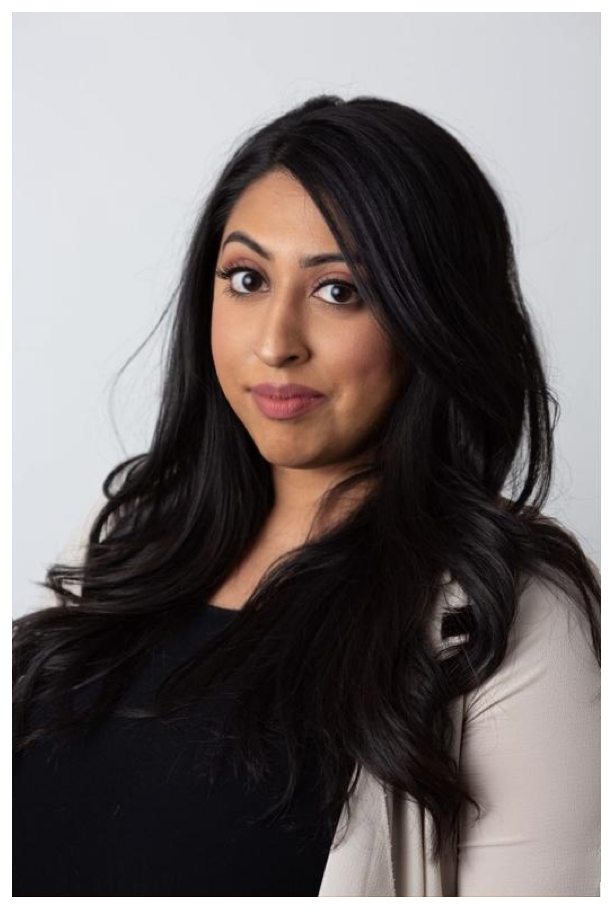
Nimisha Nariapara
Nimisha is the Trade Marketing Manager at Carestream Dental covering the UK, Middle East, Nordics, South Africa, Russia and CIS regions. She has worked at Carestream Dental for the past 7 years, where she has developed her marketing skills and industry knowledge to bring the core values and philosophy of the company to the market.
For more information, contact Carestream Dental on 0800 169 9692 or
visit www.carestreamdental.co.uk
For the latest news and updates, follow us on Twitter @CarestreamDentl
and Facebook
[i] National Geographic. Anthropocene. Available online. https://www.nationalgeographic.org/encyclopedia/anthropocene/. Accessed 20 Oct. 21.
[ii] Nature Portfolio. On the age of computation in the epoch of humankind. Available online. https://www.nature.com/articles/d42473-018-00286-8#ref-CR1. Accessed 20 Oct. 21.
[iii] Tesla. Artificial Intelligence & Autopilot. Available online. https://www.tesla.com/en_GB/AI. Accessed 20 Oct. 21.
[iv] Semantic Scholar. Application of robotics in dentistry. Available online. https://www.semanticscholar.org/paper/Application-of-robotics-in-dentistry-Rawtiya-Verma/90062372230ffa29759837b739b0d586bb0bd5ac. Accessed 20 Oct. 21.
[v] National Library of Medicine. Educational effects using a robot patient simulation system for development of clinical attitude. Available online. https://pubmed.ncbi.nlm.nih.gov/29091328/. Accessed 20 Oct. 21.
[vi] Sage Journals. A review on robot in prosthodontics and orthodontics. Available online. https://journals.sagepub.com/doi/full/10.1155/2014/198748. Accessed 21 Oct. 21.
[vii] Hindawi. Accuracy and precision evaluation of international standard spherical model by digital dental scanners. Available online. https://www.hindawi.com/journals/scanning/2020/1714642/. Accessed 20 Oct. 21.
[viii] National Library of Medicine. Patients’ preferences when comparing analogue implant impressions using a polyether impression material versus digital impressions (Intraoral scanners) of dental implants. Available online. https://pubmed.ncbi.nlm.nih.gov/23941118//. Accessed 20 Oct. 21.