


Managing Soft Tissue to Aid Implant Success
Featured Products Promotional FeaturesPosted by: Dental Design 11th April 2022
Healthy gingiva in a patient preparing to undergo dental implant treatment is a good indicator that there will be fewer complications post-surgery. However, many people suffer with periodontitis,[i] which can be caused by poor oral health habits, poor nutrition, hormonal changes and more.[ii] As such, the need for soft tissue management techniques will likely only increase in the future, especially with the growing demand for dental implants. Patients who present with periodontal issues, or who have a history of periodontitis, will need to be stabilised first before moving onto any advanced therapy. In addition, they may also require soft tissue management therapies pre-surgery to optimise implant success.
Soft Tissue Management Techniques

Example of pedicle graft used to close extraction socket and thicken tissue around an immediate implant
Managing the soft tissue in a patient pre-surgery can be complex but there are probably methods that you will feel more confident using. Generally, soft tissue management can be carried out with a free gingival graft or a connective tissue graft but other procedures include pedicle grafts and platelet-rich fibrin technology.
Free Gingival Graft: Sometimes there may be a lack of keratinised tissue present at a site where an implant is planned. Thinner mobile tissue around dental implants can result in discomfort when performing oral hygiene around the restorations, leading to more plaque accumulation which results in peri-implant inflammation. This will lead to peri-implant mucositis and possibly peri-implantitis, which may lead to loss of the implants in the future if left untreated. A free gingival graft can be carried out to increase this zone of keratinised tissue which results in thicker, firmer tissue, making oral hygiene maintenance much easier to carry out.

Free gingival graft – before and after
Connective Tissue Graft: A more common method used to treat root exposure and to thicken/bulk up tissue.[iii]In this procedure the clinician will harvest from the palate a subepithelial connective tissue graft, which is sutured to cover the exposed root/implant. The flap is then coronally repositioned to cover the graft. In comparison to other soft tissue management methods, such as a free gingival graft, there is no statistically significant difference in terms of success.[iv] However, there is better colour matching with connective tissue graft, which is an advantage especially in the aesthetic zone.

Connective tissue graft before and after – final photo shows extent of graft
Optimising Both Hard and Soft Tissue
Soft tissue management techniques are often required in conjunction or prior to implant placement in order to maximise the chance of long-term success. It’s well known that healthy gingivae help to maintain healthy hard tissue and this is especially important when considering the healing process post implant procedure. There are many other factors that can lead to bone defects and these include trauma to the bone, implant placement into fresh extraction sockets, untreated bone dehiscence, patient’s bad habits, and more.[v]
Bone defects aren’t easy to identify, especially as a lot of patients are asymptomatic, but radiographic assessment – especially 3D scans – should reveal any issues. It’s important to identify all the conditions that might put the patient at risk of any bone defect. Sometimes the patient’s lifestyle could have impacted the quality of the bone. Modifiable risks include alcohol consumption, smoking, a low BMI, poor nutrition, vitamin D deficiency, eating disorders, insufficient exercise, and frequent falls.[vi] Working with your patient to combat any of these challenges will mean that their implant is more likely to be a success. A study that compared the rate of implant survival in patients who had already experienced periodontitis to those who did not revealed the latter to have greater odds of implant survival.[vii]
Surgical Approach
Traditionally, the surgical procedure for implant placement would involve raising a flap. As technology evolved, a flapless surgical technique was developed which often made procedures more efficient for the clinician and more comfortable for the patient.
Over the years there has been some debate on which method is best to use when placing implants. In a study which included 98 patients, researchers compared the advantages and disadvantages of both protocols along with their success rates.[viii] Advantages of a flapless technique include being able to immediately load the implant although it restricts the clinician’s view of the placement of the surgical site. In contrast, a flap technique allows the clinicians to be able to see the entire area. The success rates in this study varied between the male and female participants: in males both techniques were more successful compared to females. Overall, the flap technique saw a 95% success rate while the flapless technique saw an 86% success rate. The differences in these outcomes revealed that when using a flapless technique, the clinician must undergo proper evaluation of bone height, type, and width of the residual ridge in order to ensure successful osseointegration. However, this is debated throughout the literature as there are many other variables that can influence success of the procedure.
Are Your Skills up to Scratch?
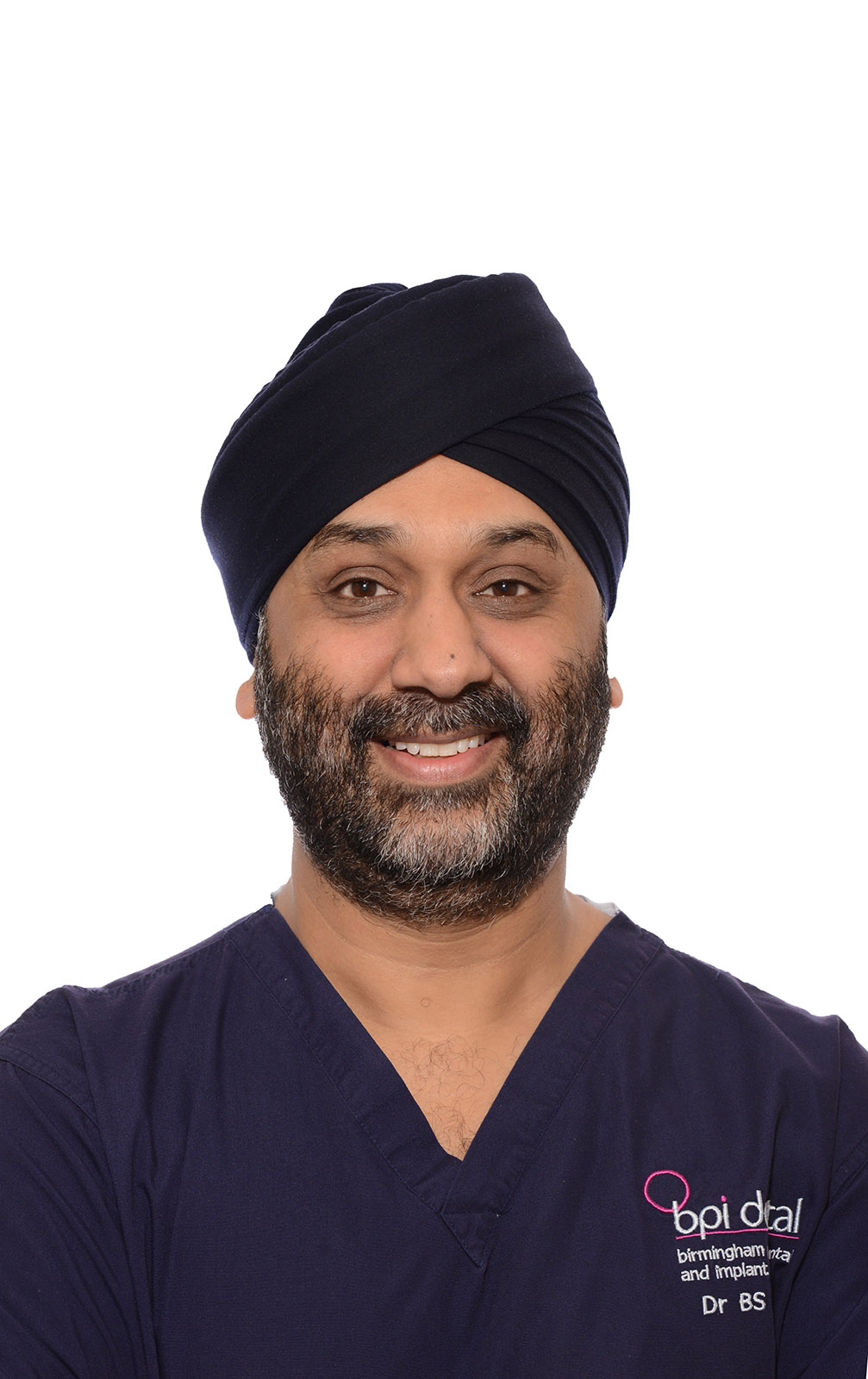
One sure way to ensure that you’re confident in managing the soft tissue of your patients is to train with a team you can trust to share expert knowledge with you. Led by Dr Boota Singh Ubhi, the Soft Tissue Around Dental Implants course from BPI Dental Education & Training could be the next step in your career. This two-day hands-on course will enable you to diagnose potential problems before implant treatment commences, implement various soft tissue optimisation techniques, and then maintain aesthetics and longevity post-surgery for outstanding outcomes.
Overall, managing soft tissue in dentistry can be complex as different protocols will be most suitable depending on the patient and their clinical condition. However, this should not put you off elevating your career through top quality education and training, as this way you can rest assured that you’re providing your patients with the best treatment possible.
For more details or to book your place on the next course with Dr Boota Singh Ubhi, please visit the website
[i] Steele, J. and O’Sullivan, I. (2011). Adult Dental Health Survey 2009. [online] NHS Digital. Available at: https://files.digital.nhs.uk/publicationimport/pub01xxx/pub01086/adul-dent-heal-surv-summ-them-exec-2009-rep2.pdf [Accessed 17 Jan. 2022].
[ii] Mayo Clinic (2017). Gingivitis – Symptoms and Causes. [online] Mayo Clinic. Available at: https://www.mayoclinic.org/diseases-conditions/gingivitis/symptoms-causes/syc-20354453 [Accessed 18 Jan. 2022].
[iii] Marks, H. (2017). Gum Tissue Grafts. WebMD. Available at: https://www.webmd.com/oral-health/guide/gum-tissue-graft-surgery [Accessed 17 Jan. 2022].
[iv] Gholami, G.A., Saberi, A., Kadkhodazadeh, M., Amid, R. and Karami, D. (2013). Comparison of the clinical outcomes of connective tissue and acellular dermal matrix in combination with double papillary flap for root coverage: A 6-month trial. Dental Research Journal, [online] 10(4), pp.506–513. Available at: https://www.ncbi.nlm.nih.gov/pmc/articles/PMC3793415/ [Accessed 17 Jan. 2022].
[v] ANNIBALI, S., RIPARI, M., LA MONACA, G., TONOLI, F. and CRISTALLI, M.P. (2008). Local complications in dental implant surgery: prevention and treatment. Oral & Implantology, [online] 1(1), pp.21–33. Available at: https://www.ncbi.nlm.nih.gov/pmc/articles/PMC3476500/ [Accessed 17 Jan. 2022].
[vi] www.osteoporosis.foundation. (n.d.). Modifiable Risks | International Osteoporosis Foundation. [online] Available at: https://www.osteoporosis.foundation/health-professionals/about-osteoporosis/risk-factors/modifiable-risks [Accessed 14 Jan. 2022].
[vii] Safii, S.H., Palmer, R.M. and Wilson, R.F. (2009). Risk of Implant Failure and Marginal Bone Loss in Subjects with a History of Periodontitis: A Systematic Review and Meta-Analysis. Clinical Implant Dentistry and Related Research.
[viii] Khalaf Jabar, S. (2014). Advantages and Disadvantages of Flapless Surgical Technique (Blind technique) in Comparison with Flap Surgical Technique (traditional technique) in Dental Implant Placement. [online] Available at:https://www.iasj.net/iasj/download/c2712f986040693f [Accessed 17 Jan. 2022].







