


Improving Smiles, Restoring Confidence
Featured Products Promotional FeaturesPosted by: Dental Design 7th June 2022
Orthodontic treatment has become more accessible and viable for those who dislike their smiles. Unfortunately, there are many patients who lack self-confidence due to their poor smile, even to the extent of not discussing it with their own dentist. These patients are regularly attending dental practices that do not open up the discussion of ‘how do you like your smile’, and patients are opting to go to unregulated businesses in the UK or overseas for aligners and tooth whitening, or worse – highly destructive ‘cosmetic makeovers’. This is wrong.
As dentists we should be discussing patients’ dental appearance with them, especially if it is worsening with time. As we are in the unique position of being able to understand what the problems are and explain how their smile can be improved, often using minimally invasive techniques involving orthodontics, bleaching and composite bonding.
Smile and confidence
It is well known that having a pleasant facial appearance, particularly the smile, improves self-confidence and opportunities in life.[i] Facial attractiveness plays an increasing important role in society;[ii] a meta-analysis found that attractive children and adults were judged more favourably by their peers, had exhibited more favourable behaviours and traits and this correlated with self confidence and self-esteem. In social situations, the mouth and eyes attract the majority of attention, with the mouth being the centre of communication, further increasing the importance of the smile.[iii] It is therefore important to discuss smile aesthetics with your patients, record the current situation and monitor any change. This can be undertaken easily by photography or 3D scanning. The simple act of discussing a photograph of their teeth with your patient can bring out concerns or start a conversation that over time may lead the patient to wanting treatment.
How to improve smiles
The simple ABB (Align Bleach and Bond) technique, pioneered by Dr Tif Qureshi, has meant that thousands of patients have improved their smile and self-image using minimally invasive techniques that all GDPs should have as part of their technical skills. The use of easy-to-use removable appliances and/or aligners, in selected cases, can massively improve a patient’s smile in a very short time period. However, there are equally as many cases that simple orthodontic techniques cannot manage correctly, and a greater knowledge and skill is required.
The College of General Dentistry has developed their Structured Career Pathways for the whole dental profession, progressively developing and building professional skills. In line with the CoGD pathway, and as the CoGD’s Trusted Provider for Orthodontic education, IAS Academy has developed incremental learning of orthodontic and restorative skills to improve the patient’s smile and function, taking the GDP new to orthodontics from ‘Zero to Hero’. This educational programme can be accessed at the pace that the GDP decides what is most suitable for them and allows more the experienced GDP to join at higher levels. Potentially, the ‘Zero to Hero’ programme can be undertaken over 5 years, but many will progress at a slower pace more suited to their individual circumstances. The programme culminates in the IAS Academy Advanced Course, presented by myself, Professor Ross Hobson*. This is an in-depth programme designed to train delegates in how to treat more complex malocclusions and, on completion, enables delegates to sit the CoGD examination for the Diploma in Primary Care Orthodontics.
The Advanced programme is delivered over 18 months, during which delegates will learn the science, theories, knowledge and skills to deliver care for more difficult problems using the full range of orthodontic appliances. This includes cases requiring extractions, using fixed (conventional and lingual), functionals and aligners.

For more information on upcoming IAS Academy training courses, please visit www.iasortho.com or call 01932 336470 (Press 1)
Authored by Professor Ross Hobson, BDS, MDS, PhD, FDS, MDOrth (RCPS), FDS (RCS Ed), FDS (RCS Eng), SFHEA
* Retired Professor of Orthodontics
[i] Bull and Rumsey. The Social Psychology of Facial Appearance. New York, NY: Springer Verlag; 1988
[ii] Langlois et al. Maxims or myths of beauty? A meta-analytic and theoretical review. Psychol Bull 2000 126: 390 – 423
[iii] Van der Geld et al. Smile Attractiveness: Self-perception and Influence on Personality
Angle Orthod (2007) 77 (5): 759–765.
Author Bio
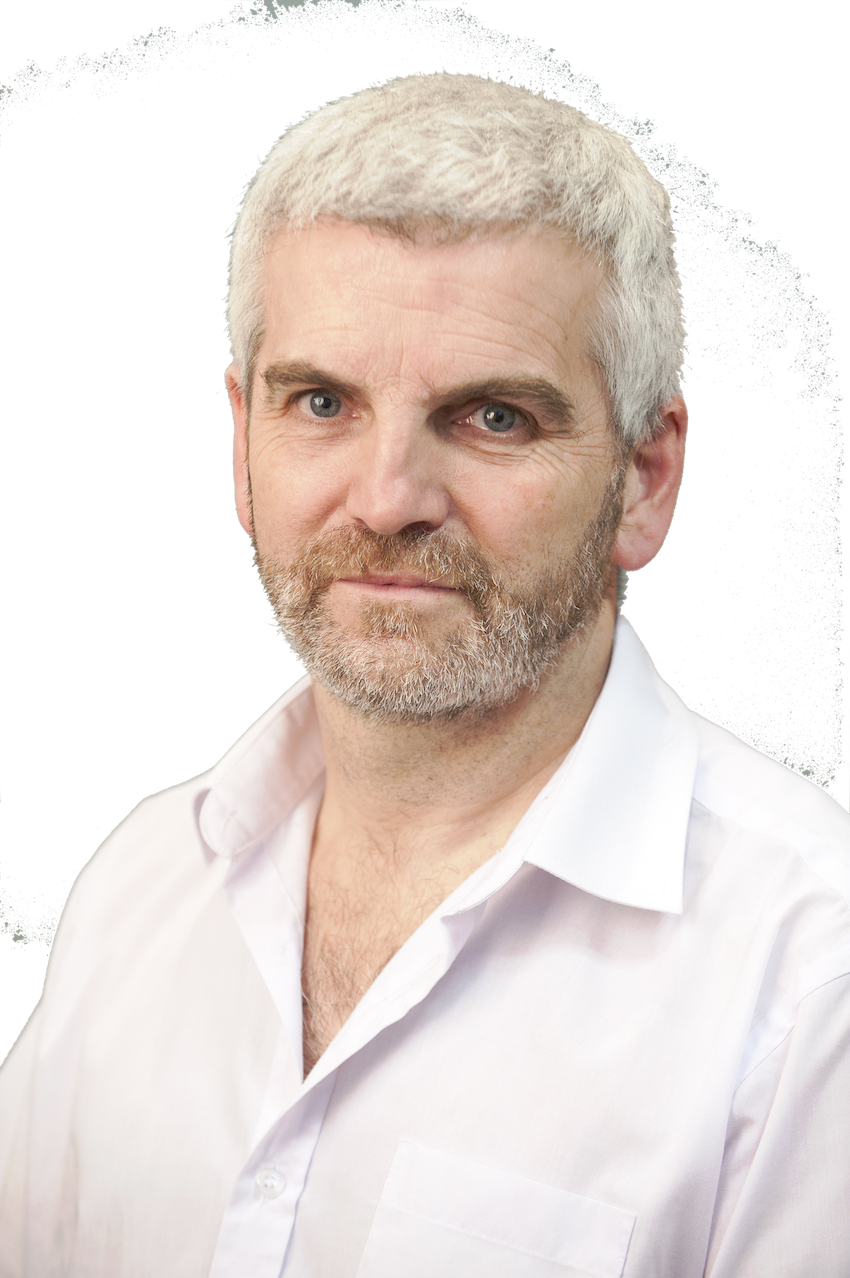
Prof Ross Hobson* BDS, MDS, PhD, FDS, MDOrth (RCPS), FDS (RCS Ed), FDS (RCS Eng), SFHEA
Ross graduated from the University of Newcastle, has Fellowships from the Royal Colleges of Surgeons of Glasgow, Edinburgh and England. His MDOrth is from the RCPS Glasgow). He was the first dentist to be awarded the prestigious Senior Fellowship of the Higher Education Academy. His specialist orthodontic training was completed in Dundee. He has published over 60 refereed articles on Orthodontics, hypodontia, dental materials and education. He was appointed to the Chair in Orthodontics at UCLan to develop part-time specialist orthodontic training in primary care.
1992 – 2009: Newcastle upon Tyne University, Senior Lecturer/Consultant, Head of Department and the MSc/ Specialist training program in orthodontics.
2004-2008: Chair of CCDAS (the BDA academic committee) and a member of the BDA Executive Board.
2010: He was awarded the BDA Fellowship in recognition of his work for the profession.
2012: He and his partners established Windmill Orthodontic Group, the North of England’s first 7 private multidisciplinary specialist practices
*Ross is a former retried professor of UCLan.







