


Developing excellence
Featured Products Promotional FeaturesPosted by: Dental Design 21st November 2022
The so-called sink-or-swim approach is still pervasive across many career paths, not least in dental care. Sink-or-swim is characterised by throwing an employee “in at the deep end”. In some instances, this is driven by a belief among more senior staff that this is the quickest way to test a person’s mettle, a means to get them up to speed quickly, and to winnow out weak team-members. However, rather than a calculated gamble to see staff rise to a new challenge, often this is simply cover for a lack of proper on-boarding and training.
New staff are frequently brought in only when a vacancy has opened, often with minimal time allowed (if any) for the exiting employee to transfer the benefits of their knowledge and experience to their replacement. This is wasteful and inefficient, as hard lessons have to be relearned with each new staff member. Practices that use the sink-or-swim approach are inherently less welcoming to new members, as it slows their integration into the team and makes things more stressful than needed. The natural consequence of this is that these practices will see higher rates of employee churn, which again results in lower efficiency and longer periods of incompletely developed staffing.
Sink-or-swim is most often discussed in relation to onboarding, however, many of the same concerns are applicable to more seasoned staff, particularly when trying to develop new skills and fill new roles. There definitely are times when it is best to step back and give staff space to learn and make mistakes on their own, people cannot grow properly without being trusted in this way. However, there is a world of difference between this type of trust, and the neglect that a sink-or-swim approach often masks. Unnecessary confusion is not tough love, it’s merely stressful and sloppy.
 There are many better ways to help members of the team develop, including mentoring. This can be formalised, or informal, with merits to both methods. Many of the benefits are readily apparent: it aids the development of the mentee, improves morale and teamwork, aids in communication of ideas, skills, and expectations, and demonstrates to the mentee that they are valued. In many ways it is the polar opposite of where sink-or-swim goes wrong.
Mentoring is also beneficial to the mentor. As with mentees, it can help develop professional relationships and provide networking opportunities. It can also help to keep knowledge and skills sharp, as the process of teaching can often provide useful reflection and practice. Sometimes working with a mentee can be serendipitous for the mentor as it can give rise to fresh questions and insights, as you naturally re-examine your practices through new eyes.
Within dentistry the second leading cause given for leaving the profession is stress, with over a third of GDPs citing stress as their reason for retiring early. Beyond career development, mentoring has been suggested as a useful tool to combat occupational stress and burnout. Results from mentoring practices implemented by other industries, the NHS, private healthcare sector and numerous corporations have been promising on this front. However, more widescale adoption of mentoring in dentistry has been somewhat limited to date. In large part this is due to practical constraints of time and money, practice owners often feel that there is insufficient time to dedicate to mentoring. Practice owners also report concerns that mentoring itself requires significant training to provide, and many feel that they would be on particularly shaky ground when it comes to the non-clinical aspects of mentorship.[1]
It is unfortunate that mentorship is not more widespread and more readily available within dentistry. Hopefully, this is a shortfall that will be addressed as more practitioners become aware of the substantive value that mentoring offers, which – in addition to helping staff – gives hard and fast business benefits that justify the time-investment for all concerned. In the here and now, if you are looking for a mentor, it may be a wise idea to extend your professional network, particularly by taking advantage of learning opportunities where you will have the chance to meet experienced practitioners that also have a background in mentoring.
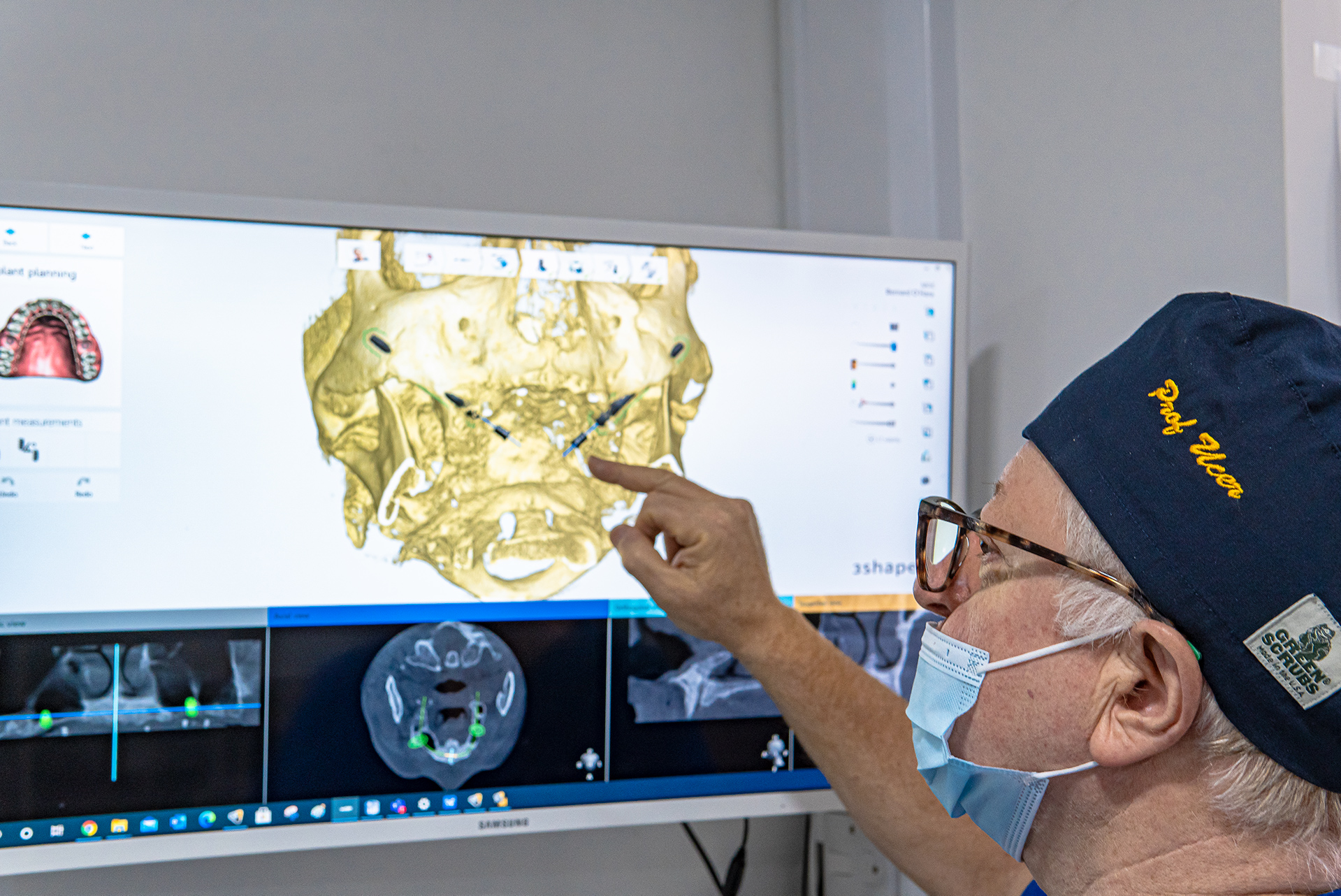
If you are considering a career shift into implant dentistry, and wish to benefit from a full one-to-one mentoring opportunity, you would be well advised to look to Ucer Education. The training provider has been at the forefront of postgraduate education in implantology in the UK for over 25 years. Led by Specialist Oral Surgeon, Professor Cemal Ucer, Ucer Education’s Postgraduate Certificate (PGCert) in Implant Dentistry (EduQual Level 7) – is a brilliant opportunity for clinicians looking to advance their skills and knowledge under Professor Ucer’s close supervision. You will gain a current understanding in the latest and greatest techniques and technologies, from a friendly team eager to share their experiences.
Even if your clinic does not currently use a mentor system, there is almost always room to improve onboarding and communication with the team. If you aren’t developing you are stagnating – we always have more to learn, whether mentor or mentee.
For more information on the PG Cert in Implant Dentistry from Ucer Education – supported by Geistlich, Megagen, Neoss, and General Medical – please visit www.ucer.education or call Prof Ucer on 07767 645331
Email ucer@icedental.institute
[1] Seath R., Radford D., Mudford L., Reed D. Should mentoring be routinely introduced into general dental practice to reduce the risk of occupational stress? British Dental Journal. 2019; 227(2): 121-125. https://doi.org/10.1038/s41415-019-0484-3 July 10, 2022.







