


Tooth decay and how to reverse demineralisation of the masses
Featured Products Promotional FeaturesPosted by: Dental Design 14th July 2023
Tooth decay is the most prevalent non-transmissable disease globally.[i] It’s estimated that almost 3.5 billion people worldwide are affected by oral disease, with an estimated 2 billion suffering from permanent dental caries.[ii] Many socioeconomic and cultural factors can lead to the development of tooth decay. These can include natural decline in dental health with age,[iii] oral hygiene and diet,[iv] as well as psychosocial[v] and environmental factors,[vi] such as access to fluoridated water. The impact of tooth decay on an individual’s well-being can be severe and far-reaching, from impaired sleeping and eating to chronic pain and systemic infection.[vii] Dental caries carry a global economic price too; from the direct cost of treatment to the indirect costs of absenteeism at work.[viii]
Development of dental decay: a combination of culprits
Given that the oral cavity plays host to so many pathophysiological interactions throughout the day, it’s no surprise that dental problems stem from micro-organic imbalances with such frequency. Plaque bacteria, a finely adapted microbial biofilm[ix] nourished by food particles, contains aciduric cariogenic bacteria – amongst which are Streptococcus mutans and lactobacilli.[x] These bacterial groups are considered most critical to the development of caries. As they metabolise fermentable carbohydrates they produce acids including lactic, acetic, formic and propionic – each capable of dissolving the enamel and dentine mineral. The acids readily permeate the enamel and dentine and set about dissolving any acid-soluble underlying tissue it can find. If left uninterrupted for long enough, this process can lead to dental caries.[xi]
Treatment options for patients
 Treatment for tooth decay is largely determined by the stage and severity of the decay itself.[xii] Very early detection means decay can be treated simply with topical fluoride application. Subsequent regular and thorough bacterial plaque removal with toothbrushing and interdental cleaning, both in the clinical setting and at home, can control and prevent the progression of further decay.[xiii] If the decay has led to cavities in the enamel, the affected tooth can be treated with an amalgam filling or crown. If the decay has reached the pulp, root canal treatment may be required.[xiv] If the decay is very severe, there may be no option but to extract the tooth. In all cases, improved oral hygiene routines that incorporate cleaning, regular dental check-ups and a healthy diet will be beneficial to dental health.[xv]
Remineralisation is key
The principle of minimal intervention dentistry is becoming increasingly adopted amongst dental practioners. The concept embraces the philosophy of preservation of dental tissues first and foremost, with restoration only when indicated. The process of remineralising early non-cavitated carious lesions is therefore seen as a crucial element of caries management within the minimal intervention strategy.[xvi]
Saliva plays a key role in this process: it helps to neutralise the oral cavity’s low pH after acidic foods are consumed and also works to deliver essential ions to the enamel surface[xvii] such as calcium, phosphate and fluoride,[xviii] which are critical to remineralisation.[xix] When fluoride in saliva makes contact with enamel, it replaces the hydroxyl ion in the apatite crystal structure, changing hydroxyapatite into the more acid-resistant fluorapatite.[xx] The calcium and phosphate in saliva work as common ions to the minerals in enamel and dentine, slowing the dissolution rate of minerals.[xxi] Encouraging your patients to enjoy a healthy, varied diet, that might include dairy, red meat, leafy vegetables and black tea, will promote the mineral-rich salivary flow required to support this.[xxii]
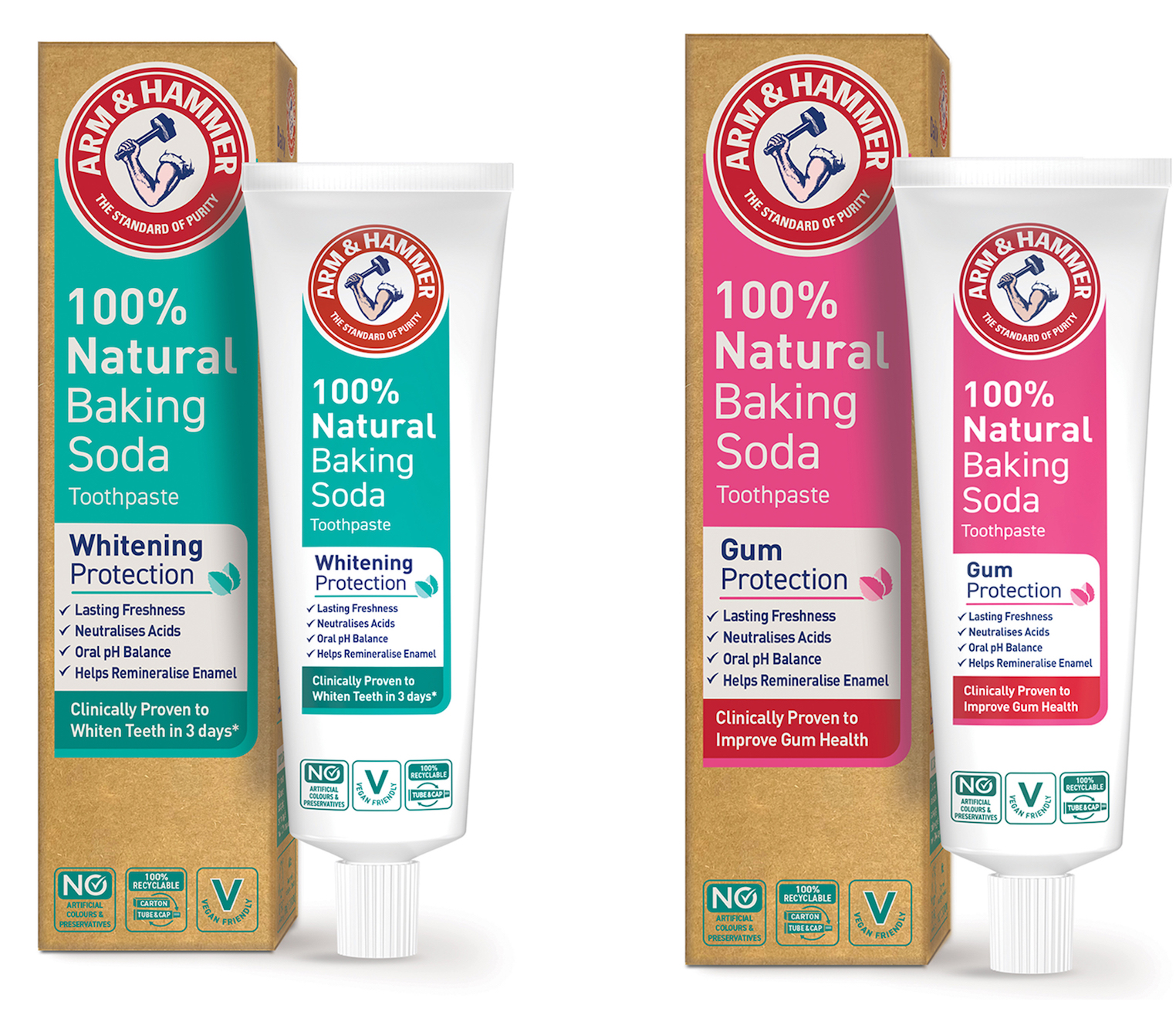
Where additional assistance is needed, extrinsic methods of remineralisation are readily available, such as fluoridated drinking water[xxiii] and sugar-free chewing gum to stimulate salivary flow and promote remineralisation this way.[xxiv] Specially designed toothpastes have been proven effective too – the Arm & HammerTM 100% Natural Toothpaste range is formulated to help remineralise and strengthen enamel, harnessing the alkalinity of baking soda to help re-establish neutral pH levels. The range offers solutions designed for both gum protection and whitening protection and contains 1450 ppm of fluoride for lasting protection against caries. [xxv]
Prevention – ultimately better than cure
The most desirable outcome is to prevent dental decay, or at least slow down and halt its progression quickly. Prevention and early intervention are proven to help maintain public health, relieve pressure on public services, prevent productivity loss and support economic growth.[xxvi] Patient education in the causes and effects of tooth decay – including the importance of remineralisation – can only help in the long-term mission to raise the global standard of oral health.
For more information about the carefully formulated Arm & Hammer™ toothpaste range, please visit https://www.armandhammer.co.uk/ or email: ukenquiries@churchdwight.com

Arm & Hammer™ oral healthcare products can now be purchased from Boots, Amazon, Superdrug, ASDA, Sainsbury’s, Tesco, Morrison’s, Waitrose & Partners and Ocado.
[i] World Health Organization. Sugars and dental caries. November 9, 2017. www.who.com. Available at: https://www.who.int/news-room/fact-sheets/detail/sugars-and-dental-caries#:~:text=Almost%20half%20of%20the%20world’s,because%20the%20disease%20is%20cumulative. Accessed March 7, 2023.
[ii] World Health Organization. Oral health. November 18, 2022. www.who.com. Available at: https://www.who.int/news-room/fact-sheets/detail/oral-health. Accessed March 7, 2023.
[iii] Cherney K. 10 ways to remineralize your teeth and stop demineralization. September 13, 2019. Healthline.com. Available at: https://www.healthline.com/health/remineralizing-teeth. Accessed March 9, 2023.
[iv] Štefanová E, Baška T, Holubčíková J, Timková S, Tatarková M, Sovičová M, Hudečková H. Selected behavioural factors affecting oral health in schoolchildren: results from the health behaviour in school-aged children (HBSC) Slovak study. October 2020. www.ncbi.com. Available at: https://www.ncbi.nlm.nih.gov/pmc/articles/PMC7602590/#:~:text=Diets%20rich%20in%20the%20consumption,of%20dental%20caries%20%5B12%5D. Accessed March 9, 23.
[v] Jönsson B, Holde GE, Baker SR. The role of psychosocial factors and treatment need in dental service use and oral health among adults in Norway. February 11, 2020. www.doi.org. Available at: https://doi.org/10.1111/cdoe.12518. Accessed March 9, 23.
[vi] Silva MJ, Kilpatrick NM, Craig JM, Manton DJ, Leong P, Burgner DP, Scurrah KJ. Genetic and early-life environmental influences on dental caries risk: a twin study. May 2019. National Center for Biotechnology Information. www.pubmed.ncbi.nlm.nih.gov. Available at: https://pubmed.ncbi.nlm.nih.gov/31028158/. Accessed March 9, 2023.
[vii] World Health Organization. Sugars and dental caries. November 9, 2017. www.who.com. Available at: https://www.who.int/news-room/fact-sheets/detail/sugars-and-dental-caries#:~:text=Teeth%20affected%20by%20caries%20are,infection%20or%20adverse%20growth%20patterns. Accessed March 7, 2023
[viii] Vujicic M, Listl S. ACFF Make Cavities History Taskforce, An economic perspective of the global burden of dental caries. 2015. www.acffglobal.org. Available at: https://www.acffglobal.org/wp-content/uploads/2021/03/An-economic-perspective-on-the-burden-of-dental-caries.pdf Accessed March 8, 2023.
[ix] Tatakis DN, Kumar PS. Etiology and pathogenesis of periodontal disease. June 2005. Dent Clin Nam. 2005;49:491–516. Available at: https://pubmed.ncbi.nlm.nih.gov/15978238/. Accessed March 7, 2023.
[x] Loesche WJ. Microbiology of dental decay and periodontal disease. 1996. Medical Microbiology. 4th edition. Galveston (TX): University of Texas Medical Branch at Galveston; chapter 99. Available at: https://www.ncbi.nlm.nih.gov/books/NBK8259/. Accessed March 7, 2023
[xi] Featherstone JDB. Dental caries: a dynamic disease process. August 18, 2008. Australian Dental Journal Volume 53, Issue 3 p.286-291. Available at: https://doi.org/10.1111/j.1834-7819.2008.00064.x Accessed March 8, 2023.
[xii] Mandal A. Treatment and prevention of tooth decay, January 20, 2023. www.news-medical.net. Available at: https://www.news-medical.net/health/Treatment-and-Prevention-of-Tooth-Decay.aspx Accessed March 7, 2023.
[xiii] Kuru BE, Kuka GI, Tunar OL. Role of the mechanical interdental plaque control in the management of periodontal health: how many options do we have? November 5, 2018. Gingival Disease – A Professional Approach for Treatment and Prevention. October 2019. Available at: https://www.intechopen.com/chapters/63884. Accessed March 8, 2023.
[xiv] Vishwanath V and Rao HM. Gutta-percha in endodontics – A comprehensive review of material science. May-June 2019. J Conserv Dent. 22(3): 216–222. Available at: https://www.ncbi.nlm.nih.gov/pmc/articles/PMC6632621/ Accessed March 7, 23.
[xv] NHS. Take care of your teeth and gums. Reviewed January 28, 2022. www.nhs.uk. Available at: https://www.nhs.uk/live-well/healthy-teeth-and-gums/take-care-of-your-teeth-and-gums/. Accessed March 9, 2023.
[xvi] Amaechi B. Remineralisation – the buzzword for early MI caries management. August 11, 2017. British Dental Journal. Br Dent J 223, 173–182 (2017). Available at: https://doi.org/10.1038/sj.bdj.2017.663 Accessed March 9, 2023.
[xvii] Farooq I. Bugshan A. The role of salivary contents and modern technologies in the remineralization of dental enamel: a narrative review. June 15, 2021. National Center for Biotechnology Information. Available at: https://www.ncbi.nlm.nih.gov/pmc/articles/PMC7076334/#ref-19. Accessed March 9, 2023.
[xviii] Sahi A. Foods good for teeth. Reviewed February 27, 2019. www.news-medical.net. Available at: https://www.news-medical.net/health/Foods-Good-for-Teeth.aspx. Accessed March 9, 2023.
[xix] Farooq I. Bugshan A. The role of salivary contents and modern technologies in the remineralization of dental enamel: a narrative review. June 15, 2021. National Center for Biotechnology Information. Available at: https://www.ncbi.nlm.nih.gov/pmc/articles/PMC7076334/#ref-19. Accessed March 9, 2023.
[xx] Müller F, Zeitz C, Mantz H, Ehses K-H, Soldera F, Schmauch J, Hannig M, Hüfner S, Jacobs K. Elemental depth profiling of fluoridated hydroxyapatite: saving your dentition by the skin of your teeth? December 21, 2010. Langmuir. 2010;26(24):18750–18759. 10.1021/la102325e. Available at: https://pubmed.ncbi.nlm.nih.gov/21090577/. Accessed March 9, 2023.
[xxi] [xxi]Buzalaf MAR, Hannas AR, MT Kato. Saliva and dental erosion. September – October 2012. J Appl Oral Sci.; 20(5): 493–502. Available at: https://www.ncbi.nlm.nih.gov/pmc/articles/PMC3881791/. Accessed March 9, 2023.
[xxiii] NHS. Fluoride. www.nhs.uk. Available at: https://www.nhs.uk/conditions/fluoride/ Accessed March 9, 2023.
[xxiv] Rios D, Honório HM, Magalhães AC, Delbem ACB, Machado MAAM, Silva SMB, Buzalaf MAR. Effect of salivary stimulation on erosion of human and bovine enamel subjected or not to subsequent abrasion: an in situ/ex vivo study. 2006. Available at https://pubmed.ncbi.nlm.nih.gov/16707870/. Accessed March 8, 2023.
[xxv] Arm & HammerTM 100% Natural Range. www.armandhammer.co.uk. Available at: https://www.armandhammer.co.uk/our-products/ Accessed March 9, 2023.
[xxvi] Public Health England. Inequalities in oral health in England. March 2021. Available at: https://assets.publishing.service.gov.uk/government/uploads/system/uploads/attachment_data/file/970380/Inequalities_in_oral_health_in_England.pdf Accessed March 8, 2023.







