


Quick and effective care for a case of mild cross-bite
NewsPosted by: Dental Design 16th October 2023
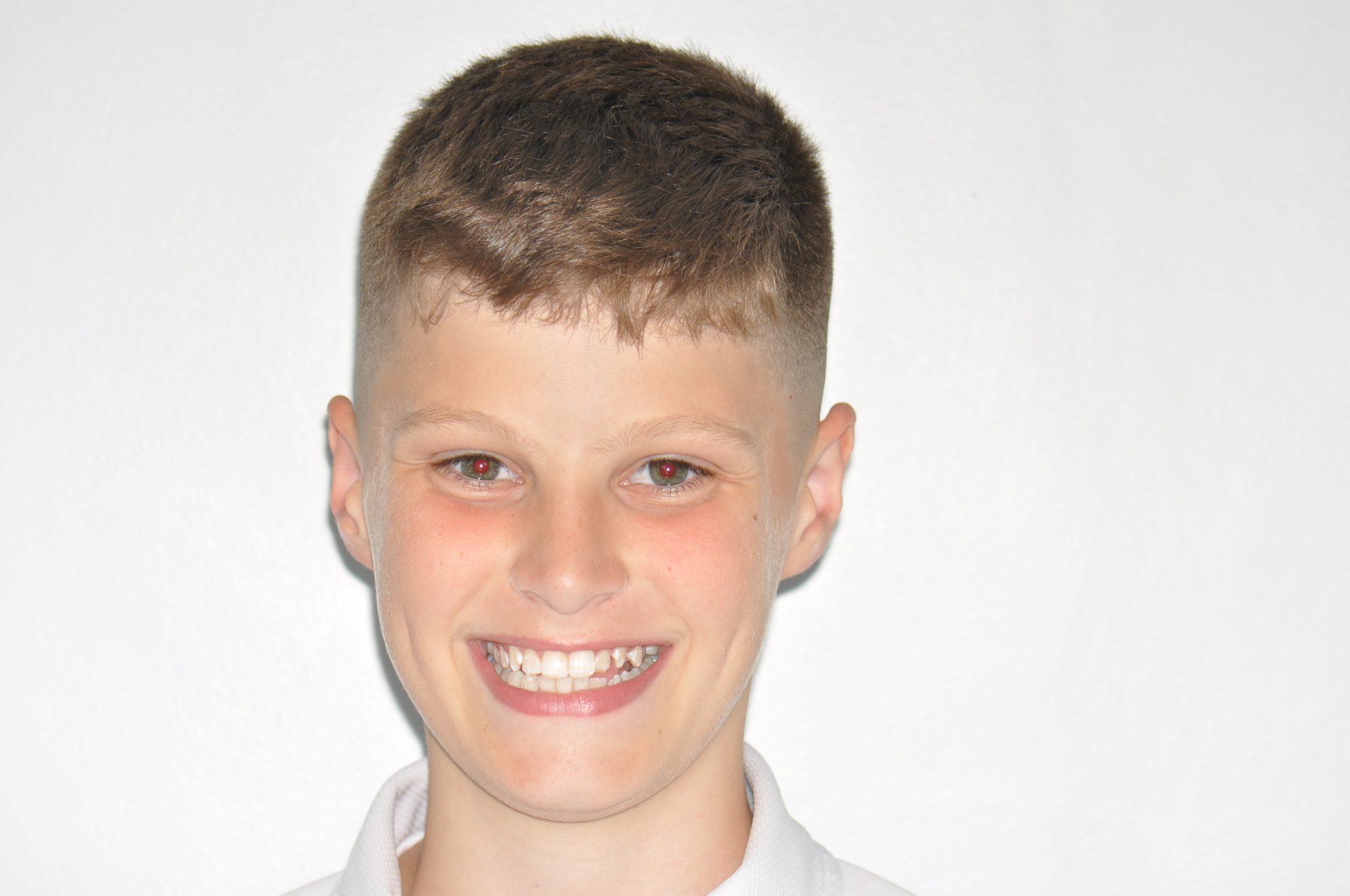
Sean Power BDS presents a mild case of cross-bite and the effective solution provided.
 A 13-year-old patient presented with a Class I incisor and molar relationship on a mild Class II skeletal base. A regular at our practice with his family for the last seven years, he has consistently demonstrated good oral hygiene, with his only restorative intervention being a small resin restoration on LL6. The patient’s chief concern was the appearance of his anterior teeth, particularly UL2 and his erupting UL3. He was also aware that he was grinding his teeth in this area, resulting in discomfort and sensitivity.
Upon a clinical assessment, very mild crowding was detected in the upper and lower arch, with the UL2 and UL3 in crossbite, and LR3 significantly rotated.
A range of treatment options were considered. Since I am a GDP with a special interest in orthodontics, the option to refer for treatment with a specialist, either through NHS or private pathways, was discussed. However, the patient and his mother wanted to avoid any delays and preferred to proceed with myself.
We talked about upper and lower arch treatment, the primary options being traditional fixed braces or ClearCorrect®aligners, but the patient wasn’t interested in lower arch treatment. He accepted that LR3 would remain rotated as a result. The option of a traditional acrylic based upper removable appliance which incorporated adjustable springs was also discussed, but the patient’s preference was ClearCorrect® aligners, owing to them being discreet and straightforward.
A comprehensive orthodontic assessment was completed, utilising a dSLR camera for intra- and extra-oral photos. A 3D scan was carried out with an intraoral scanner (all major scanners are compatible), which was subsequently uploaded alongside a written prescription to the ClearCorrect® Doctor Portal, requesting the creation of a treatment set-up with the agreed upon objectives.
 The treatment set-up was available to view two days later, indicating that 10 stages of aligners were needed to achieve the desired outcomes. Each would be worn for 10 days, totalling a treatment time of three to four months. Engagers were to be used on the UL2 and UL3 to assist the tracking. The ClearPilot™ treatment planning tool enables me to make some direct adjustments, which in this case included rotating a tooth slightly further than the technician initially planned. After carefully examining all the planned movements I was satisfied with the set-up, requiring no further changes.
The prospective treatment was then shared with the patient and his mother to ensure they were satisfied. They were able to access an interactive view of the proposed procedure and outcome from home, and I followed this with a telephone discussion about the treatment, saving valuable chair time, and the consent process was finalised.
Aligner manufacture was confirmed in the Doctor Portal, selecting the FLEX treatment option, which is a pay per aligner  option. This was perfect considering it was for a single arch treatment with predictable tooth movements, and only needed an estimated 10 stages of treatment. If I was unsure about the process and its complexity, the ONE treatment option would have been an ideal choice, allowing for one revision within the initial flat fee.
The patient attended for the initial fitting appointment and oral health care and wear instructions were provided. It was reiterated that the aligner must be worn all day, removed only when eating, drinking (except for plain water) and cleaning teeth. Chewies were also demonstrated, with the patient advised to use them for 10-15 seconds every time the aligner is fitted to ensure it is fully seated.
 The second aligner was given to the patient to take home for use after 10 days. Their first review took place three weeks into the treatment, and I observed good tracking, signalling exemplary patient compliance. Engagers were fixed with the given templates prior to fitting the next aligner. The following two (step 4 and 5) were given to the patient to take home.
At the second review, compliance remained high, but the patient commented that his bite was starting to feel very awkward, and sometimes uncomfortable when eating. I reassured him that this was to be expected and would cease as treatment went on. By the third review, these concerns had dissipated and the UL2 was completely over the bite.
As the planned aligner sequence was completed, a very slight loss of tracking was noted on the UL3. This was shown by a  slight space on the incisal edge between the aligner and the tooth, and with the engager not completely captured by the aligner. However, as the cross-bites were resolved and the occlusion stable, we agreed to conclude the aligner treatment. I decided that no retention would be used, encouraging the natural eruption of UL3 and allow for further settling of the developing posterior occlusion.
Visible incisal wear on the UL2 was corrected by restoring the clinical crown height with some composite bonding.
The next review took place five months later. The UL3 had completed its eruption and the entire occlusion had settled in nicely. I spoke with the patient and mother about retention, but since the patient’s primary objective had been fulfilled with a mutually stable occlusal outcome, we decided to progress without it.
 After a final 3D scan and post-alignment photos, the patient returned to six-monthly recall examinations for consistent monitoring. The most recent examination, 15 months following the completion of treatment, confirmed continued occlusal stability.
Looking back, this case was a great example of simple but effective treatment. A compliant patient aided the outcome – a crucial aspect of treatment in this age group. The speed at which treatment could be completed was very appealing, negating the wait for an NHS referral, alongside the discreet appearance of the aligners throughout treatment.
The occlusal settling process took place quickly, owing to the patient’s age and stage of development. In an older patient this would be slower, or may not happen at all, and cannot be solely relied upon. Fixed retainers would be needed for the anterior teeth if you were to use posterior settling in an older patient following the aligner treatment.
For more information on ClearCorrect®, visit:
https://www.straumann.com/clearcorrect/en/home.html
Author bio:

Sean Power BDS graduated from Birmingham University in 1998, with working experience stretching from the West Midlands to Melbourne, Australia. Sean has experience working with invisible aligners for over 15 years, and has an expressed interest in cosmetically focused orthodontics, alongside endodontic care. This case was entered into the ClearCorrect 2022 International Smile Award, finishing 6th place, with Sean as the only UK Dentist in the final eight.







