


Material matters
Featured Products Promotional FeaturesPosted by: Dental Design 10th November 2023
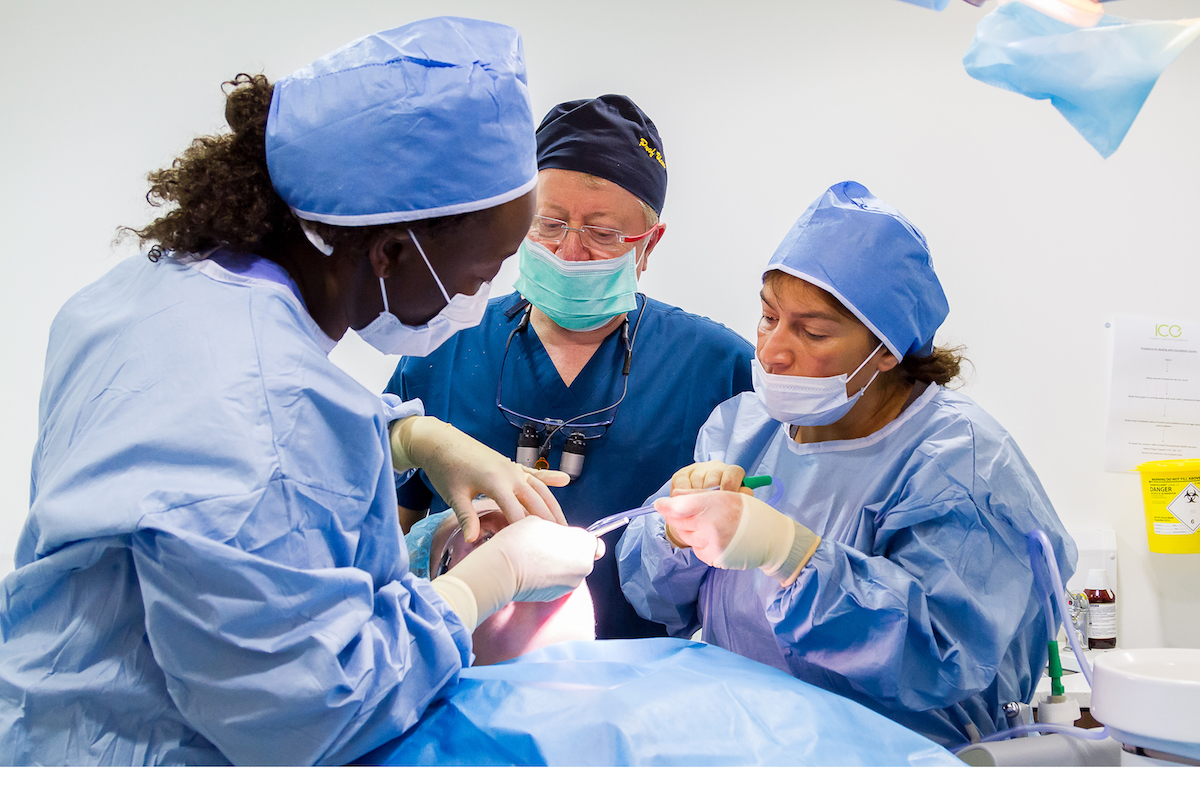
Choosing the right bone grafting material will help dental professionals achieve the best clinical outcomes for their patients
Dental implants have become a well-established treatment for the management of complete and partial edentulism.[i] Full arch implant-retained prostheses provide several advantages over other options such as conventional dentures. In addition to looking and functioning like natural teeth, these prostheses are designed to be long lasting. They’re also more comfortable and stable than conventional dentures,[ii] allowing the patient to bite and chew more naturally and to eat certain foods that can be difficult to eat with a removable alternative.
In addition, full arch rehabilitation will help to preserve the bone, while removable dentures often lead to bone resorption. After the first year of implantation, an implant should have <0.2mm annual loss of marginal bone level to be considered a success.[iii] The annual marginal bone loss for dentures varies from 0.13 +/- 0.35mm to 1.03 +/- 0.65mm.[iv]
Where bone loss has already occurred and inadequate volume exists for implant treatment, bone augmentation may be indicated. Bone grafting is the only solution to reverse dental bone loss and is a well-accepted procedure required in one in every four dental implants placed.[v]
There are four main types of bone grafts: guided bone regeneration (GBR), block grafting, bone expansion and distraction osteogenesis,[vi] with GBR being the most common in implant treatment.
In GBR different materials for bone augmentation can be used. The use of autogenous bone is often considered as a ‘gold standard’ in regards to grafting and is preferred in maxillofacial reconstruction.[vii]
Depending on the size of the area to be grafted, bone can be harvested from a number of different areas. Local or small bone defects will often receive grafts harvested from within the oral cavity including the implant site, external oblique ridge, mandibular ramus, mental region, maxillary tuberosity or the anterior nasal spine region.vi
However, increasingly, due to the resorptive properties of the alveolus post extraction, bone substitutes may also be used.vi
Allogenic bone, or allograft, is non-living bone harvested from a cadaver, which contains no organic tissue. It is processed using a freeze-dry technique to extract the water and then sterilised. Dissimilar to autogenous bone, allogenic bone cannot produce new bone on its own. It serves as a framework so that bone cells from the surrounding bone can grow to fill the defect.
Xenogenic bone, or xenograft, is derived from non-living bone of another species, usually from bovine or porcine sources. Processed at very high temperatures to avoid the possibility of immune rejection and contamination, only the mineral content of the bone is used for grafting. Xenografts are the materials most used in the dental field.[viii]
Both allogenic and xenogenic bone grafting have the advantage of not requiring a second procedure to harvest a patient’s own bone. However, bone regeneration does take longer than with autografts because they lack the same bone-forming properties.
There is also the option of alloplast or ‘synthetic bone’. This has a structure similar to natural bone and various materials are available for grafting, the most common being tri-calcium phosphate which shows good biocompatibility and osteoconductivity.[ix]
Different bone grafting materials can also work together. The combination of autogenous bone with deproteinised bovine bone has shown better results because of its osteogenic property.[x]
When considering what bone graft to use, a patient’s preferences should be considered along with the usual clinical factors such as tissue viability, defect site, graft size and cost – an element that is often overlooked.[xi]Successful dental treatment does not depend solely on the provision of good dental care; it also depends on the patient’s compliance and participation in decision making. Some patients may have reservations about xenografts, for example, due to their religious or dietary beliefs.x
 Due to the prevalence of peri-implantitis, it is crucial to provide the most suitable bone augmenting biomaterial to accomplish the best treatment results.[xii] Indeed, peri-implantitis is considered to be the main biological cause of implant failure five years post-operatively. Review studies have estimated that peri-implantitis will affect 28%-56% of patients and 12%-43% of individual implant sites.[xiii]
Dentists have to be right at the top of their game in the field of implantology when it comes to full mouth rehabilitation work. Unlike simpler dental procedures, the success of such treatment largely depends on the individual dentist’s skill.[xiv] Therefore, it is essential to keep your skills refreshed and also consider attending courses designed to stimulate and elevate your skills. A practice can see increases in turnover and profits by offering advanced treatment options.
Training that covers full mouth rehabilitation is provided by Ucer Education. Eminent specialist oral surgeon Professor Cemal Ucer and his team of highly skilled professionals can guide dental practitioners through an Advanced Certificate in Full Mouth Oral Implant Rehabilitation giving them the skills to confidently practise in the area. This blended postgraduate training programme, which takes place over a period of six months, is accredited by the University of Salford and delivered at the cutting-edge facilities of the prestigious ICE Postgraduate Dental Institute.
Given the state of the nation’s oral health – around three in four adults (74%) in the UK have had a tooth extracted[xv] – demand for dental implant treatments is only set to rise. Will you be ready?

To find out more, contact Ucer Education today. Contact Professor Ucer at
ucer@icedental.institute or Mel Hay at mel@mdic.co;
call 01612 371842 or visit www.ucer-clinic.dental.

FYI
Prof. Cemal Ucer, BDS, MSc, PhD, FDTFEd., ITI Fellow, Specialist Oral Surgeon
Cemal Ucer first established an implant referral centre in 1995. He was awarded an MSc in Implantology at Manchester Dental Hospital following his research into guided bone regeneration and osteopromotion. He later gained a PhD for his clinical and laboratory studies into the factors affecting the success of implant treatment in iliac grafts and the investigation of the effect of skeletal bone density on implant survival. He has personally trained and mentored more than 1,000 dentists in implant dentistry as one of the main providers of implant education in the UK.
Cemal’s current clinical research interests include immediate implant placement, reconstructive bone surgery, nerve damage and the effect of bone density on the success of implant treatment. Academically, he has gained European recognition for his work on the development of a new framework for teaching and assessment of clinical competence in implantology. He is a co-author of the consensus paper produced by the Association for Dental Education in Europe (ADEE) following the first pan-European collaboration between EU universities to establish common training and assessment standards in dental implantology. He is an invited member of the working group convened by the FGDP (UK) and the General Dental Council (GDC) to update the Training Standards in Implant Dentistry (TSID) guidelines in 2012 and 2016.
Cemal is a Fellow of the Dental Trainers Faculty of the Royal College of Surgeons of Edinburgh (RCSEd) and a Fellow of the International Team for Implantology (ITI) and a member of Megagen’s MINTEC UK & I Board for education and clinical research. He is a member of the editorial board of JOMR (Journal of Oral & Maxillofacial Research) and the chair of the editorial advisory board of Implant Dentistry Today. Cemal is Professor and Clinical Lead of the MSc programme in Dental Implantology and a member of the Faculty of Examiners of the Royal College of Surgeons of Edinburgh’s Diploma in Implant Dentistry. He is a past president of The Association of Dental Implantology (ADI) (2011-2013).
Cemal has been appointed by FGDP (UK) to lead the working group to develop the “national standards in implant dentistry” which is due to be published later in 2018 following the completion of an external consultation process.
[i] Azpiazu-Flores FX, Lee DJ, Jurado CA, Afrashtehfar KI, Alhotan A, Tsujimoto A. Full-Mouth Rehabilitation of a Patient with Sjogren’s Syndrome with Maxillary Titanium-Zirconia and Mandibular Monolithic Zirconia Implant Prostheses Fabricated with CAD/CAM Technology: A Clinical Report. Journal of Functional Biomaterials. 2023; 14(4):174. https://doi.org/10.3390/jfb14040174 [Accessed August 2023]
[ii] Bajunaid SO, Alshahrani AS, Aldosari AA, Almojel AN, Alanazi RS, Alsulaim TM, Habib SR. Patients’ Satisfaction and Oral Health-Related Quality of Life of Edentulous Patients Using Conventional Complete Dentures and Implant-Retained Overdentures in Saudi Arabia. Int J Environ Res Public Health. 2022 Jan 4;19(1):557. doi: 10.3390/ijerph19010557. PMID: 35010815; PMCID: PMC8744659. [Accessed August 2023]
[iii] Geraets W, Zhang L, Liu Y, Wismeijer D. Annual bone loss and success rates of dental implants based on radiographic measurements. Dentomaxillofac Radiol. 2014;43(7):20140007. doi: 10.1259/dmfr.20140007. Epub 2014 Jul 17. PMID: 25030551; PMCID: PMC4170845. [Accessed August 2023]
[iv] Dorj O, Lin CK, Salamanca E, Pan YH, Wu YF, Hsu YS, Lin JC, Lin HK, Chang WJ. Marginal Bone Loss around Implant-Retaining Overdentures versus Implant-Supported Fixed Prostheses 12-Month Follow-Up: A Retrospective Study. Int J Environ Res Public Health. 2022 Feb 3;19(3):1750. doi: 10.3390/ijerph19031750. PMID: 35162773; PMCID: PMC8835213. [Accessed August 2023]
[v] Zhao R, Yang R, Cooper PR, Khurshid Z, Shavandi A, Ratnayake J. Bone Grafts and Substitutes in Dentistry: A Review of Current Trends and Developments. Molecules. 2021 May 18;26(10):3007. doi: 10.3390/molecules26103007. PMID: 34070157; PMCID: PMC8158510. [Accessed August 2023]
[vi] NHS England Bone Grafting for Dental Implants https://www.cuh.nhs.uk/patient-information/bone-grafting-for-dental-implants/
[viii] Ferraz MP. Bone Grafts in Dental Medicine: An Overview of Autografts, Allografts and Synthetic Materials. Materials. 2023; 16(11):4117. https://doi.org/10.3390/ma16114117 [Accessed August 2023]
[ix] Titsinides S, Agrogiannis G, Karatzas T. Bone grafting materials in dentoalveolar reconstruction: A comprehensive review. Jpn Dent Sci Rev. 2019 Nov;55(1):26-32. doi: 10.1016/j.jdsr.2018.09.003. Epub 2018 Sep 28. PMID: 30733842; PMCID: PMC6354279.
[x] Dam VV, Trinh HA, Rokaya D, Trinh DH. Bone Augmentation for Implant Placement: Recent Advances. Int J Dent. 2022 Mar 27;2022:8900940. doi: 10.1155/2022/8900940. PMID: 35386549; PMCID: PMC8977324. [Accessed August 2023]
[xi] Almutairi AS. A descriptive analysis of patient’s preferences in bone graft therapy in dentistry. Int J Health Sci (Qassim). 2019 May-Jun;13(3):24-28. PMID: 31123436; PMCID: PMC6512149. [Accessed August 2023]
[xii] Shamsoddin E, Houshmand B, Golabgiran M. Biomaterial selection for bone augmentation in implant dentistry: A systematic review. J Adv Pharm Technol Res. 2019 Apr-Jun;10(2):46-50. doi: 10.4103/japtr.JAPTR_327_18. PMID: 31041181; PMCID: PMC6474167. [Accessed August 2023]
[xiii] Al-Kadhim, Karrar A. H., Pritchard, Manon ORCID: https://orcid.org/00000002-5135-4744, Farnell, Damian ORCID: https://orcid.org/0000-0003-06621927, Thomas, David W. ORCID: https://orcid.org/0000-0001-7319-5820, Adams, Robert and Claydon, Nicholas ORCID: https://orcid.org/0000-00024151-1515 2018. Surgical therapy for peri-implantitis management: a systematic review and meta-analysis. Oral Surgery 11 (3) , pp. 200-212. 10.1111/ors.12344 file [Accessed August 2023]
[xiv] Sonkar, J., Maney, P., Yu, Q. et al. Retrospective study to identify associations between clinician training and dental implant outcome and to compare the use of MATLAB with SAS. Int J Implant Dent 5, 28 (2019). https://doi.org/10.1186/s40729-019-0182-6[Accessed August 2023]
[xv] Oral Health Foundation. Oral health statistics in the UK https://www.dentalhealth.org/oral-health-statistics [Accessed August 2023]







