


Stability in unlikely circumstances
Featured Products Promotional FeaturesPosted by: Dental Design 10th November 2023
Osseointegration is key to a dental implant’s long-term success. Without it, the restoration wouldn’t be stable enough to provide functional and aesthetic benefits for a patient. If the relationship between implant and bone is so important, what considerations should be made when a patient presents with less than favourable bone density?
In particular, how does an implant case change when a patient has osteoporosis?
An important factor
Bone loss occurs naturally with age, but abnormally fast deficiency could be a result of steroid use, the menopause, a genetic predisposition, or even a poor diet, amongst other causes.[i] By definition, osteoporosis is a health condition that weakens bones by reducing their density, making them fragile and putting them at a greater risk of a break or fracture.i It affects approximately 200 million people worldwide.[ii]
It’s also often difficult to diagnose early. Commonly developing with age, it may take a fracture to realise the presence of osteoporosis. Whilst a dental x-ray could potentially show a disparity in bone density and act as a primary screening, a diagnosis can only be safely made with a dual-energy X-ray absorptiometry (DEXA) examination.[iii] This is a more specialised form of imaging assessment that primarily judges bone density.
The connection between implant osseointegration and osteoporosis seems obvious. To a patient it may be no surprise that impaired bone density is a biological risk for implant failure[iv] and traditionally the condition may have even been a cause for ruling out an implant altogether – but this doesn’t have to be the case.
Prior to placement
Osteoporosis must be considered alongside other systemic and local risk factors that contribute to the success of an implant, such as periodontal conditions.[v]
If periodontal diseases are not adequately controlled, patients are at risk of alveolar bone loss which affects the attachment to teeth,[vi] and in turn an implant. If a patient presents with both osteoporosis and periodontal disease they could be at a greater risk of implant failure. Attention to effective oral hygiene is therefore necessary to reduce the incidence of periodontal disease occurring in osteoporotic patients. Already fragile bone potentially undergoing further resorption would be a higher risk to implant survival.
Evidence suggests that osteoporotic patients face an increased incidence and severity of periodontal disease, with post-menopausal women most at risk.[vii] Clinicians should be wary of their patients’ oral hygiene when assessing the suitability of implant treatment, and must insist that diligent routines be followed to maximise the potential of a favourable outcome.
The implant zone
One possible way to create a suitable setting for implant osseointegration in the osteoporotic patient is with a bone graft. Up to 50% of all dental implant procedures already involve the use of a bone graft.[viii] It’s an option to treat resorption, and ensures there is a sufficient quality of bone for the placement of an implant.[ix]
The choice of an autograft (bone taken from the individual’s body) or an allograft (transferred between genetically unrelated subjects)viii could both be viable, but the latter may be preferable if the pre-existing issues with osteoporotic bone are consistent throughout a patient’s body.
Tracking success
 If the patient is deemed suitable for a dental implant, or work has been completed to facilitate its placement, the next step is carefully tracking the implant’s osseointegration. Both primary and secondary stability are important. Having an objective measurement for this throughout the process can be a valuable tool for timing implant loading correctly.[x]
Immediate loading has become a preferential treatment for many patients, achieving restoration to a complete and aesthetic dentition in as little time as possible. Immediate placement and loading have been found to have a success rate of 96.2%, which increases to 98.3% when loading is delayed.[xi]
Both methods are evidently successful in the right circumstances, and immediate loading has proven to be successful for osteoporotic patients.[xii] However, an objective measurement of implant stability allows for the greatest chance of treatment success.
If a clinician can identify low implant stability early on, they could make the informed decision to delay loading and employ a two-step protocol. Similarly, if an osteoporotic patient shows excellent primary stability, immediate loading becomes a viable option backed by the clinician’s judgement and evidence.
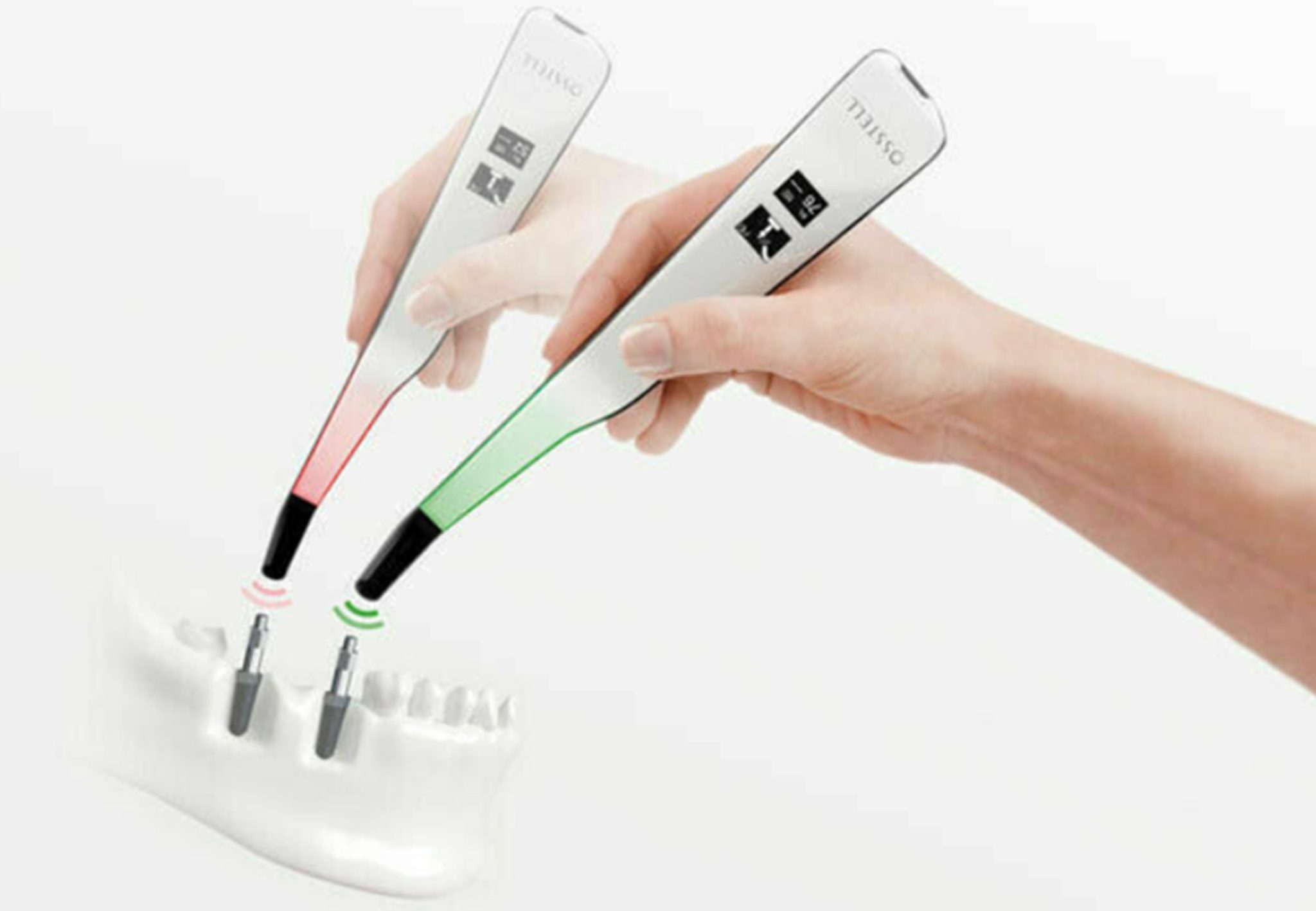
Dental professionals can precisely judge implant stability for patients with risk factors in a matter of seconds with the Osstell Beacon from W&H. It is a fast working, non-invasive instrument that guides treatment provision by assessing implant stability and therefore giving a good indication of osseointegration. The wireless tool can be moved simply around a practice for complete freedom, whilst sharing accurate implant stability quotient (ISQ) values, that are backed by over 1300 studies, to your workstation.
When supported with an effective treatment plan and the tools to track the success of a dental implant, osteoporotic patients can enjoy successful treatment. Assessing the unique risks that come with osteoporosis is important, and can create a solution that benefits millions of prospective patients across the world.

To find out more visit www.wh.com/en_uk, call 01727 874990 or email office.uk@wh.com
[i] NHS, (2022). Overview, Osteoporosis (Online) Available at: https://www.nhs.uk/conditions/osteoporosis/ [Accessed August 2023]
[ii] Sözen, T., Özışık, L., & Başaran, N. Ç. (2017). An overview and management of osteoporosis. European journal of rheumatology, 4(1), 46.
[iii] Tounta, T. S. (2017). Diagnosis of osteoporosis in dental patients. Journal of frailty, sarcopenia and falls, 2(2), 21.
[iv] De Medeiros, F. C. F. L., Kudo, G. A. H., Leme, B. G., Saraiva, P. P., Verri, F. R., Honório, H. M., … & Junior, J. S. (2018). Dental implants in patients with osteoporosis: a systematic review with meta-analysis. International journal of oral and maxillofacial surgery, 47(4), 480-491.
[v] Giro, G., Chambrone, L., Goldstein, A., Rodrigues, J. A., Zenóbio, E., Feres, M., … & Shibli, J. A. (2015). Impact of osteoporosis in dental implants: a systematic review. World journal of orthopedics, 6(2), 311.
[vi] Helmi, M. F., Huang, H., Goodson, J. M., Hasturk, H., Tavares, M., & Natto, Z. S. (2019). Prevalence of periodontitis and alveolar bone loss in a patient population at Harvard School of Dental Medicine. BMC Oral Health, 19, 1-11.
[vii] Juluri, R., Prashanth, E., Gopalakrishnan, D., Kathariya, R., Devanoorkar, A., Viswanathan, V., & Romanos, G. E. (2015). Association of postmenopausal osteoporosis and periodontal disease: a double-blind case-control study. Journal of international oral health: JIOH, 7(9), 119.
[viii] Zhao, R., Yang, R., Cooper, P. R., Khurshid, Z., Shavandi, A., & Ratnayake, J. (2021). Bone grafts and substitutes in dentistry: A review of current trends and developments. Molecules, 26(10), 3007.
[ix] Elakkiya, S., Ramesh, A. S., & Prabhu, K. (2017). Systematic analysis on the efficacy of bone enhancement methods used for success in dental implants. The Journal of the Indian Prosthodontic Society, 17(3), 219.
[x] Swami, V., Vijayaraghavan, V., & Swami, V. (2016). Current trends to measure implant stability. The Journal of the Indian Prosthodontic Society, 16(2), 124.
[xi] Donos, N., Asche, N. V., Akbar, A. N., Francisco, H., Gonzales, O., Gotfredsen, K., … & Schliephake, H. (2021). Impact of timing of dental implant placement and loading: summary and consensus statements of group 1—the 6th EAO consensus conference 2021. Clinical Oral Implants Research, 32, 85-92.
[xii] Siebert, T., Jurkovic, R., Statelova, D., & Strecha, J. (2015). Immediate implant placement in a patient with osteoporosis undergoing bisphosphonate therapy: 1-year preliminary prospective study. Journal of Oral Implantology, 41(S1), 360-365.







