


The minimally invasive method: a philosophy for dental implant longevity
Featured Products Promotional FeaturesPosted by: Dental Design 25th November 2023
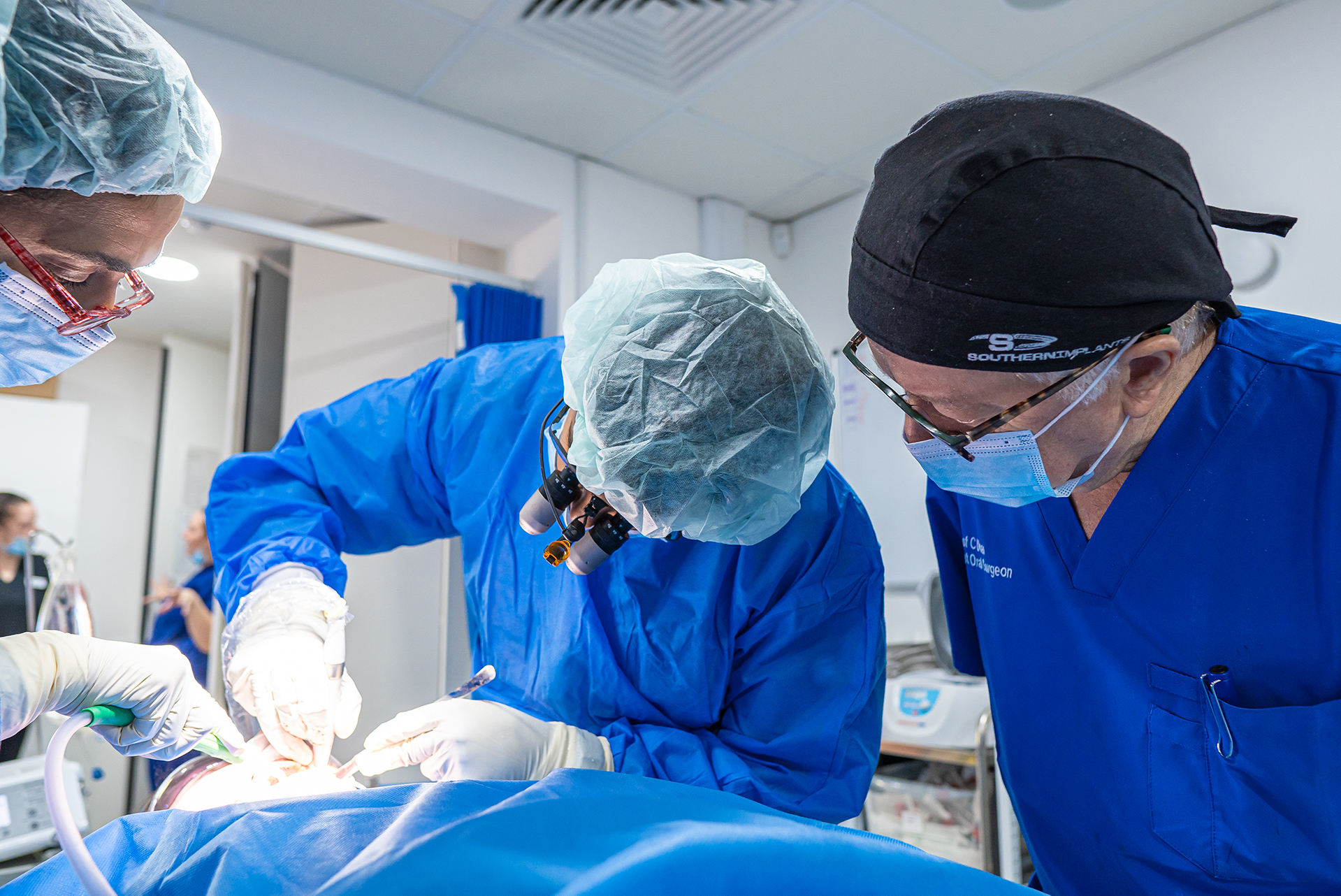
Considered the ‘gold standard of modern restorative dentistry’, minimally invasive concepts shift the practitioner’s focus to prevention and minimal intervention.[i] Such standards allow clinicians to prevent dental disease or halt its progression, in addition to honouring the biological tissues during surgery. Many areas within the field have adopted minimally invasive concepts into their treatment plans, including when treating patients with dental implants. This method of tooth replacement has become an immensely popular option but despite the advancements in the technology, complications still arise that can put the procedure at risk.
How can minimally invasive dentistry aid clinicians in delivering implant therapy that is safe, effective and long-lasting?
The rise of dental implants
 Saving a tooth is at the heart of minimally invasive dentistry, but in situations where the tooth cannot be saved, alternative solutions are needed. It is impossible to predict how many dental implants are placed in the UK each year, but what is evident is the benefit that this treatment provides to patients. The literature supports the view that many patients prefer implants over other treatment modalities to treat missing teeth: research shows that implants can enhance a patient’s quality of life, self-confidence and mental health.[ii] They provide stability and are predictable for patients who are either partially- or fully-edentulous.
Advancements in the last decade have made implant treatment highly accessible and suitable for most patients. Minimally invasive dentistry allows clinicians to approach treatment holistically and conservatively, with concepts that simplify the procedure and reduce surgery time and post-operative discomfort, while boosting patient satisfaction.
The minimal approach
Minimally invasive techniques have been developed in order to extract the tooth as atraumatically as possible. Traditional forceps, the literature argues, could increase the risk of tooth fracture and damage to the soft tissues.[iii] Similarly, should this fail, techniques like mucoperiosteal flap surgery have been shown to increase postoperative pain and could impact the aesthetics of the soft tissues during rehabilitation.[iv]
Research postulates that minimally invasive extraction concepts like vertical extraction has a high success rate in the anterior and premolar areas.v Instruments like the periotome have also been lauded in the literature,[v]with researchers noting that it helps to remove the tooth and retained roots without damaging the surrounding alveolar plates or soft tissues. During implant therapy, the use of a periotome for extraction facilitates the ideal environment for both immediate and delayed placement.vi
As you may know, one of the most notable complications following an extraction is alveolar ridge resorption. Figures vary, but it is believed that after the first 6 months post extraction, around 40% of the alveolar height and 60% of the alveolar width is lost. This then continues at a rate of 0.25%-0.5% per year.[vi] Techniques for ensuring bone preservation and optimised healing is socket grafting, which as you are aware has become a predictable way to protect the buccolingual and mesiodistal dimensions of the site.[vii] Grafting can help to provide a strong foundation for implant placement and also facilitates improved aesthetics, a vital consideration in today’s society. In cases where the site is infected, bone-grafting should be delayed until the site has healed:vii however, in healthy sites, research shows that a combination of immediate implant placement and socket grafting is not only predictable but also facilitates adequate gingival contour and a favourable emergence profile.[viii]
Immediate implant therapy has been rapidly utilised as a means to preserve bone following a minimally invasive extraction.iii This procedure not only helps to limit bone resorption, but it can help to reduce the amount and complexity of surgical procedures, reduces the time the patient spends without a tooth replacement and can help to boost patient acceptance.iii
Meticulous treatment planning for superior outcomes
For many patients, implants are a considerable investment and the prospect of surgery can cause some apprehension. As you know, meticulous treatment planning is key when achieving successful and long-lasting outcomes that restore a patient’s dental function, aesthetics and comfort. Of course, having a comprehensive arsenal of clinical skills is vital to ensure you can achieve only the best outcome for your patient.
Keeping your skills refreshed includes attending courses designed to stimulate and elevate your skills in implant dentistry. Training that covers minimally invasive extractions and management of tooth loss with socket grafting or immediate implants is provided by Ucer Education, offering clinicians the chance to hone their abilities in minimally invasive dentistry. Specialist Oral Surgeon Professor Cemal Ucer and his team of highly skilled professionals will guide attendants through cutting-edge concepts and techniques, using his knowledge and expertise to help clinicians achieve success in practice. For more detail, contact the team today or visit the website for more information.
Dental implants represent the ingenuity of the dental field, and advancements like minimally invasive techniques are allowing clinicians to treat patients with a more holistic approach. With the right skills and with scrupulous planning, you can help your patients wear their new smile with confidence, with solutions that will endure.

To find out more, contact Ucer Education today. Contact Professor Ucer at
ucer@icedental.institute or Mel Hay at mel@mdic.co;
call 01612 371842 or visit www.ucer-clinic.dental.

[i] MM, J. (2014). Minimal Intervention Dentistry – A New Frontier in Clinical Dentistry. JOURNAL OF CLINICAL AND DIAGNOSTIC RESEARCH. [online] Available at: https://www.ncbi.nlm.nih.gov/pmc/articles/PMC4149165/ [Accessed 24 Jun. 2023].
[ii] Bhat, P., Siddique, E., Kulkarni, S., Trasad, V. and Thakur, S. (2019). Public awareness, knowledge, attitude and acceptance of dental implants as a treatment modality among patients visiting SDM College of Dental Sciences and Hospital, Dharwad. Journal of Indian Society of Periodontology, [online] 23(1), p.58. Available at: https://www.ncbi.nlm.nih.gov/pmc/articles/PMC6334542/ [Accessed 24 Jun. 2023].
[iii] BORGO, G.O., SOUSA, K.G. de, MOREIRA, K.M.S. and PUPPIN-RONTANI, R.M. (2021). A minimally invasive technique for primary tooth extraction: a case report. RGO – Revista Gaúcha de Odontologia, [online] 69. Available at: https://www.scielo.br/j/rgo/a/FVHrQYbzvz78ZRGjvSzJ4HB/?format=pdf&lang=en [Accessed 25 Jun. 2023].
[iv] Hong, B., Bulsara, Y., Gorecki, P. and Dietrich, T. (2018). Minimally invasive vertical versus conventional tooth extraction. The Journal of the American Dental Association, [online] 149(8), pp.688–695. Available at: https://jada.ada.org/article/S0002-8177(18)30202-2/pdf [Accessed 25 Jun. 2023].
[v] Sharma, S.D., Vidya, B., Alexander, M. and Deshmukh, S. (2014). Periotome as an Aid to Atraumatic Extraction: A Comparative Double Blind Randomized Controlled Trial. Journal of Maxillofacial and Oral Surgery, [online] 14(3), pp.611–615. Available at: https://link.springer.com/article/10.1007/s12663-014-0723-8 [Accessed 25 Jun. 2023].
[vi] Fu, P.-S., Wu, Y.A., Tsai, C.-F., Wang, J.-C., Huang, T.-K., Chen, W.-C. and Hung, C.-C. (2011). Immediate implant placement following minimally invasive extraction: A case report with a 6-year follow-up. [online] 27(8), pp.353–356. Available at: https://onlinelibrary.wiley.com/doi/10.1016/j.kjms.2010.10.003 [Accessed 24 Jun. 2023].
[vii] Jackson, B.J. and Morcos, I. (2007). Socket Grafting: A Predictable Technique for Site Preservation. Journal of Oral Implantology, [online] 33(6), pp.353–364. Available at: https://meridian.allenpress.com/joi/article/33/6/353/2144/Socket-Grafting-A-Predictable-Technique-for-Site [Accessed 24 Jun. 2023].
[viii] Castellon, P. and Yukna, R.A. (2004). Immediate Dental Implant Placement in Sockets Augmented With HTR Synthetic Bone. Implant Dentistry, [online] 13(1), pp.42–48. Available at: https://pubmed.ncbi.nlm.nih.gov/15017303/ [Accessed 26 Jun. 2023].







