


Extending your comfort zone
Featured Products Promotional FeaturesPosted by: Dental Design 14th December 2023
Creating a comfortable dental environment is relatively easy – play a soothing radio station in the background for starters – but doing procedures that are comfortable? Now that’s a different ball game
With dental anxiety a pretty common problem,[i] anything a dental professional can do to make a patient feel as comfortable as possible is vital.
Take the relatively straightforward and everyday dental procedure of taking an analogue impression. Placing the impression tray in the patient’s mouth can be a challenge and if the tray doesn’t fit then that’s another problem. Traditional impression materials, such as alginate or polyvinyl siloxane, can also often contribute to gag reflexes and discomfort in patients. And when the entire process can take up to 24 minutes[ii] an important and vital procedure is deemed unpleasant and one only to be endured. Not exactly a recipe for carefree and repeat visits to your practice, is it?
Enter the age of digital dentistry and the advent of intraoral scanners (IOS). IOS offer a non-invasive alternative, allowing the dental team to capture digital impressions without the need for messy materials or uncomfortable trays.
Digital impressions are quicker too, taking less than half the time of conventional impressions.[iii] By capturing precise digital images, intraoral scanning eliminates the potential errors and discrepancies commonly associated with traditional impression materials. This increased accuracy reduces the need for retakes and enhances the quality of the final dental restoration. Research has shown that digital impressions with IOS have a higher level of detail and precision than conventional methods.[iv]
IOS enable faster data acquisition and processing, resulting in streamlined workflows and reduced chair time. Dental professionals can quickly capture digital impressions and  immediately view and analyse them on a computer screen, expediting the treatment planning process. An advantage that benefits patient communication too.
Furthermore, IOS greatly improve the efficiency of the dental workflow. Digital impressions are captured and processed in real-time, eliminating the need for sending physical impressions to dental laboratories. This reduces the turnaround time for dental restorations, allowing patients to receive the final products more quickly. Additionally, the digital workflow enables improved communication between dentists and dental technicians, as they can share and discuss the digital model online without the limitations of physical models.
It’s not just about being a replacement for a conventional impression. IOS integrate seamlessly with other digital tools and software, such as computer-aided design and computer-aided manufacturing (CAD/CAM) systems. This enables dentists to fabricate restorations in-house or send digital files to dental laboratories for milling or 3D printing. The digital workflow also allows for easier integration of emerging technologies, such as artificial intelligence, into everyday dental practice.[v]
Intraoral scanning facilitates improved treatment planning and case evaluation.[vi] The digital images captured by IOS can be enlarged, enhanced, and manipulated to aid in diagnosis and treatment planning. Dentists can easily analyse the images, measure distances and angles, and make accurate evaluations of dental conditions.
Admittedly, IOS require investment but they can contribute to cost savings in the long run. They reduce the need for traditional impression materials and shipping costs associated with physical impressions, while also minimising the chances of remakes or adjustments (and their associated costs).
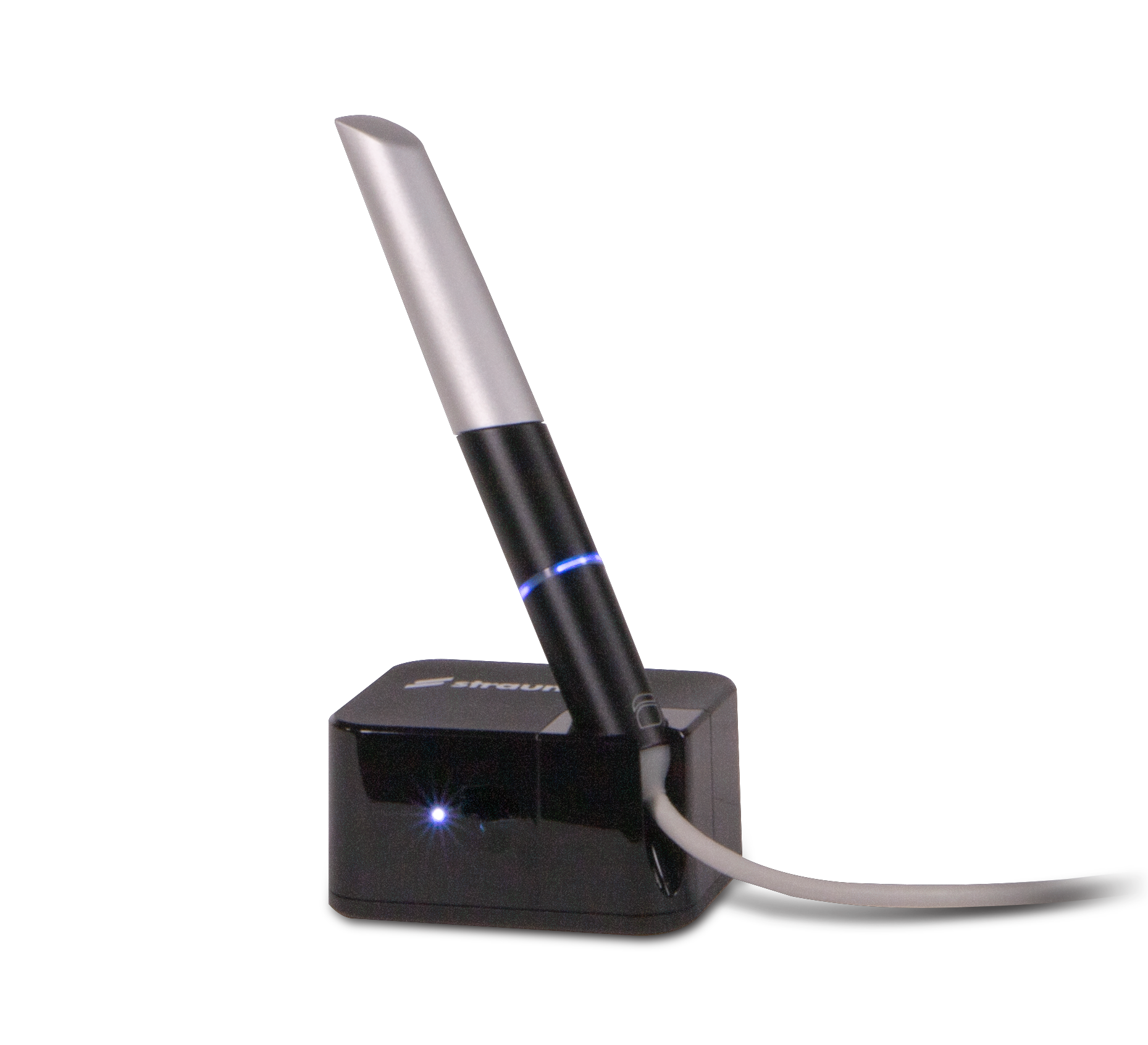
Technology in the IOS arena is constantly evolving and the Straumann Group is at the cutting-edge. It supplies the Virto Vivo™ intraoral scanner, which offers flexibility and simplicity while boosting both practitioner and patient comfort. High-resolution images make diagnostics simple, while fast scanning speeds and autoclavable sleeves enhance workflow efficiency. The guided workflow helps clinicians at each stage, allowing even those new to the technology to enjoy integrated connectivity from the very beginning.
From increased accuracy and improved efficiency to enhanced patient comfort and satisfaction, intraoral scanners have transformed the way dental impressions are taken. With the ability to facilitate precise treatment planning and integrate with other digital tools, intraoral scanners are set to become indispensable in the 21stcentury dental practice.

For more details, please visit
https://www.straumann.com/digital/us/en/home/equipment/io-scanners.html
[i] Beaton L, Freeman R, Humphris G. Why are people afraid of the dentist? Observations and explanations. Med Princ Pract. 2014;23(4):295-301. doi: 10.1159/000357223. Epub 2013 Dec 20. PMID: 24356305; PMCID: PMC5586885. [Accessed August 2023]
[ii] Lee SJ, Gallucci GO. Digital vs. conventional implant impressions: efficiency outcomes. Clin Oral Implants Res. 2013 Jan;24(1):111-5. doi: 10.1111/j.1600-0501.2012.02430.x. Epub 2012 Feb 22. PMID: 22353208.
[iii] Alfallaj HA, Alsaloum MA, Altuwaijri SH, Aldibasi OS, Alkadi LT. Procedure Time and Students’ Perception Comparing Full Arch Digital Scans with Conventional Impressions: A Cross-Over Randomized Experimental Trial. Int J Dent. 2022 Oct 17;2022:6320251. doi: 10.1155/2022/6320251. PMID: 36299404; PMCID: PMC9592231.
[iv] Zarbakhsh A, Jalalian E, Samiei N, Mahgoli MH, Kaseb Ghane H. Accuracy of Digital Impression Taking Using Intraoral Scanner versus the Conventional Technique. Front Dent. 2021 Feb 10;18:6. doi: 10.18502/fid.v18i6.5649. PMID: 35965710; PMCID: PMC9355861.
[v] Vodanović M, Subašić M, Milošević D, Savić Pavičin I. Artificial Intelligence in Medicine and Dentistry. Acta Stomatol Croat. 2023 Mar;57(1):70-84. doi: 10.15644/asc57/1/8. PMID: 37288152; PMCID: PMC10243707.
[vi] Christopoulou I, Kaklamanos EG, Makrygiannakis MA, Bitsanis I, Perlea P, Tsolakis AI. Intraoral Scanners in Orthodontics: A Critical Review. Int J Environ Res Public Health. 2022 Jan 27;19(3):1407. doi: 10.3390/ijerph19031407. PMID: 35162430; PMCID: PMC8834929. [Accessed August 2023]







