



Making IOS child’s play
Featured Products Promotional FeaturesPosted by: Dental Design 25th February 2024
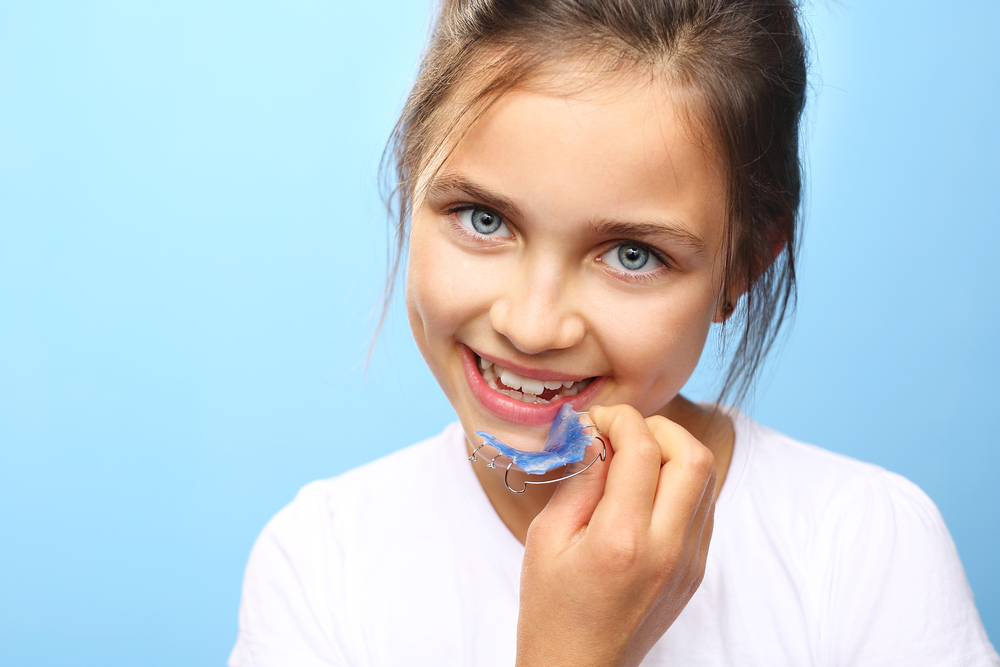
Embracing intraoral scanning can enhance the patient experience whatever their age
The use of intraoral scanning (IOS) has increased exponentially over recent years. It has gained a lot of traction in orthodontics[i] and studies have proven both time-efficiency and comfort benefits.[ii] Most of these studies are conducted in adult patients[iii] and yet a large percentage of the volume of orthodontic patients are children and/or adolescents.[iv]
Indeed, according to the British Orthodontic Society, orthodontics in children is in high demand. In excess of 200,000 children and teenagers in England and Wales have treatment every year, with growing numbers of young people seeking treatment on a private basis.[v]
The paediatric patient presents different challenges compared to adult patients which means a dental professional needs to adapt their way of working with them. So, what advantages can IOS bring for younger patients?
Comfort blanket
One of the most significant advantages of IOS in children’s orthodontics is the increased comfort it provides. Children have smaller oral cavities, which makes it more difficult to take impressions whatever method you use. And this may cause more discomfort as a result. However, traditional methods of taking dental impressions often involve the use of messy and unpleasant materials, such as alginate. Children, especially those who are apprehensive about dental visits, commonly find this process uncomfortable and distressing.iv
The prevalence of dental anxiety in children ranges from 6% to 20%[vi] and a 2013 national survey in the UK found very high levels of dental anxiety in 14% of young people aged 12, and in 10% of 15-year-olds.[vii] Most children prefer intraoral scanning – one study found that 89.3% of children felt stressed with the conventional methods, compared to 3.6% with the digital method.iv
Another benefit of intraoral scanning in children’s orthodontics is the improved accuracy and precision of treatment planning. As you know, the digital impressions captured by the intraoral scanner provide high-resolution images of the teeth and gingiva, allowing orthodontists to obtain more detailed information about the patient’s oral structures. This information can then be used to create a precise treatment plan, ensuring that the orthodontic treatment is tailored to the child’s specific needs.
Screen time
 Additionally, intraoral scanning allows for better communication between the orthodontist, the child, and their parents. The digital images can be displayed on a computer screen, making it easier for the orthodontist to explain the treatment process and show the child and their parents the current condition of their teeth and gums. And what child do you know who isn’t happy looking at a screen? According to Specsavers, children in the UK aged between 5-16 years spend a total of 6.3 hours on screens a day![viii] And furthermore, a study by the National Institute for Health and Care Research, shows that audiovisual distraction slightly reduced the heart/pulse rate in children and improved children’s cooperation during treatment.[ix]
Intraoral scanning also offers time-saving benefits for both the child and the dental professional.i With intraoral scanning, the digital impressions can be obtained in a single appointment, reducing the overall treatment time. This is especially beneficial for children, as it minimises their time spent in the dental chair. The average attention span of an 8-year-old is 16-24 minutes, rising to 24-36 minutes for a 12-year-old.[x]
Perception is all
And while the two methods in children have been found to have a similar time frame, regarding the perception of time, 64.3% of children thought that the conventional method was longer.iv Similarly, while the gag reflex and breathlessness were found to be similar between digital scanning and conventional impressions, children were significantly more nauseated and less comfortable with alginate impressions than with digital impressions in the maxilla.iv
Suitable for patients both young and old, the award winning Virtuo VivoTM Intraoral Scanner from Straumann®is a light and small solution (only 130g), ergonomically designed to provide a pen-like grip and exceptional patient comfort. Hard and soft tissue can be scanned from multiple orientations, capturing difficult-to-see areas with minimal effort. Resulting scans are in colour and high resolution. The scanner boasts a removable, autoclavable sleeve in coated metal to ensure proper hygiene for the patient and practice.
Intraoral scanning offers numerous benefits in children’s orthodontics. From increased comfort to enhanced treatment planning, these advantages are transforming the orthodontic experience for children. With its improved accuracy, better communication, and time-saving capabilities, intraoral scanning is revolutionising the way orthodontic treatment is delivered to children. By embracing this technology, dental professionals can provide more efficient, effective, and enjoyable experiences for their young patients.

For more details, please visit
https://www.straumann.com/digital/us/en/home/equipment/io-scanners.html
[i] Christopoulou I, Kaklamanos EG, Makrygiannakis MA, Bitsanis I, Perlea P, Tsolakis AI. Intraoral Scanners in Orthodontics: A Critical Review. Int J Environ Res Public Health. 2022 Jan 27;19(3):1407. doi: 10.3390/ijerph19031407. PMID: 35162430; PMCID: PMC8834929. [Accessed December 2023]
[ii] Mohammed Alassiry A. Clinical aspects of digital three-dimensional intraoral scanning in orthodontics – A systematic review. Saudi Dent J. 2023 Jul;35(5):437-442. doi: 10.1016/j.sdentj.2023.04.004. Epub 2023 May 4. PMID: 37520596; PMCID: PMC10373090. [Accessed December 2023]
[iii] Mangano F, Gandolfi A, Luongo G, Logozzo S. Intraoral scanners in dentistry: a review of the current literature. BMC Oral Health. 2017 Dec 12;17(1):149. doi: 10.1186/s12903-017-0442-x. PMID: 29233132; PMCID: PMC5727697. [Accessed December 2023]
[iv] Intraoral scanners in kids: Serrano-Velasco D, Martín-Vacas A, Paz-Cortés MM, Giovannini G, Cintora-López P, Aragoneses JM. Intraoral scanners in children: evaluation of the patient perception, reliability and reproducibility, and chairside time-A systematic review. Front Pediatr. 2023 Jun 26;11:1213072. doi: 10.3389/fped.2023.1213072. PMID: 37435173; PMCID: PMC10331299.
https://www.frontiersin.org/articles/10.3389/fped.2023.1213072/full [Accessed December 2023]
[v] British Orthodontic Society https://www.bos.org.uk/patients/treatments/orthodontics-for-adults/why-orthodontics
[vi] Coric A, Banozic A, Klaric M, Vukojevic K, Puljak L. Dental fear and anxiety in older children: an association with parental dental anxiety and effective pain coping strategies. J Pain Res. 2014 Aug 20;7:515-21. doi: 10.2147/JPR.S67692. PMID: 25187737; PMCID: PMC4149462. [Accessed Decmber 2023]
[vii] NHS Digital https://digital.nhs.uk/data-and-information/publications/statistical/children-s-dental-health-survey/child-dental-health-survey-2013-england-wales-and-northern-ireland
[viii] Specsavers https://www.specsavers.co.uk/eye-health/screen-time-for-kids
[ix] National Institute for Health and Care Research https://evidence.nihr.ac.uk/alert/cartoons-are-promising-for-reducing-dental-anxiety-in-children/
[x] Brain Balance https://www.brainbalancecenters.com/blog/normal-attention-span-expectations-by-age







