



Stepping up to the platelet and bioenhancement
Featured Products Promotional FeaturesPosted by: Dental Design 19th February 2024
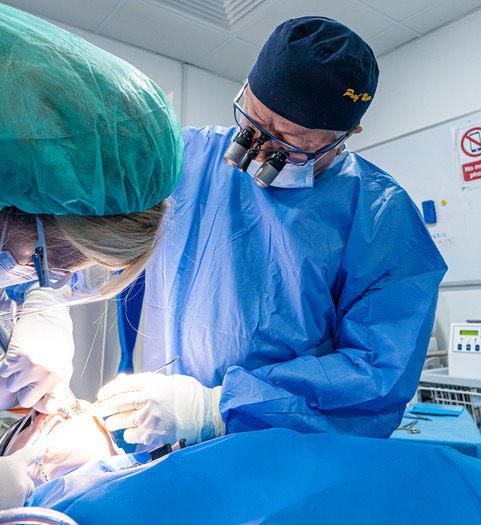
How platelet concentrates play a crucial role in the healing of bone defects in dentistry
Uncomplicated healing after an oral surgical procedure is a key stage for both patient and clinician. When it comes to dental implants, the time needed for healing can vary. While the restoration can sometimes be fitted at the time of implant placement, in staged graft cases, implant placement is delayed between six weeks to six months to allow the bone to regenerate.[i] This prolongs the overall duration of implant treatment and inconveniences the patient who has to wear a temporary restoration much longer.
Platelet rich plasma (PRP)[ii] and platelet rich fibrin (PRF)[iii] are two types of autologous blood-derived products that have gained popularity in the field of dentistry for their bio- active role in enhancing healing of various hard and soft tissue defects. While both PRP and PRF contain a high concentration of platelets, they differ in their method of preparation and composition, leading to different properties and outcomes in dental healing.
Platelet concentrates are produced by obtaining a small amount of the patient’s own blood and processing it to separate the platelet-rich portion from other components.[iv] This is typically done through centrifugation, a process that separates blood components based on their density. PRF is rich in growth factors and bioactive molecules, such as platelet-derived growth factor, transforming growth factor-beta, vascular endothelial growth factor, and insulin-like growth factor, amongst others.[v] These growth factors play a vital role during all four stages of wound healing by stimulating cell proliferation, angiogenesis, and the synthesis of extracellular matrix components.[vi]
Second generation PRF platelet concentrates are produced without the addition of anticoagulants or bovine thrombin. They are obtained by collecting blood in specially designed tubes that facilitate the formation of a fibrin clot. The blood sample is then centrifuged at a slower speed compared to PRP, resulting in the formation of a fibrin matrix containing highly concentrated matrix of leukocytes and platelet produces. The fibrin network in PRF acts as a scaffold that traps the platelets and allows for the slow release of growth factors over an extended period.[vii]
Different actions
The main difference between PRP and PRF lies in their method of preparation, composition and fibrin architecture.[viii] PRF offers a more sustained release of bio-active products such as cytokines and growth factors due to the fibrin matrix. Additionally, PRF retains leukocytes, which have osteo-immune modulating properties that have been shown to significantly enhance hard and soft tissue healing and regeneration.[ix]
In dentistry, PRF has been used to enhance healing after various treatments, such as tooth extractions, implant placement, periodontal surgeries, and bone grafting.
The application of PRF in dental procedures involves either the direct application of the platelet concentrate at the surgical site or the incorporation of these biomaterials into grafting materials to form “sticky bone”. PRF promotes angiogenesis, enhance soft tissue healing, and accelerate wound closure. In addition, these biomaterials have been shown to improve bone regeneration and enhance the integration of dental implants.[x]
Clinician’s choice
Autologous platelet concentrates have been employed in dentistry as well as medicine and surgery for several years to promote both hard- and soft-tissue healing.
The advantages of incorporating autogenous platelet concentrates (PRF) during oral surgical procedures such as bone grafting encompass reduced healing time, improved angiogenesis and enhanced bone regeneration, socket sealing through the fibrin matrix, antibacterial properties, and decreased post-extraction pain and infection risk.
A new paper authored by the eminent Professor Cemal Ucer and Dr Rabia Khan exploring alveolar ridge preservation (ARP) and applications of PRF could change future approaches for many clinicians. Their paper, ‘Alveolar Ridge Preservation with Autologous Platelet-Rich Fibrin (PRF): Case Reports and the Rationale’, demonstrates how implants could be placed just 8 weeks following ARP when augmented with PRF, creating the potential for reduced treatment durations and enhanced implant success. Such promising results are exemplary of the work associated with the Centre for Oral, Maxillofacial and Dental Implant Reconstructive Surgery, the renowned ZAGA Centre in Manchester offering patients clinically backed treatment approaches for predictable zygomatic treatments.
PRF has emerged as a valuable adjunct in oral surgery and implantology for its ability to enhance healing and promote tissue regeneration. PRF can be produced in solid or liquid format. Depending on the specific needs of the patient and the procedure, dental clinicians can choose between these autologous platelet concentrate preparations to optimise the healing process and improve patient outcomes.
Professor Ucer will be leading an advanced course with live surgery on the management of tooth loss with immediate implant placement or alveolar ridge preservation with PRF which will be launched in February 2024.

To request a copy of Professor Ucer’s newly published paper on socket grafting and PRF or to enquire about the new course please contact Professor Ucer at ucer@icedental.institute or Mel Hay at mel@mdic.co
01612 371842
Professor Cemal Ucer (BDS, MSc, PhD, Oral Surgeon, ITI Fellow)
FYI
Prof. Cemal Ucer, BDS, MSc, PhD, FDTFEd., ITI Fellow, Specialist Oral Surgeon

Cemal Ucer first established an implant referral centre in 1995. He was awarded an MSc in Implantology at Manchester Dental Hospital following his research into guided bone regeneration and osteopromotion. He later gained a PhD for his clinical and laboratory studies into the factors affecting the success of implant treatment in iliac grafts and the investigation of the effect of skeletal bone density on implant survival. He has personally trained and mentored more than 1,000 dentists in implant dentistry as one of the main providers of implant education in the UK.
Cemal’s current clinical research interests include immediate implant placement, reconstructive bone surgery, nerve damage and the effect of bone density on the success of implant treatment. Academically, he has gained European recognition for his work on the development of a new framework for teaching and assessment of clinical competence in implantology. He is a co-author of the consensus paper produced by the Association for Dental Education in Europe (ADEE) following the first pan-European collaboration between EU universities to establish common training and assessment standards in dental implantology. He is an invited member of the working group convened by the FGDP (UK) and the General Dental Council (GDC) to update the Training Standards in Implant Dentistry (TSID) guidelines in 2012 and 2016.
Cemal is a Fellow of the Dental Trainers Faculty of the Royal College of Surgeons of Edinburgh (RCSEd) and a Fellow of the International Team for Implantology (ITI) and a member of Megagen’s MINTEC UK & I Board for education and clinical research. He is a member of the editorial board of JOMR (Journal of Oral & Maxillofacial Research) and the chair of the editorial advisory board of Implant Dentistry Today. Cemal is Professor and Clinical Lead of the MSc programme in Dental Implantology and a member of the Faculty of Examiners of the Royal College of Surgeons of Edinburgh’s Diploma in Implant Dentistry. He is a past president of The Association of Dental Implantology (ADI) (2011-2013).
Cemal has been appointed by FGDP (UK) to lead the working group to develop the “national standards in implant dentistry” which is due to be published later in 2018 following the completion of an external consultation process.
[i] Association of Dental Implantology, https://consideringdentalimplants.co.uk/considering/default.aspx
[ii] Albanese A, Licata ME, Polizzi B, Campisi G. Platelet-rich plasma (PRP) in dental and oral surgery: from the wound healing to bone regeneration. Immun Ageing. 2013 Jun 13;10(1):23. doi: 10.1186/1742-4933-10-23. PMID: 23763951; PMCID: PMC3683340.[Accessed November 2023]
[iii] Sharma A, Ingole S, Deshpande M, Ranadive P, Sharma S, Kazi N, Rajurkar S. Influence of platelet-rich fibrin on wound healing and bone regeneration after tooth extraction: A clinical and radiographic study. J Oral Biol Craniofac Res. 2020 Oct-Dec;10(4):385-390. doi: 10.1016/j.jobcr.2020.06.012. Epub 2020 Jul 1. PMID: 32760646; PMCID: PMC7393389. [Accessed November 2023]
[iv] Dhurat R, Sukesh M. Principles and Methods of Preparation of Platelet-Rich Plasma: A Review and Author’s Perspective. J Cutan Aesthet Surg. 2014 Oct-Dec;7(4):189-97. doi: 10.4103/0974-2077.150734. PMID: 25722595; PMCID: PMC4338460. [Accessed November 2023]
[v] Pavlovic V, Ciric M, Jovanovic V, Stojanovic P. Platelet Rich Plasma: a short overview of certain bioactive components. Open Med (Wars). 2016 Aug 12;11(1):242-247. doi: 10.1515/med-2016-0048. PMID: 28352802; PMCID: PMC5329835. [Accessed November 2023]
[vi] Schultz GS, Chin GA, Moldawer L, et al. Principles of Wound Healing. In: Fitridge R, Thompson M, editors. Mechanisms of Vascular Disease: A Reference Book for Vascular Specialists [Internet]. Adelaide (AU): University of Adelaide Press; 2011. 23. Available from: https://www.ncbi.nlm.nih.gov/books/NBK534261/ [Accessed November 2023]
[vii] Naik B, Karunakar P, Jayadev M, Marshal VR. Role of Platelet rich fibrin in wound healing: A critical review. J Conserv Dent. 2013 Jul;16(4):284-93. doi: 10.4103/0972-0707.114344. PMID: 23956527; PMCID: PMC3740636. [Accessed November 2023]
[viii] Rizk HM, Salah Al-Deen MSM, Emam AA. Comparative evaluation of Platelet Rich Plasma (PRP) versus Platelet Rich Fibrin (PRF) scaffolds in regenerative endodontic treatment of immature necrotic permanent maxillary central incisors: A double blinded randomized controlled trial. Saudi Dent J. 2020 Jul;32(5):224-231. doi: 10.1016/j.sdentj.2019.09.002. Epub 2019 Sep 21. PMID: 32647469; PMCID: PMC7336024. [Accesssed November 2023]
[ix] Marenzi G, Riccitiello F, Tia M, di Lauro A, Sammartino G. Influence of Leukocyte- and Platelet-Rich Fibrin (L-PRF) in the Healing of Simple Postextraction Sockets: A Split-Mouth Study. Biomed Res Int. 2015;2015:369273. doi: 10.1155/2015/369273. Epub 2015 Jul 26. PMID: 26273612; PMCID: PMC4529911. [Accessed November 2023]
[x] Rodriguez IA, Growney Kalaf EA, Bowlin GL, Sell SA. Platelet-rich plasma in bone regeneration: engineering the delivery for improved clinical efficacy. Biomed Res Int. 2014;2014:392398. doi: 10.1155/2014/392398. Epub 2014 Jun 23. PMID: 25050347; PMCID: PMC4094865. [Accessed November 2023]







