



Teenage kicks
Featured Products Promotional FeaturesPosted by: Dental Design 4th February 2024
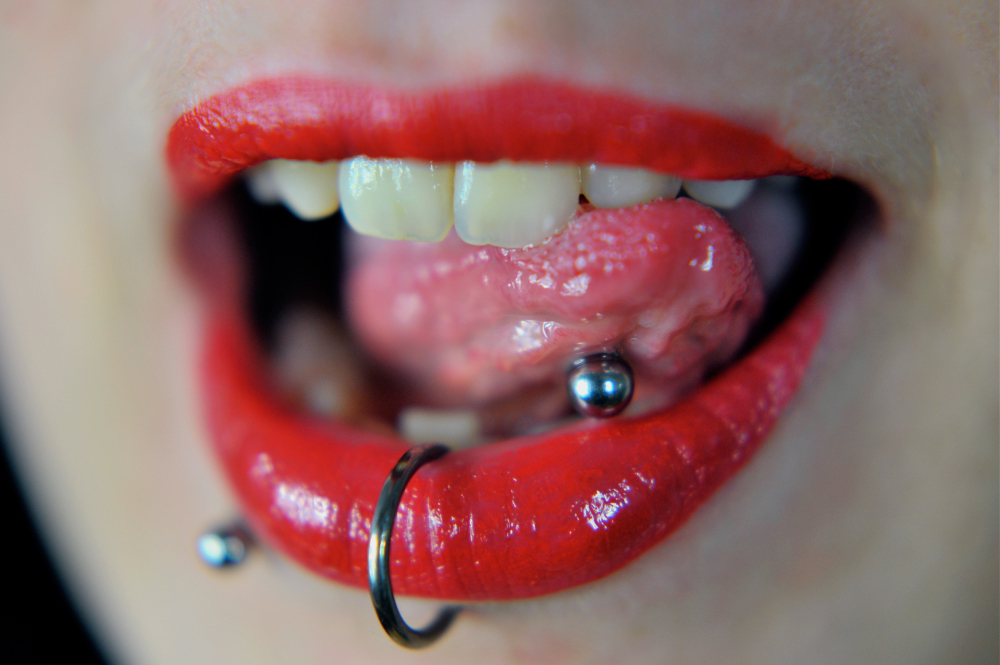
Oral piercings – an appealing form of self-expression or a dental nightmare?
During the teen years, rebellion against adult rules and expectations is developmentally normative to some degree.[i] Whether it’s neglecting schoolwork or sneaking a cigarette, an important aspect of being a teenager is the process of developing a sense of personal identity.
One of the ways that is growing in popularity is the prevalence of oral piercings.[ii] If the piercing is carried out by a professional and is kept clean, then all should be well. However, the Royal College of Surgeons and the British Association of Plastic Reconstructive and Aesthetic Surgeons find that half of tongue piercings result in complications. Similarly, one in five cases of lip piercings lead to problems.[iii]
The appeal of the mouth piercing lies in its ability to enhance the appearance and express individuality. However, young patients need to be advised that there can be risks with this practice if not carried out professionally.
Risk awareness
One of the most significant dangers of mouth piercing is the risk of infection.iii The mouth is a breeding ground for bacteria, and any break in the skin, such as a piercing, greatly increases the likelihood of infection. Improper sterilisation techniques or the use of contaminated jewellery can introduce harmful pathogens into the piercing site. Infections can lead to pain, swelling, and unpleasant discharges. In severe cases, they may even require surgical intervention and intravenous antibiotics.[iv]
Oral piercings can cause damage to the teeth and gums. The constant contact between the jewellery and the soft tissues of the mouth can result in gingival recession, tooth erosion, and even tooth loss.[v] The metal can cause friction against the teeth, leading to enamel wear and eventual decay.[vi] In addition, regular contact with hard jewellery can traumatise the gums, increasing the risk of gingival disease.
Another potential danger of a mouth piercing is the interference it can have with oral function. The placement of piercings on the tongue, lip, or cheek can affect speech patterns and articulation. The presence of jewellery can alter the normal tongue movement required for clear speech, resulting in lisps, slurred speech, or difficulties pronouncing certain sounds. Additionally, oral piercings can interfere with eating and swallowing, making it uncomfortable and challenging to consume certain types of food or drink.[vii]
Allergic reaction
In some cases, mouth piercings can also lead to allergic reactions. Many people are unaware of their allergic sensitivities until they are exposed to certain substances, such as specific metals used in jewellery.[viii] Allergic reactions can range from mild skin irritations to severe swelling and difficulty breathing. It is crucial to be aware of any allergies before getting a mouth piercing and to select hypoallergenic materials to minimise the risk.
Apart from these physical hazards, there are also social and professional implications of mouth piercings to consider.v Some schools have strict policies against visible piercings, including those in the mouth. Having a visible oral piercing may require removal during school hours.
While not so popular, the Oral Health Foundation also points out the hazards of tooth jewellery. This involves sticking small jewels onto the teeth using dental cement.[ix] Young patients should be advised that the area around the jewel needs to be kept very clean, as plaque can easily build up around it.
Proper brushing technique is vital for effective plaque removal. Dental professionals should recommend the use of a soft-bristled toothbrush and fluoride toothpaste. Teenagers may overlook the importance of interdental cleaning too, but it is essential for removing plaque and food particles from between the teeth and along the gum line. They should be reminded to clean interdentally at least once a day, ideally before brushing their teeth.
The FLEXI range of interdental brushes from TANDEX can help young patients remove more plaque than brushing alone. Each product’s handle is flexible, and the brush can be bent into the perfect shape to clean in between the teeth. Available in 11 different sizes, the line presents a solution for each individual patient, for a comfortable and effective clean. They can be used to easily apply PREVENT GEL too, a product which contains 0.12% chlorhexidine and 900ppm fluoride known for their antibacterial and enamel strengthening properties.
While an oral piercing may seem like an appealing form of self-expression, it is essential young patients are aware of the dangers associated with it. Infections, dental problems, speech difficulties, allergic reactions, and social implications are all significant concerns to consider before getting an oral piercing. Young patients should be advised that regular dental check-ups and proper oral hygiene practices are crucial to minimising the associated risks.
For more information on Tandex’s range of products,
visit https://tandex.dk/ or visit the Facebook page: https://www.facebook.com/TandexUK
Our products are also available from CTS Dental Supplies
https://www.cts-dental.com/ and DHB Oral Healthcare https://dhb.co.uk/
Author Kimberley Lloyd- Rees on behalf of Tandex

Kimberley graduated from the University of Sheffield in 2010, where she now works as a clinical tutor in Dental Hygiene and Therapy as well as working in practice. She has spent her career working across a variety of specialist private and mixed dental practices, for the MOD and volunteering her time to a dental charity in Nepal.
[i] Luthar SS, Ansary NS. Dimensions of adolescent rebellion: risks for academic failure among high- and low-income youth. Dev Psychopathol. 2005 Winter;17(1):231-50. doi: 10.1017/s0954579405050121. PMID: 15971768; PMCID: PMC4358933. [Accessed November 2023]
[ii] King, E., Brewer, E. & Brown, P. A guide to oral piercings. BDJ Team 5, 18106 (2018). https://doi.org/10.1038/bdjteam.2018.106
[iii] Royal College of Surgeons of England https://www.rcseng.ac.uk/dental-faculties/fds/faculty/news/archive/statement-on-oral-piercing-and-tongue-splitting/
[iv] Preslar D, Borger J. Body Piercing Infections. [Updated 2023 Jul 10]. In: StatPearls [Internet]. Treasure Island (FL): StatPearls Publishing; 2023 Jan-. Available from: https://www.ncbi.nlm.nih.gov/books/NBK537336/ [Accessed November 2023]
[v] Plastargias I, Sakellari D. The consequences of tongue piercing on oral and periodontal tissues. ISRN Dent. 2014 Jan 29;2014:876510. doi: 10.1155/2014/876510. PMID: 24616814; PMCID: PMC3926233.[Accessed November 2023]
[vi] Malcangi G, Patano A, Palmieri G, Riccaldo L, Pezzolla C, Mancini A, Inchingolo AD, Di Venere D, Piras F, Inchingolo F, Dipalma G, Inchingolo AM. Oral Piercing: A Pretty Risk-A Scoping Review of Local and Systemic Complications of This Current Widespread Fashion. Int J Environ Res Public Health. 2023 May 8;20(9):5744. doi: 10.3390/ijerph20095744. PMID: 37174261; PMCID: PMC10177791.[Accessed November 2023]
[vii] Oral Health Foundation, https://www.dentalhealth.org/safe-smiles-oral-piercings
[viii] Escudero-Castaño N, Perea-García MA, Campo-Trapero J, Cano-Sánchez, Bascones-Martínez A. Oral and perioral piercing complications. Open Dent J. 2008 Dec 4;2:133-6. doi: 10.2174/1874210600802010133. PMID: 19444317; PMCID: PMC2606659. [Accessed November 2023]
[ix] Oral Health Foundation, https://www.dentalhealth.org/teens-teeth







