



The art of implants
Featured Products Promotional FeaturesPosted by: Dental Design 7th February 2024
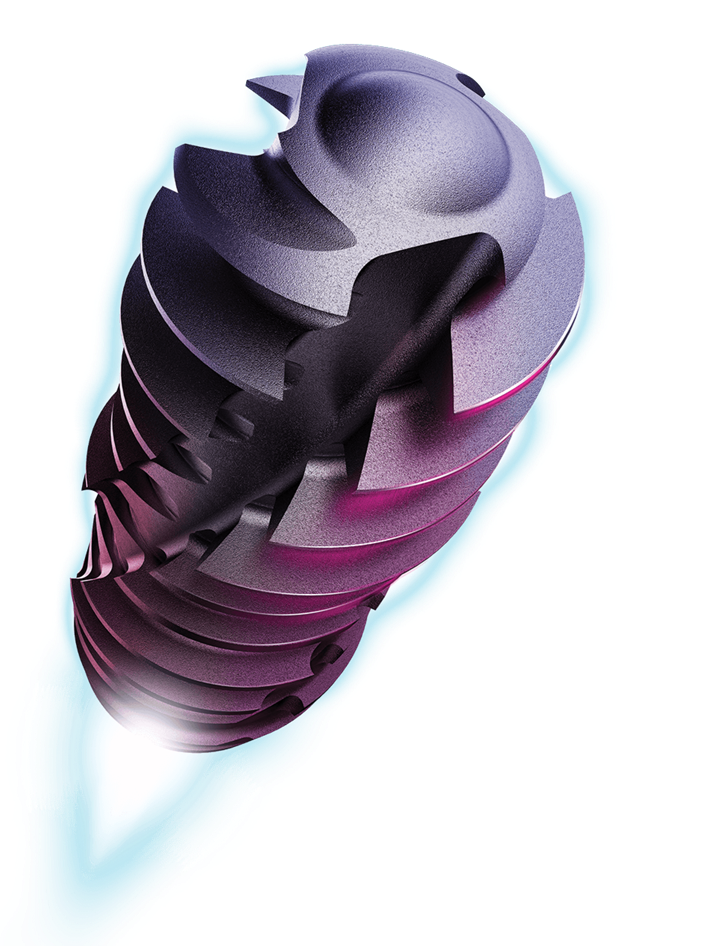
The aesthetic challenges of dental implants require meticulous attention to detail
How we look plays an important role in how we perceive ourselves and how we are perceived by others. Any detrimental impact that affects our physical appearance can lead to distress and anxiety, which in turn can affect our quality of life.[i] And in a world where 93 million selfies[ii] are taken every day, losing a tooth – or teeth – is a serious matter.
The advent of dental implantology offers patients a reliable and long-lasting solution to replace missing teeth. Not only do dental implants restore oral functionality and prevent further dental complications, but they also have the potential to enhance a person’s smile aesthetically. Patients are seeing countless celebrity smiles these days and are keen to replicate them.[iii] However, achieving optimal aesthetic outcomes in dental implant treatments is not without its challenges.
Natural-looking results
The primary objective of an aesthetically pleasing dental implant restoration is achieving natural-looking results. Dental implants should seamlessly blend with the surrounding teeth, both in terms of colour and shape. Colour matching is crucial, as the precise shade of the implant crown needs to match the patient’s existing teeth to create a harmonious smile.[iv] Achieving a proper colour match can be difficult due to individual differences in tooth colour, translucency, and surface texture. Additionally, factors like the age and lifestyle of the patient can influence the shade selection process.[v]
Another key challenge with dental implants lies in managing the soft tissues around the implant site. Achieving a balanced gingival contour and papilla emergence profile is essential for a natural-looking smile.[vi] The shape of the implant crown, its position in the mouth, and the underlying bone structure can all affect the soft tissue response. Proper management techniques, such as appropriate flap design,[vii] tissue augmentation,[viii] and surgical precision, are utilised to encourage optimal soft tissue healing and contouring.
The quality and quantity of the remaining bone at the implant site can also significantly influence the aesthetic outcome of the dental implant. In cases where bone loss has occurred due to tooth extraction, trauma, or periodontal disease, bone grafting may be necessary to provide a stable foundation for the implant. Bone grafting procedures can help restore lost bone volume and promote osseointegration, leading to successful implant placement.[ix] When it comes to aesthetics, having an adequate amount of bone volume is crucial. This is because the bone provides support to the soft tissue and determines the shape and contour of the gums around the implant.
Implant position
 The precise placement and angulation of dental implants are vital for both functional and aesthetic reasons. The position of the implant and its emergence through the gingival tissues impact the final aesthetic outcome.[x]Improper placement or angulation can result in unpleasant crown emergence profiles, inadequate support for the lips and cheeks, and potentially compromised speech.
The temporary restoration stage plays a crucial role in shaping soft tissues and delivering aesthetic satisfaction during the implant treatment process.[xi] Temporary restorations allow the patient and the dental clinician to evaluate the colour, shape, and overall aesthetics before fabricating the final implant-supported crown. Challenges may arise during this stage, including maintaining proper emergence profiles,[xii] contouring the provisional restoration, and managing aesthetics in cases of multiple implants in adjacent spaces. Selecting the appropriate materials, techniques and artistic finesse is critical to ensure a smooth transition from temporary to final restoration.
When looking for less-invasive dental implantology solutions, take time to consider the Anthogyr Mini Implant System which offers a one-piece, small diameter implant, combined with an integrated Optiloc® prosthetic connection, dedicated to removable overdenture stabilisation. The Mini Implant System from Straumann Group brand Anthogyr® is indicated for patients with totally edentulous mandible and/or maxilla presenting severe reduced horizontal bone availability. The solution offers minimally invasive treatment, without compromising on reliability, performance or patient comfort.
The aesthetic challenges of dental implants require meticulous attention to detail and adroit execution. Achieving seamless integration of dental implants with natural dentition involves overcoming various obstacles, including colour matching, soft tissue management, bone reconstruction, implant position and angulation, as well as the provision of temporary and final restorations. By addressing these challenges, dental professionals can deliver superior aesthetic results, improving not only the functionality but also the overall appearance of their patients’ smiles. Through a combination of precision and artistry, dental implant treatments can provide patients with renewed confidence and a smile they’ll cherish.

For more details, please visit
https://www.straumann.com/anthogyr/en/home.html
[i] Shah RJ, Diwan FJ, Diwan MJ, Chauhan VJ, Agrawal HS, Patel GC. A study of the emotional effects of tooth loss in an edentulous Gujarati population and its association with depression. J Indian Prosthodont Soc. 2015 Jul-Sep;15(3):237-43. doi: 10.4103/0972-4052.161564. PMID: 26929519; PMCID: PMC4762342.[Accessed November 2023]
[ii] Eksposure online learning resource https://www.eksposure.com/selfie-statistics/
[iii] Zoe Brown, Marika Tiggemann, A picture is worth a thousand words: The effect of viewing celebrity Instagram images with disclaimer and body positive captions on women’s body image, Body Image, Volume 33, 2020, Pages 190-198, ISSN 1740-1445, https://doi.org/10.1016/j.bodyim.2020.03.003.
[iv] Sikri VK. Color: Implications in dentistry. J Conserv Dent. 2010 Oct;13(4):249-55. doi: 10.4103/0972-0707.73381. PMID: 21217954; PMCID: PMC3010031. [Accessed November 2023]
[v] Rashid F, Farook TH, Dudley J. Digital Shade Matching in Dentistry: A Systematic Review. Dentistry Journal. 2023; 11(11):250. https://doi.org/10.3390/dj11110250 [Accessed November 2023]
[vi] Le, B, Hayashi, N. The Aesthetic Contour Graft – Enhancing peri-implant soft tissue contours and pontic sites with guided bone regeneration. J Esthet Restor Dent. 2022; 34(1): 188-202. doi:10.1111/jerd.12865 [Accessed November 2023]
[vii] Cho YD, Kim S, Ku Y. Effectiveness of dental implantation with the partial split-flap technique on vertical guided bone regeneration: a retrospective study. J Periodontal Implant Sci. 2021 Dec;51(6):433-443. doi: 10.5051/jpis.2103780189. PMID: 34965622; PMCID: PMC8718335. [Accessed November 2023]
[viii] Gita VB, Chandrasekaran SC. Hard and soft tissue augmentation to enhance implant predictability and esthetics: ‘The perio-esthetic approach’. J Indian Soc Periodontol. 2011 Jan;15(1):59-63. doi: 10.4103/0972-124X.82276. PMID: 21772724; PMCID: PMC3134050. [Accessed November 2023]
[ix] Jun SH, Park CJ, Hwang SH, Lee YK, Zhou C, Jang HS, Ryu JJ. The influence of bone graft procedures on primary stability and bone change of implants placed in fresh extraction sockets. Maxillofac Plast Reconstr Surg. 2018 Apr 25;40(1):8. doi: 10.1186/s40902-018-0148-2. PMID: 29725586; PMCID: PMC5915983. [Accessed November 2023]
[x] Wu AY-J, Hsu J-T, Fuh L-J, Huang H-L. Effects of Positions and Angulations of Titanium Dental Implants in Biomechanical Performances in the All-on-Four Treatment: 3D Numerical and Strain Gauge Methods. Metals. 2020; 10(2):280. https://doi.org/10.3390/met10020280 [Accessed November 2023]
[xi] Regish KM, Sharma D, Prithviraj DR. Techniques of fabrication of provisional restoration: an overview. Int J Dent. 2011;2011:134659. doi: 10.1155/2011/134659. Epub 2011 Oct 12. PMID: 22013441; PMCID: PMC3195530. [Accessed November 2023]
[xii] Mohajeri M, Khazaei S, Vafaee F, Firouz F, Ghorbani Gholiabad S, Shisheian A. Marginal Fit of Temporary Restorations Fabricated by the Conventional Chairside Method, 3D Printing, and Milling. Front Dent. 2021 Sep 5;18:31. doi: 10.18502/fid.v18i31.7236. PMID: 35965729; PMCID: PMC9355902. [Accessed November 2023]







