



Addressing a complex crossbite early in my orthodontic journey
Featured Products Promotional FeaturesPosted by: Dental Design 9th March 2024
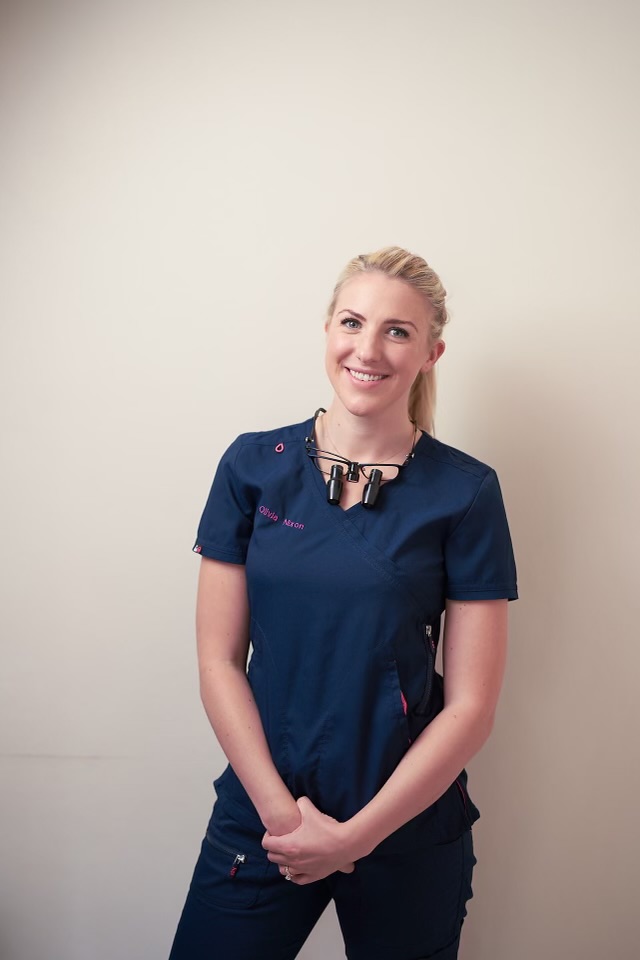
and up-to-date Dr Olivia Nixon presents a case of treating crowding and a crossbite effectively.
A 30-year-old patient presented at my practice hoping to receive orthodontic care to straighten her upper and lower teeth. She exhibited mild crowding in both the maxilla and mandible, she had a crossbite on the LR3, and was verging on a Class III occlusal relationship. The patient also had a veneer on her UL1.
She had previously seen another clinician, who said they wouldn’t be able to provide the necessary care and achieve the requested outcome. Following this, she came to me for a second opinion.
A comprehensive orthodontic assessment was completed, with intraoral images being attained with the use of a DSLR camera. The appropriate X-rays and scans were taken to inform my considerations for treatment.
A range of treatment options was considered. This included clear aligners, which present an aesthetic benefit to the patient. However, with the insights produced from Archwise™ – the digital planning and crowding calculator – and thorough consultation with my mentor in the IAS Academy forums, Emma Doherty, I came to the conclusion that a fixed brace solution would be better suited. This was due to the presentation of the crossbite, as well as the ability to reach an optimal outcome sooner. The ability to share my initial assessments and scans on the forum meant I could receive advice from my mentor about what to watch out for – which mainly concerned the occlusal stability – and tips to achieve a great result.
Following discussions with the patient, a fixed brace approach was agreed upon to reduce the treatment time and directly address her crossbite.
I was also concerned about the veneer in this case, as it was the first instance in which I had to consider this type of existing restoration when providing fixed orthodontic treatment. I felt my targets were still achievable, but I ensured the patient consent form included the potential need to replace the veneer following alignment.
I chose to use the 3M Gemini Ceramic Brackets, which would optimise aesthetics during treatment, and NiTi wires in a sequence of 0.12, 0.16, and 20:20. Placement of the fixed appliance was completed in stages. The initial fitting appointment saw the upper teeth bonded up first. 50% of the recommended total interproximal reduction (IPR) from Archwise™ was achieved to allow for efficient movement. A stent from the IAS Laboratory was used for bracket placement, and a 0.12 NiTi wire was placed. I also utilised placed anchors on the distal aspects in order to limit proclination of the teeth. At this stage I didn’t need to open the occlusion.
With the consideration that the UL1 was a veneer, I needed to approach the tooth differently. Since I wasn’t bonding a bracket onto enamel, I followed the ceramic bonding protocol which called for the use of a ceramic etch.
The patient was instructed on the importance of keeping an effective oral hygiene routine, and was advised on ways to do so with the presence of the fixed brace. This was reiterated upon at each follow-up appointment.
After six weeks the patient attended her second visit, where I bonded up her lower teeth. I once again used the 3M Gemini Ceramic Brackets, and a 0.12 NiTi wire was placed. In this appointment I had to open up the occlusion, and I did so by placing glass ionomer cement on the molars. During this visit, the 0.12 NiTi wire on her upper teeth was replaced with a 0.16 wire.
With the initial treatment stages progressing well, the patient’s only concern was the presence of ulcers, which was described as the hardest part of the treatment. I reassured her that this was normal and to continue using orthodontic wax for as long as needed until they healed. In follow up appointments, this had begun to subside and the patient felt management in her day-to-day life was getting easier.
After each appointment, I consulted with my IAS Academy mentor with the latest images and scans. I listened to their opinions on the treatment, as well as any advice for my next steps. This was especially helpful when managing the patient’s lower incisors.
These were rotated. I attempted to address the issue with quick ties to attain an optimal position for the wires to sit. I chose to employ short-term power chains to derotate the lower incisors into an aesthetically and functionally optimal position. A 2-unit power chain was placed under the wire, in what was ultimately the most complicated part of the treatment. Progress on the lower teeth was therefore delayed, and the upper teeth were completed whilst teeth in the mandible were still undergoing treatment.
After a total of nine appointments that followed the initial placement of the upper brackets, the final outcome was achieved. The upper brackets were debonded seven months after placement, with the lower fixed appliance being removed another two months later. I was happy with the outcome, especially the management of the occlusion which had proven successful, as well as the final position of the lower incisors which had fallen into place with the surrounding dentition, with little room for improvement. More importantly, the patient was delighted with the outcome and, much like myself, was relieved that the UL1 veneer was left intact.
To maintain the results, I proposed multiple options of retainers. This included a fixed solution; however, the patient was opposed to this idea, and preferred removable retainers. I provided her with a total of four appliances, two upper and two lower, with the instruction to wear them every night.
This was one of my initial fixed brace orthodontic cases following the completion of the Fixed Braces course with the IAS Academy, and it was an exceptionally important case to improve a variety of my clinical skills as well as my confidence. The journey from placement to debonding was faster than I had anticipated, and it taught me that lower incisors can be more complex to control than I initially thought.
It was also my first time using a fixed orthodontic device on a veneer. I was delighted with how it turned out, and it quashed my initial hesitations about the chance of ruining the restoration. In turn, I have felt more comfortable when they have appeared in other cases to date.
This case also gave me greater insight on the management of the occlusion, with the need to do IPR to avoid slipping into a Class III occlusal relationship with the proclination of the lower teeth. By taking the opportunities to consult with a mentor, I felt it was an ideal chance for a clinician early in their orthodontic journey to complete a case that would previously have been referred.

For more information on upcoming IAS Academy training courses, please visit
www.iasortho.com or call 01932 336470 (Press 1)
Author bio:
Dr Olivia Nixon studied at Bristol University before working in a busy NHS practice where she provided general dentistry to patients of all ages. She went on to spend time as a Senior House officer in the Oral and maxillofacial surgery department at the Royal United Hospital, during which she was awarded membership to the Royal College of Surgeons in London. Today, she provides care at Clove House Dental & Implant Centre, Wiltshere, and holds an interest in qualitycosmetic dentistry.

Fig 1

Fig 2

Fig 3

Fig 4

Fig 5

Fig 6

Fig 7

Fig 8

Fig 9

Fig 10

Fig 11

Fig 12

Fig 13

Fig 14

Fig 15

Fig 16

Fig 17

Fig 18

Fig 19







