



An understanding of Class III malocclusions
Featured Products Promotional FeaturesPosted by: Dental Design 21st November 2024

Timely interventions by the dental professional are essential to optimise a patient’s care. This is especially the case with Class III malocclusions, or an anterior crossbite. Left untreated, an individual may ultimately require orthognathic surgery.[i]
Before surgery is considered as a solution, conventional orthodontics should be explored as a potentially viable treatment approach. The timeliness of care is reported in the literature to be key, with the modality even offered to patients under 10 years of age to optimise the orthopaedic effect.[ii]
Clinicians need to be able to identify the most appropriate time to provide treatment for the Class III malocclusion patient. Treatment might be not be comfortable, but living indefinitely with a Class III malocclusion can be far worse.
Underbite repercussions
For patients with a Class III malocclusion, their orthodontic status can severely impact everyday life. Psychologically, adolescents with Class III malocclusion have reported higher levels of social appearance anxiety, and lower self-esteem scores in comparison to those with a Class I malocclusion.[iii] This may impact their mood and social relationships, and could even cause the development of detrimental anxiety conditions.iii
Class III malocclusion has also been found to be damaging to everyday functions. Chewing movement has been deemed irregular and unstable for patients with untreated Class III malocclusion when compared to a control group with normal occlusion.[iv] Patients with a Class III malocclusion are also multiple times more likely to present auditory, visual, dental and interdental distortions when producing sounds such as /sa/, /si/, /sɪsi/, /ta/, /ti/ and /la/.[v] An inability to articulate some aspects of speech can lead to confusion in social situations and a failure to communicate thoughts clearly, which may further cause psychological and social problems.[vi] These could include shyness, frustration, introversion and social anxiety.
Considering each of these issues, its imperative that clinicians deliver effective treatments that can restore and optimise an individual’s quality of life. A Class III malocclusion may need intensive care, but all treatment options should be explored to ensure the highest quality results can be achieved.
Timely treatment
There are two forms of Class III malocclusion that must be considered for treatment: true and pseudo. A true (skeletal) Class III malocclusion features a deficient maxilla with a large prognathic mandible, whereas a pseudo-Class III malocclusion is characterised by a deficient maxilla with a normal mandible, which is caused by premature contact with functional mandible forward positioning.[vii] Both types of malocclusion, if not treated early, may affect the standard development of the maxillofacial structures, leading to restricted maxillary growth and potential mandibular overgrowth.[viii]
The literature has observed treatment options for adult patients seeking to rectify a Class III malocclusion, and found that orthodontic camouflage may be appropriate in many borderline cases rather than orthognathic surgery.[ix] Patients with a Holdaway angle greater than 10.3º could be treated successfully by camouflage alone, whereas those with an angle smaller than 10.3º will always require surgical intervention.ix Similarly, a Wits appraisal greater than -5.8mm could be effectively corrected through orthodontics alone, but less than -5.8mm must be treated through surgery.ix
Interceptive orthodontics may be an effective treatment option. By implementing orthodontic care in the mixed dentition, clinicians are able to treat pseudo-Class III malocclusion cases and reduce the need for orthognathic surgery in late teenage years.[x]
For true Class III malocclusion cases, it is equally important to take action promptly. By implementing orthopaedic treatment in the early stages of the mixed dentition, clinicians can take advantage of bone bioelasticity and the ability to redirect growth of facial and skeletal characteristics, as well as prevent dental disharmonies from evolving to skeletal issues.[xi] This should be considered for patients as young as eight to 10 years old.
Comfort and care
Whilst timely treatment is key, it is never too late for orthodontic care to be part of a treatment solution. No matter a patient’s age, comfort throughout this intense process is necessary.
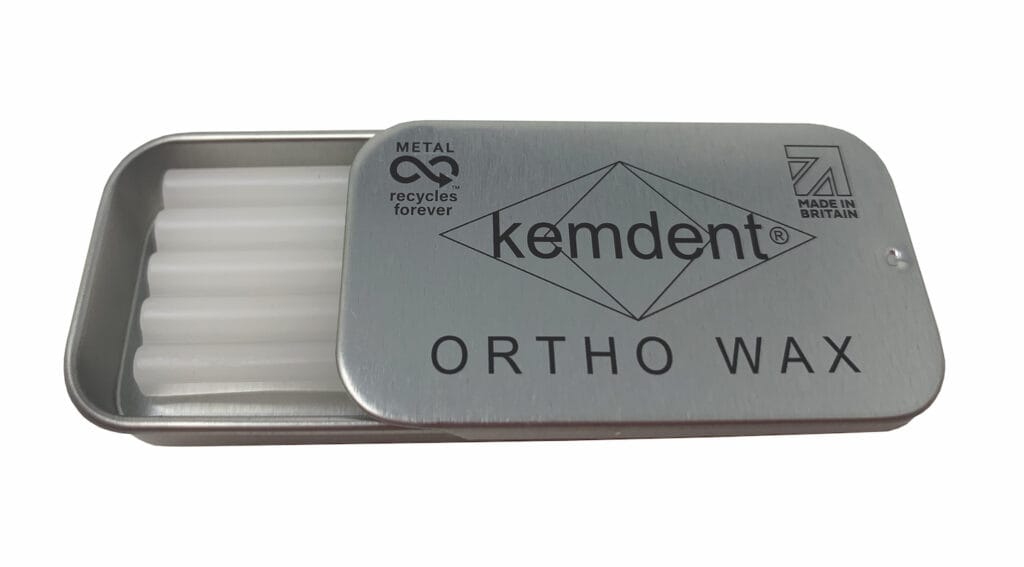
The Orthodontic Relief Wax from Kemdent provides ample support at this time. The solution is a soft gum protector that can be used to cover any fixed orthodontic brackets or protruding wires. Patients and their parents can simply warm the wax in their hands, before moulding it to suit their needs. In turn, buccal and gingival tissue can be relieved of scratches and irritation.
Class III malocclusions often require complex treatment plans, but timely intervention can reduce the need for invasive surgeries later in life. In turn, patients may be able to benefit from functional and aesthetic improvements to their dentition, helping them feel more confident in everyday life.
For more information about the leading solutions available from Kemdent, please visit www.kemdent.co.uk or call 01793 770 256
[i] Sarangal, H., Namdev, R., Garg, S., Saini, N., & Singhal, P. (2020). Treatment modalities for early management of Class III skeletal malocclusion: a case series. Contemporary clinical dentistry, 11(1), 91-96.
[ii] Woon, S. C., & Thiruvenkatachari, B. (2017). Early orthodontic treatment for Class III malocclusion: A systematic review and meta-analysis. American Journal of Orthodontics and Dentofacial Orthopedics, 151(1), 28-52.
[iii] Atik, E., Önde, M. M., Domnori, S., Tutar, S., & Yiğit, O. C. (2021). A comparison of self-esteem and social appearance anxiety levels of individuals with different types of malocclusions. Acta Odontologica Scandinavica, 79(2), 89-95.
[iv] Kim, H., Sakamoto, T., Yamaguchi, H., & Sueishi, K. (2017). Evaluation of chewing movement in skeletal Class III patients with orthognathic treatment. The Bulletin of Tokyo Dental College, 58(4), 213-221.
[v] Lathrop-Marshall, H., Keyser, M. M. B., Jhingree, S., Giduz, N., Bocklage, C., Couldwell, S., … & Jacox, L. A. (2022). Orthognathic speech pathology: impacts of Class III malocclusion on speech. European Journal of Orthodontics, 44(3), 340-351.
[vi] AL Bdour, N. T., Al-Bustanji, M. A., & AL Dhamit, Y. A. (2022). Self-Esteem among Individuals with Speech Disorders in Light of Some Variables. International Education Studies, 15(3), 26-38.
[vii] Kale, B., & Buyukcavus, M. H. (2020). Comparison of three-dimensional soft-tissue evaluations between skeletal and pseudo-class III malocclusions. Scientific reports, 10(1), 14717.
[viii] Yelampalli, M. R., & Rachala, M. R. (2012). Timely management of developing class III malocclusion. Journal of Indian Society of Pedodontics and Preventive Dentistry, 30(1), 78-84.
[ix] Eslami, S., Faber, J., Fateh, A., Sheikholaemmeh, F., Grassia, V., & Jamilian, A. (2018). Treatment decision in adult patients with class III malocclusion: surgery versus orthodontics. Progress in orthodontics, 19(1), 1-6.
[x] DiBiase, A. T., Seehra, J., Papageorgiou, S. N., & Cobourne, M. T. (2022). Do we get better outcomes from early treatment of Class III discrepancies?. British Dental Journal, 233(3), 197-201.
[xi] Silva, D. B. H. D., & Gonzaga, A. S. (2020). Importance of orthodontic intervention of the Class III malocclusion in mixed dentition. Dental Press Journal of Orthodontics, 25(05), 57-65.







