



Understanding conformative dentistry
Featured Products Promotional FeaturesPosted by: Dental Design 18th November 2024
When patients require restorative care, they likely envisage a major transformation, with radical improvements to their smile. In reality, whilst great dentistry can have this effect, clinicians may seek to have a minimal influence on the dentition. This is especially relevant when managing a patient’s occlusion with a conformative dental approach.
This methodology looks to work with the existing dentition, and can be applied in the vast majority of restorative cases.[i] Clinicians need to consider how to plan for and design restorative solutions that work with a patient’s present occlusion.
Making a thorough assessment of the existing occlusion is key when utilising a conformative approach, or deciding whether it is even suitable in a given clinical situation. Understanding how it could be valuable, and when it may not be, is fundamental, and should be a skill that every clinician develops.
The limits of conformity
When a patient requires restorative care, dental professionals can implement a conformative or reorganised approach. In the former, the clinician will consider a patient’s existing intercuspal position, and provide new restorations that dovetail with the existing jaw relationships.[ii] Some changes may be made to the restoration, for example, through the shortening of an opposing cusp or the removal of a deflective contact on a tooth that is being restored.[iii] A reorganised approach may be necessary if the proposed restoration requires an adjustment of the occlusion.ii
Whilst clinicians can work with the existing dentition, it’s not necessary that a restoration replicates the existing contacts. After all, treatment may be needed to improve upon this aspect of the dentition – a like-for-like restoration would defeat the object of pursuing care.ii
An example would be changing the design of a restored tooth to minimise the influence of a problematic cusp.i Where a patient may be experiencing non-working side interference during lateral mandibular movement, a high cusp might be subject to a damaging load. The restorative solution could feature a slight reduction of height of the cusp in question, eliminating the non-working side interference and reducing the risk of future fracture. Since the rest of the occlusion remains as the patient presented, this would be a conservative intervention.
There are multiple benefits to taking a conformative approach to restorative care. It is a simpler approach to care, often not requiring orthodontic treatment, and is largely predictable.[iv] It’s also a safe and reliable strategy, and requires little or no adaption of the neuro-muscular system.[v] Without needing to adjust the occlusion, treatment time is minimised, meaning an effective result may be achieved relatively quickly.
 Time to reorganise
Whilst treating patients in this manner may be favourable, clinicians must be able to recognise when it is not possible to provide care with conformative dentistry. Taking a reorganised approach may be the only way to reach an effective result that promotes long-lasting benefits, especially when the maximum interocclusal position is unsatisfactory.v
Implementing orthodontic treatment to reorganise the dentition may also be necessary when an increase in vertical dimension is required, when a large fixed prosthesis is needed to replace a significant portion of the dentition, and when full mouth rehabilitation is necessary.v
Clinicians should not progress with their care under the assumption that a conformative approach can and should be applied in every case, waiting to find whether the occlusion remains effective until post-restoration. It is only through pre-treatment assessments and developed knowledge that the most effective treatment can be decided upon with confidence.
It’s what you know
Every treatment decision taken by a clinician should be justifiable, and therefore dental professionals must have the skills and confidence to recognise when a conformative approach is ideal or ineffective, and when reorganisation is worthwhile for an extended treatment time, and perhaps increased treatment complexity. This requires up-to-date education, and an exploration of the current restorative solutions available to clinicians; these may produce new ways of managing cases that were previously unthinkable.
The Basics of Occlusion course from IAS Academy is a brilliant option for clinicians looking to develop their knowledge of occlusion. Dr Jaz Gulati and Dr Mahmoud Ibrahim present their unique ‘Tangible’ philosophy which ensures every concept taught, including advanced techniques in conformative dentistry and wear pattern recognition, can be implemented immediately for enhanced patient outcomes. Over two days, your understanding of occlusion will be transformed, enabling you to perform more confident and predictable treatment planning.
Conformative dentistry has its perks, but cannot be applicable in every clinical situation. Understanding when to reorganise the dentition is essential for successful outcomes, but knowing how to implement conformative care whilst also making subtle yet powerful changes to intercuspal points can make for a wider range of treatment approaches.
For more information on upcoming IAS Academy training courses, please visit www.iasortho.com or call 01932 336470 (Press 1)
Author bio:
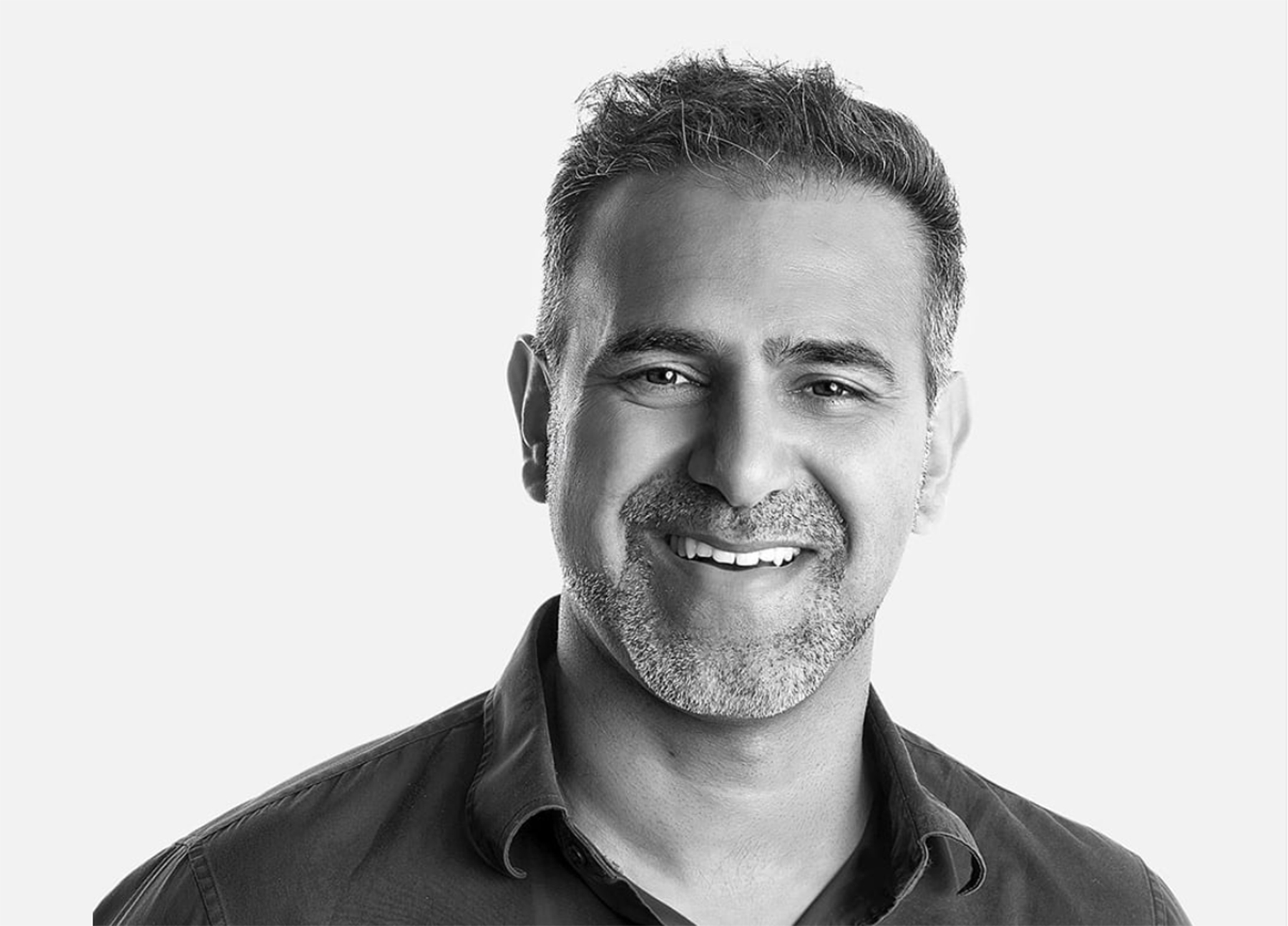
Dr Tif Qureshi founder and a clinical director of IAS Academy, qualified from Kings College London in 1992. He is a Past President of the British Academy of Cosmetic Dentistry, an International faculty that provides mentored education for general dentists on a pathway from appropriate simple to comprehensive orthodontics.
Tif has a special interest in simple orthodontics and truly minimally invasive dentistry. He has committed his life’s work to empowering dentists to provide important alternative techniques. He offers a wide variety of treatments to many more patients, while always respecting the fundamental precepts of orthodontics. Tif also pioneered the concept of Progressive Smile Design through Alignment, Bleaching, Bonding – a course that combines tooth alignment, composite bonding and teeth whitening to produce superior smiles using techniques with the absolute minimum of invasiveness available today. An experienced teacher in the Dahl concept, Tif shows how this technique is used to plan tooth alignment and minimise invasive dentistry in the development of a beautiful smile. Tif now lectures and published scientific articles internationally.
[i] Devlin, H. (2018). Good Occlusal Practice in Restorative Dentistry. Annals of Dentistry University of Malaya, 25(2), 33-35.
[ii] Qureshi, N., & Imran, Z. (2023). Principles and concepts of occlusion in restorative dentistry. International Journal of Oral and Craniofacial Science, 9(1), 001-007.
[iii] Tiwari, B., Ladha, K., Lalit, A., & Dwarakananda Naik, B. (2014). Occlusal concepts in full mouth rehabilitation: an overview. The Journal of Indian Prosthodontic Society, 14(4), 344-351.
[iv] Bereznicki, T., Patel, R., & Clark, M. (2022). Revisiting the functionally generated path technique: is this an aid to predictable digital occlusal design? Part 1: introduction and background. Dental Update, 49(5), 371-378.
[v] Warreth, A. (2015). Fundamentals of occlusion and restorative dentistry. Part II: occlusal contacts, interferences and occlusal considerations in implant patients. Journal of the Irish Dental Association. Oct/Nov 2015: Vol 61 (5). (Online) Available at: https://www.lenus.ie/bitstream/handle/10147/582636/art4.pdf?sequence=1&isAllowed=y [Accessed August 2024]







