



Effective restoration following orthodontic care with the Dahl Technique
Featured Products Promotional FeaturesPosted by: Dental Design 21st December 2024
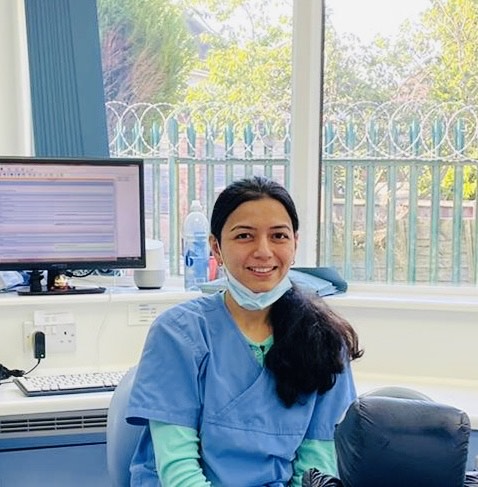
Dr Poonam Goyal presents a case of moderate crowding in the lower anterior dentition, followed by restorative treatment for tooth wear using the Dahl Technique.
A 33-year-old male patient presented at my practice with concerns about his smile aesthetics, seeking orthodontic treatment to resolve moderate crowing in his lower anteriors.
This individual was incredibly self-conscious about his smile, and it was affecting his everyday life. In professional meetings, he would instinctively cover his mouth out of embarrassment while smiling. Providing effective restorative care would not only seek to resolve aesthetic issues, but potentially improve their psychological well-being.
He had no previous history of orthodontic treatment.
Assessing treatment options
Upon initial assessment, moderate crowding was confirmed in the lower anterior region, with mild crowning in the upper anterior teeth. The patient was, however, not concerned about the appearance of the upper dentition.
One carious lesion on the LR6 and the need for hygiene treatment were identified, along with visible wear on the anterior teeth. Radiographic examinations found appropriate bone health for orthodontic treatment. Upper and lower impressions were taken to formulate the treatment plan.
A number of treatment options were presented to the patient, considering the advantages and disadvantages that each may present. This included both removable aligners and conventional fixed appliances, as well as composite bonding at the resolution of treatment. Veneers and crowns were also considered and discussed with the patient, but due to the malalignment of the teeth they were not a preferable option.
The patient was only interested in straightening the dentition at this time so decided to pursue orthodontic treatment. He was given the option of seeing an orthodontic specialist but was happy to continue treatment with me, and opted for clear aligners due to their aesthetic advantage over a conventional fixed appliance.
Standard oral hygiene and dietary instructions were provided and full consent attained before proceeding.
Orthodontic treatment
The patient saw a dental hygienist prior to care. I also judged that he needed an occlusal restoration on his LR6 prior to aligner treatment and was carried out with direct composite.
Aligner treatment progressed as expected, with no significant complications encountered during this phase of treatment.
Following the planned orthodontic treatment for about 8 months, some improvement was still needed to refine the aesthetic result. The patient was provided with one set of refinement aligners, which allowed for an improved outcome. At this point, the patient was happy with the alignment of the teeth, but now saw the impact of wear on the upper and lower anterior teeth. He requested restorative work to help amend this issue.
I had undergone an Align, Bleach and Bond (ABB) course with the IAS Academy which shaped my approach to effective, holistic restorations. The patient felt comfortable proceeding with restorative treatment with me, and so I planned to restore the anterior teeth using the Dahl technique.
Effective restorative care with the Dahl technique
The patient’s posterior wear was minimal in comparison to the edgewear on the anterior teeth (especially on the lower incisors and left sided canines). This made him an ideal candidate for a Dahl approach. I consulted with Tif Qureshi, my mentor at the IAS Academy, following the clear aligner treatment to ensure I was taking the most appropriate approach. He agreed that this was a suitable case to implement the Dahl method and composite edge bonding techniques.
Having such support on hand was brilliant for making clinical decisions, and reinforcing my confidence in the care I was going to provide. Tif’s confirmation of my proposal and support allowed me to progress appropriately.
I discussed with the patient composite build-up on the anterior teeth, putting his posterior teeth into an open bite that could last for 8-12 weeks. Getting his informed consent was essential. He was advised that this may feel uncomfortable at first when chewing and at rest, and there was a chance that the bite would not fully settle. However, he was optimistic to proceed with this treatment, and trusted me to provide effective care.
The patient first underwent a course of teeth whitening, and a fixed retainer was placed on the lower anterior teeth to prevent relapse from orthodontic treatment. All the composite attachments were thereafter removed, with the teeth being adequately smoothened and polished at these sites.
A yellow IPR strip was also used to loosen the posterior contacts and facilitate ample eruption of the posterior teeth to assist with bite closure later on.
Free hand direct composite was placed on each of the lower incisors, as well as the LL3 and UL3, to restore a functional and aesthetic shape. On the LR3 and UR3, I opted to smoothen the sharp edges instead of applying composite due to minimal wear on these. No composite build-ups were performed on the upper incisors as they were already of an adequate profile. After the direct build ups, I was able to achieve primary occlusal contacts on the canines bilaterally, with lighter contacts on incisors and, as expected, the posteriors were in open bite on the day of build ups. On the same day, I also modified the patient’s last set of aligners to act as anterior sectional retainers. Impressions were taken too for the fabrication of temporary sectional essix retainers for both upper and lower anteriors to minimise relapse risk in the phase of posterior bite settling, which could take anywhere between 8-12 weeks.
It would have been preferable to plan for composite edge build-ups when planning the initial clear aligner treatment. Doing so would’ve allowed me to create more space to facilitate this, however, it was important to work with the patient in a manner that made them comfortable. At the beginning of treatment, that meant planning only for orthodontics. A successful result was still possible with the current situation.
Monitoring progression
I saw the patient at 4-, 8-, and 12-weeks to monitor the posterior occlusion settling. During this time, the patient experienced minimal complications as he became comfortable with the new bite in his dentition. By the end of the 12-week period, the posterior teeth had erupted to completely close the posterior open bite and created uniform bilateral contacts that functioned optimally. Patient also showed optimal guidances on excursions (incisor guidance on protrusion, and canine guidance on lateral excursions with no posterior interreferences).
The patient was delighted with the outcome, acknowledging that the composite build-ups made a dramatic difference to the appearance of his dentition. He was given removable retainers for both arches and instructed to wear it consistently at night to minimise any orthodontic relapses.
Upon reflection, I was also delighted with the outcome from implementing the Dahl method. The help of my mentor Tif made an immense difference, as his quick, supportive responses allowed me to devise an effective treatment plan that could be regularly monitored and adjusted where needed with confidence.
Without his support, and my experience on previous IAS Academy courses, I would not have felt that I could provide effective care, and would have likely referred the patient to a restorative specialist. Luckily, I didn’t, and a fantastic outcome was achieved.
Case images

Fig 1, Moderate crowding in the lower anterior teeth, and mild crowding in the upper anterior dentition

Fig 2, Lateral right side view 
Fig 3, Lateral left side view

Fig 4, Occlusal view of lower arch

Fig 5, Occlusal view of upper arch

Fig 6, Anterior view following clear aligner treatment

Fig 7, Occlusal view of lower arch following clear aligner treatment

Fig 8, Right lateral view following clear aligner treatment

Fig 9, Left lateral view following clear aligner treatment

Fig 10, Free hand edge build ups and lingual fixed retainers on the lower incisors

Fig 11, Lower anterior contacts on day of build ups

Fig 12, Posterior open bite, right side on day of build ups

Fig 13, Posterior open bite, left side on day of build ups

Fig 14, Lower anteriors after whitening and composite Dahl build ups

Fig 15, Posterior bite closure, right side 12 weeks after build ups

Fig 16, Posterior bite closure, left side 12 weeks after build ups

Fig 17, Occlusal view of lower arch contacts following Dahl technique

Fig 18, Occlusal view of upper arch contacts following Dahl technique

Fig 19, Final result

Fig 20, Final result
For more information on upcoming IAS Academy training courses, please visit www.iasortho.com or call 01932 336470 (Press 1)
Author Bio
Dr Poonam Goyal qualified from the prestigious University of Delhi in 2010, and shortly after achieved a Master’s Degree qualification in Prosthodontics. She has also recently undertaken further Postgraduate training in Endodontics. Dr Goyal, currently is an associate dentist across two sites – Bupa Dental Care, Brackley and Mi Dental, Stony Stratford, Milton Keynes. She is extremely interested in provided comprehensive restorative care, and has taken multiple courses, including the Align, Bleach and Bond course with the IAS Academy to develop her skills in this area.







