



How to choose the correct handpiece for the job
Featured Products Promotional FeaturesPosted by: Dental Design 18th December 2024

An investment in a new dental handpiece isn’t a decision to be made in haste. As well as crucial considerations around safety, practices need to assess what applications they need the tool for, how hard they expect their tools to work, the ease and cost of maintenance and repair, as well as the efficiency and cost effectiveness of the handpiece itself.
First and foremost, it is important to identify what you need from your tools on a daily basis. Are there any areas within your practice where you feel performance could be enhanced by higher spec, specialist tools? Or are you looking for a hard-working staple that can manage a wide variety of general applications? A high-spec, speedy and power-efficient tool, engineered to be more ergonomic with less noise and vibration may cost more in the short-term, but what will the alternative cost your practice and your health long-term?
Features of commonly used handpiece types
Air turbine handpieces use compressed air to enable rotation at high speeds. Air-driven handpieces are widely used for general dental procedures, and benefit from a generally lighter weight than the average electric handpiece. Higher speed dental air turbines can achieve up to 400,000 rotations per minute (rpm), resulting in reduced pain for the patient.[i]
Air turbines benefit from high-speed, but have limited torque, reducing cutting performance in comparison to electric handpieces.[ii] In addition, air turbines generally produce more noise and vibration levels than electric handpieces. However, this can be mitigated by the use of ceramic bearings.[iii]
Electric handpieces generally benefit from a smoother operation due to higher torque, precision gear engineering and greater control over speed, making them more versatile than air turbines. There are a range of handpieces available that, when using an electric motor, can achieve speeds as low as 20 rpm, and as high as 200,000 rpm. More efficient torque to speed ratio enables these handpieces to be used for managing harder materials like dental zirconia, silver amalgam, and high noble alloys.ii
There can be a higher cost in the initial setup for running electric handpieces, but this should be considered against other factors, such as the income potential in their versatility, and their ability to manage the more challenging ceramic materials now in use in restorative dentistry. They also tend to have a longer lifespan than air turbines.ii
 Risk mitigation
The increased weight of electric handpieces could contribute to discomfort when working for long periods. However, their higher torque results in less vibration and lessens the need to apply pressure, reducing strain. Manual instruments are implicated in repetitive strain injuries among dental professionals more than both electric and air-powered handpieces.[iv]
To further safeguard muscular-skeletal health, it is recommended that clinicians choose a handpiece with a shorter, pliable hose featuring a swivel mechanism in the barrel of the handpiece to avoid strain when rotating the instrument.iv
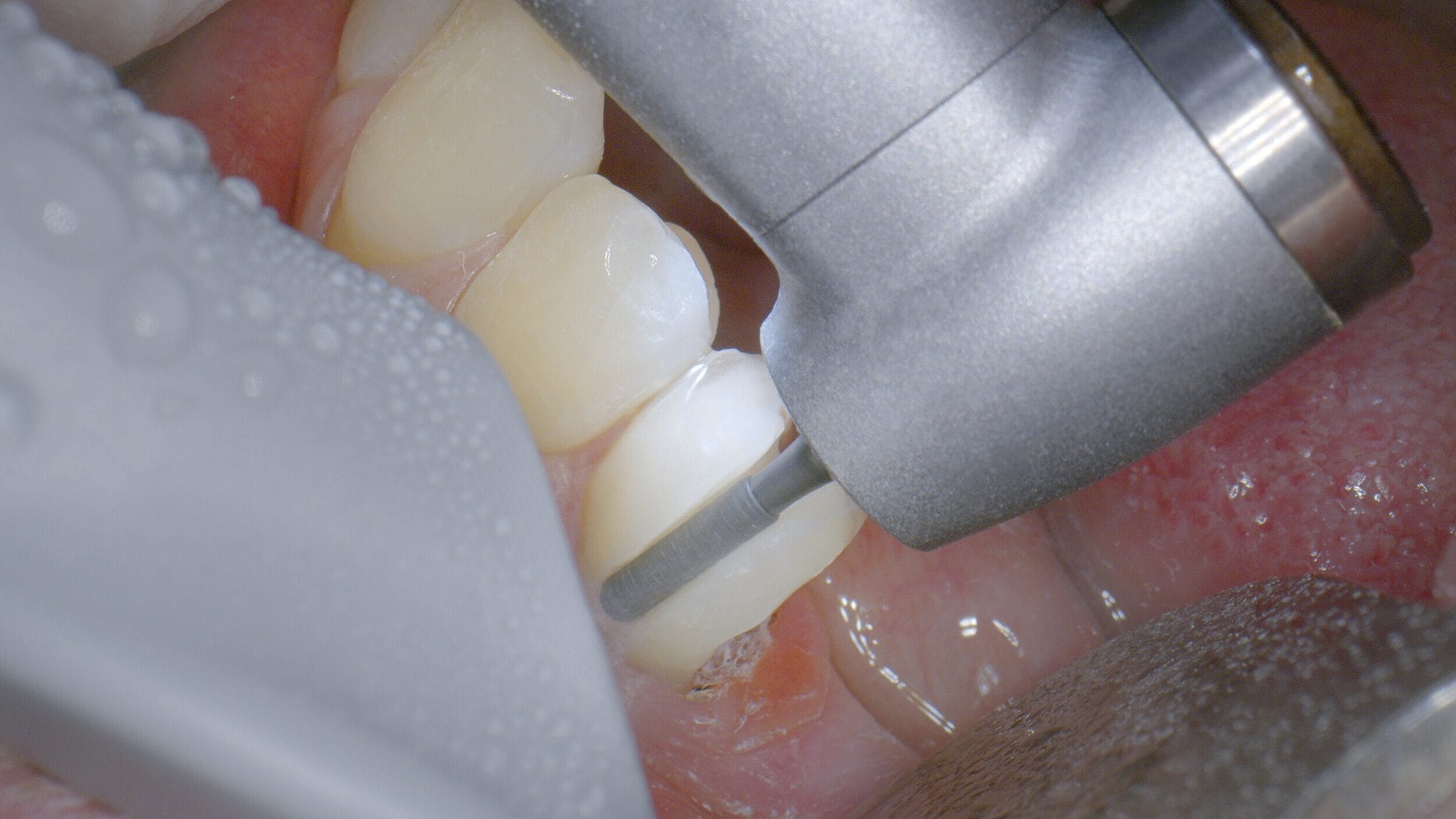
Friction between the bur and dental tissue produces high heat, which can cause thermal irritation to the patient and risks thermal damage during tooth preparations. This can be mitigated with a consistent flow of water. Several studies have recommended the use of room temperature water at between 25 and 50 mL/min rates to effectively prevent pulp injury during the process.[v]
The heaviest applications
W&H offers a comprehensive range of dental handpieces for every application. For example, the robust and ergonomic Synea Power Edition combines high-speed with exceptional torque control to manage the most challenging heavyweight applications, such as the removal of decayed materials, cavities, fillings, crowns, and bridges, and manages dental materials like zirconia. The Power Edition additionally keeps clinicians and patients safe from thermal damage with >50 ml/min coolant spray.
There are many variables around which handpiece to choose. Safety, comfort, efficiency, durability and cost effectiveness are all factors to consider carefully. Once you’ve done your research on the right handpiece for a task, it is advisable to make use of any opportunity to try it out for yourself. Once the choice is made, every handpiece should be carefully maintained according to the manufacturer’s instructions to ensure you get the most out of your purchase.
To find out more about the full range from W&H, visit www.wh.com/en_uk, call 01727 874990 or email office.uk@wh.com
[i] Nishi, Yasuyuki, Fushimi, Hikaru, Shimomura, Kazuo, Hasegawa, Takeshi, Performance and Internal Flow of a Dental Air Turbine Handpiece, International Journal of Rotating Machinery, 2018, 1826489, 11 pages, 2018. https://doi.org/10.1155/2018/1826489
[ii] Choi C, Driscoll CF, Romberg E. Comparison of cutting efficiencies between electric and air-turbine dental handpieces. J Prosthet Dent. 2010 Feb;103(2):101-7. doi: 10.1016/S0022-3913(10)60013-3. PMID: 20141814.
[iii] Lee, W., Kwon, HB. Vibroacoustic analysis of dental air turbine noise. BDJ Open 8, 27 (2022). https://doi.org/10.1038/s41405-022-00117-5
[iv] Gupta A, Bhat M, Mohammed T, Bansal N, Gupta G. Ergonomics in dentistry. Int J Clin Pediatr Dent. 2014 Jan;7(1):30-4. doi: 10.5005/jp-journals-10005-1229. Epub 2014 Apr 26. PMID: 25206234; PMCID: PMC4144062.
[v] Lau, X.E., Liu, X., Chua, H. et al. Heat generated during dental treatments affecting intrapulpal temperature: a review. Clin Oral Invest 27, 2277–2297 (2023). https://doi.org/10.1007/s00784-023-04951-1







