



It’s a small, small, small, small world
Featured Products Promotional FeaturesPosted by: Dental Design 12th December 2024
For many, nanotechnology is associated with certain superhero suits and science-fiction stories. Yet these bewilderingly small particles are used across the world in numerous sectors: technology, agriculture, food, cosmetics and healthcare all benefit from nanotechnology.[i]
Dentistry has also found many uses for this growing science; nanotechnology can be used in implantology, endodontics, prosthodontics, cosmetic care, periodontics and dental diagnostics. Certain overhead LED light curing units even use nanotechnology.[ii] Restorative dentistry in particular has been enhanced by the incorporation of nanotechnology, and understanding the benefits of this science can elevate your treatments.
The future of restorations
Nano means ‘dwarf’ in Greek and ‘one-billionth’ in scientific literature. It is hard to comprehend the size of a nanometre – it is the distance that a human fingernail grows in one second. Comparatively, if a marble’s diameter was one nanometre, then the Earth’s diameter would be one metre.[iii] Any particle that measures between 1-100 nanometres is a nanoparticle, and these are what are used in various restorative dental products.[iv]
There are two methods by which nanotechnology creates structures for use in restorative dentistry. The first is the bottom-up approach, where smaller atoms and particles are formed into a larger nanostructure.[v] Future possibilities of this may include in vitro techniques for growing teeth and regenerating tissue.[vi] The second, the top-down approach, reduces the size of the structure toward the nanoscale.[vii] It is the top-down approach – turning particles into nanoparticles – that is mostly used to support the products and equipment used in restorative dentistry.
Restorative work is needed when oral health complications such as periodontitis, caries or trauma damage a tooth. For the successful longevity of a restorative treatment, the chosen material should fulfil the following criteria:
- Lacks toxicity
- Inhibits bacterial growth
- Repairs destroyed tooth structures
- Enables tooth shape restoration
- Achieves the desired aesthetic appearance
- Has similar mechanical properties to dental structures[viii]
Nanotechnology in restorative work is largely focused on nanocomposites, meeting the demands that the best restorations should have for long-term success. Nanocomposites contain two different types of nanofiller particles: nanometrics and nanoclusters.[ix] The fusion of the two give nanocomposites superb mechanical qualities, making them ideal for restorations under occlusal stress.[x] Their high surface to volume ratio allows for a small filler size and a reduced inter-particle separation, ensuring that nanocomposites are ductile.[xi]
Furthermore, nanocomposites provide the outstanding aesthetic qualities that patients may desire. This includes good polish retention and minimal polymerisation shrinkage, limiting the risk of marginal leakage and secondary caries around the restoration.[xii]
 Metal materials
Many nanocomposites contain certain metallic nanoparticles that are effective in restorative work. Metals such as silver, gold and titanium help strengthen the restorative material, preventing fractures and increasing its overall toughness. This enhances the restoration’s resistance to wear and abrasion, meaning the patient is less likely to need multiple follow-up appointments to fix it, maintaining high levels of satisfaction.[xiii]
Metals like silver are also known for their antimicrobial qualities, helping to fulfil the ideal qualities that a restorative material should have. Silver’s toxicity reduces bacterial colonisation, improving dental health by reducing the risk of caries or gingival disease.[xiv] As silver indiscriminately kills all cells, its use in dentistry must be controlled to prevent harm to the patient – silver nanoparticles are an effective solution to moderating the risk due to their size.[xv]
Entering the next frontier
As nanotechnology continues to be applied in medical treatments such as cancer therapy and tissue and organ regeneration, it is proving to have many positive effects for patients, as well as making more successful treatments possible.[xvi] Introducing nanotechnology to restorative care offers the potential for many more future benefits as research continues to grow.
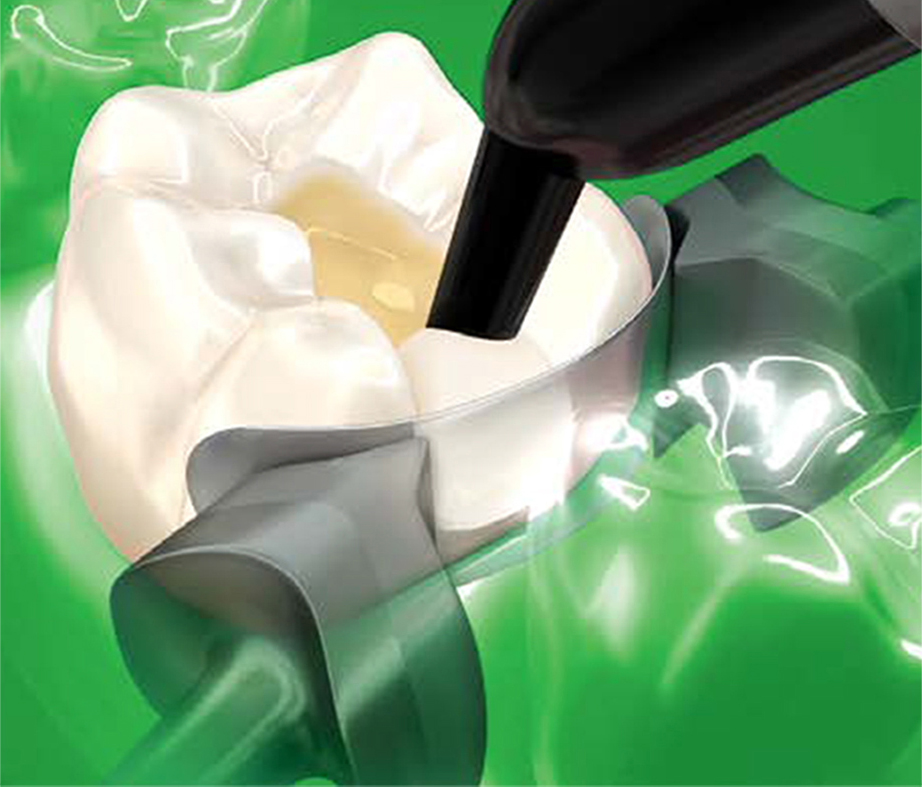
For world-class restoration work, consider the Filtek One Bulk Fill Restorative from Solventum, formerly 3M Health Care. Designed for the speedy and easy placement of bulk fill whilst retaining desirable aesthetic qualities, the Filtek One Bulk Fill Restorative uses TRUE nanotechnology for superior wear resistance and superb polish retention. Its excellent handling and sculptability allows easy access to deep cavities and the innovative AUDMA and AFM monomers reduce polymerisation shrinkage stress. Using Filtek One Bulk Fill can make your workflow simpler, and your patient’s smile bigger.
Nanoscience is growing at a rapid rate across numerous industries. With the latest nanotechnology solutions, you can turn science-fiction into a reality, allowing you to deliver the very best treatments for your patients.
To learn more about Solventum, please visit
https://www.solventum.com/en-gb/home/oral-care/
©Solventum 2024. Solventum, the S logo and Filtek are trademarks of Solventum and its affiliates. 3M and the 3M logo are trademarks of 3M.
About Solventum
Solventum, enabling better, smarter, safer healthcare to improve lives. As a new company with a long legacy of creating breakthrough solutions for our customers’ toughest challenges, we pioneer game-changing innovations at the intersection of health, material and data science that change patients’ lives for the better while enabling healthcare professionals to perform at their best. Because people, and their wellbeing, are at the heart of every scientific advancement we pursue. We partner closely with the brightest minds in healthcare to ensure that every solution we create melds the latest technology with compassion and empathy. Because at Solventum, we never stop solving for you.
[i] Jandt, K.D. and Watts, D.C. (2020). Nanotechnology in dentistry: Present and future perspectives on dental nanomaterials. Dental Materials, 36(11), pp.1365–1378. doi:https://doi.org/10.1016/j.dental.2020.08.006.
[ii] Jandt, K.D. and Watts, D.C. (2020). Nanotechnology in dentistry: Present and future perspectives on dental nanomaterials. Dental Materials, 36(11), pp.1365–1378. doi:https://doi.org/10.1016/j.dental.2020.08.006.
[iii] www.nano.gov. (n.d.). Size of the Nanoscale | nano.gov. [online] Available at: https://www.nano.gov/nanotech-101/what/nano-size#:~:text=There%20are%2025%2C400%2C000%20nanometers%20in.
[iv] Jandt, K.D. and Watts, D.C. (2020). Nanotechnology in dentistry: Present and future perspectives on dental nanomaterials. Dental Materials, 36(11), pp.1365–1378. doi:https://doi.org/10.1016/j.dental.2020.08.006.
[v] Abid, N., Khan, A.M., Shujait, S., Chaudhary, K., Ikram, M., Imran, M., Haider, J., Khan, M., Khan, Q. and Maqbool, M. (2022). Synthesis of nanomaterials using various top-down and bottom-up approaches, influencing factors, advantages, and disadvantages: A review. Advances in Colloid and Interface Science, [online] 300, p.102597. doi:https://doi.org/10.1016/j.cis.2021.102597.
[vi] Rishika Dakhale, Paul, P., Aparna Achanta, Ahuja, K.P. and Mrunal Meshram (2023). Nanotechnology Innovations Transforming Oral Health Care and Dentistry: A Review. Cureus. doi:https://doi.org/10.7759/cureus.46423.
[vii] Abid, N., Khan, A.M., Shujait, S., Chaudhary, K., Ikram, M., Imran, M., Haider, J., Khan, M., Khan, Q. and Maqbool, M. (2022). Synthesis of nanomaterials using various top-down and bottom-up approaches, influencing factors, advantages, and disadvantages: A review. Advances in Colloid and Interface Science, [online] 300, p.102597. doi:https://doi.org/10.1016/j.cis.2021.102597.
[viii] Glowacka-Sobotta, A., Ziental, D., Czarczynska-Goslinska, B., Michalak, M., Wysocki, M., Güzel, E. and Sobotta, L. (2023). Nanotechnology for Dentistry: Prospects and Applications. Nanomaterials (Basel, Switzerland), [online] 13(14), p.2130. doi:https://doi.org/10.3390/nano13142130.
[ix] Rishika Dakhale, Paul, P., Aparna Achanta, Ahuja, K.P. and Mrunal Meshram (2023). Nanotechnology Innovations Transforming Oral Health Care and Dentistry: A Review. Cureus. doi:https://doi.org/10.7759/cureus.46423.
[x] Rishika Dakhale, Paul, P., Aparna Achanta, Ahuja, K.P. and Mrunal Meshram (2023). Nanotechnology Innovations Transforming Oral Health Care and Dentistry: A Review. Cureus. doi:https://doi.org/10.7759/cureus.46423.
[xi] Jandt, K.D. and Watts, D.C. (2020). Nanotechnology in dentistry: Present and future perspectives on dental nanomaterials. Dental Materials, 36(11), pp.1365–1378. doi:https://doi.org/10.1016/j.dental.2020.08.006.
[xii] Schricker, S.R. (2017). 9 – Composite resin polymerization and relevant parameters. [online] ScienceDirect. Available at: https://www.sciencedirect.com/science/article/abs/pii/B9780081003831000096.
[xiii] Rishika Dakhale, Paul, P., Aparna Achanta, Ahuja, K.P. and Mrunal Meshram (2023). Nanotechnology Innovations Transforming Oral Health Care and Dentistry: A Review. Cureus. doi:https://doi.org/10.7759/cureus.46423.
[xiv] Umapathy, V.R., Natarajan, P.M., SumathiJones, C., Swamikannu, B., Johnson, W.M.S., Alagarsamy, V. and Milon, A.R. (2022). Current trends and future perspectives on dental nanomaterials – An overview of nanotechnology strategies in dentistry. Journal of King Saud University – Science, [online] 34(7), p.102231. doi:https://doi.org/10.1016/j.jksus.2022.102231.
[xv] Jandt, K.D. and Watts, D.C. (2020). Nanotechnology in dentistry: Present and future perspectives on dental nanomaterials. Dental Materials, 36(11), pp.1365–1378. doi:https://doi.org/10.1016/j.dental.2020.08.006.
[xvi] Glowacka-Sobotta, A., Ziental, D., Czarczynska-Goslinska, B., Michalak, M., Wysocki, M., Güzel, E. and Sobotta, L. (2023). Nanotechnology for Dentistry: Prospects and Applications. Nanomaterials (Basel, Switzerland), [online] 13(14), p.2130. doi:https://doi.org/10.3390/nano13142130.







